
Before a new customer ever calls you, they've already formed an opinion. They've seen your star rating, skimmed a few reviews, and glanced at what comes up when they search your name.
In our State of Online Reviews survey, 92% of consumers said they'd read an online review in the past year. Your reputation is doing the selling long before you get the chance to.
This guide covers everything a local business owner needs to know about online reputation management: what it is, why it matters, how to build a strategy, and how to handle the hard parts like fake reviews and AI search.
What is online reputation management?
Online reputation management (ORM) is the practice of monitoring, influencing, and improving how your business appears online.
It covers generating and responding to reviews, managing your business profiles, promoting positive content, and addressing negative or false information about your business.
For a local business, most of that work revolves around reviews. Your Google rating, your review count, and how you respond to feedback shape whether a potential customer trusts you enough to get in touch.
ORM is closely related to a couple of neighboring disciplines, and it helps to keep them straight:
- ORM vs. review management: Review management focuses specifically on collecting, monitoring, and responding to customer reviews. ORM includes review management and adds broader work like search presence, social media, and crisis handling.
- ORM vs. review marketing: Review marketing plays offense by actively using reviews to drive awareness and conversions. ORM covers the full picture, including the defensive work of monitoring and protecting your brand.
- ORM vs. SEO: SEO aims to rank your website for the keywords your customers search. ORM aims to make sure everything that ranks for your business name, on Google and beyond, builds trust with the people who find it.
Why your online reputation matters more than your marketing
Most local businesses assume they need more visibility to grow. In reality, the thing holding many of them back is trust.
When someone compares a few plumbers or dentists, they're asking one question: can I trust this business? They answer it in seconds, using your reviews, before they ever visit your website.
The numbers from our research make the stakes clear:
- Checking reviews is a buying habit: 1 in 5 consumers always check reviews before making a purchase, and 47% check them often. A thin or outdated review profile means getting filtered out before you're even considered.
- Your star rating sets the floor: More than 78% of consumers won't consider a business rated below 4 stars, and 27% only buy from businesses rated 4.5 or higher. A weak rating caps the return on every marketing dollar you spend.
- Negative reviews cost real customers: 88% of consumers have avoided a business after reading negative reviews about it. One believable complaint left unanswered can turn away dozens of potential buyers.
- Reviews outrank every other trust signal: In our research on AI and the buying journey, consumers said they trust online reviews more than AI recommendations and more than advice from friends and family. Reviews have become the single most influential voice in the buying decision.
Your reputation determines whether your marketing produces customers. A strong review profile makes every ad, every search ranking, and every referral work harder.
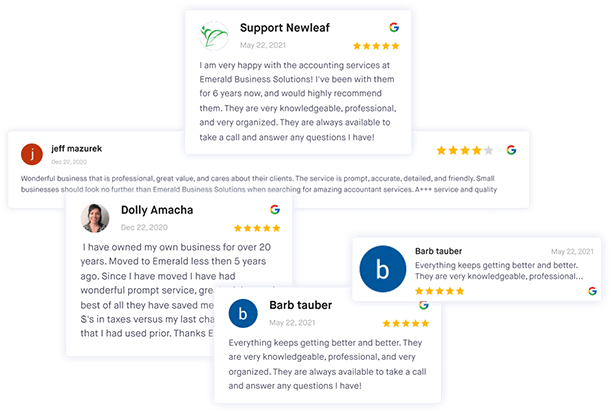
Manage your online reputation with ease
Monitor, manage, and get more online reviews for your business with LocalImpact.
Where your online reputation lives
Your reputation isn't stored in one place. It's spread across every surface where people can find and evaluate your business, and each one deserves attention:
- Google: 86% of consumers use Google to look up reviews, which makes your Google Business Profile the center of your reputation. Your rating and reviews appear in Search, Maps, and the local map pack, often as the very first impression. Our full guide to Google reviews covers this in depth.
- Secondary review platforms: Beyond Google, consumers rely on Yelp (34%), Facebook (28%), and Trustpilot (15%) to check on businesses. Industry-specific sites carry real weight too, like Healthgrades for medical practices, Avvo for law firms, and Angi for home services.
- Social media: Customers tag, mention, and discuss your business on social platforms whether you're watching or not. Unanswered complaints in comments and DMs shape perception the same way reviews do.
- Branded search results: Everything that ranks when someone Googles your business name is part of your reputation, including news mentions, directory listings, and forum threads. You control some of those results directly and influence the rest through content and reviews.
- AI assistants: Tools like ChatGPT and Google's AI summaries pull from your public review signals when they recommend businesses. Your reviews now feed a whole new discovery channel, which we'll dig into later in this guide.
The six components of online reputation management
ORM can feel vague until you break it into concrete pieces. For a local business, it comes down to six components, each with its own habits and tools.
1. Monitoring your reviews and mentions
You can't manage feedback you never see. Monitoring means tracking new reviews across every platform your customers use, plus mentions of your business name on social media and the wider web.
Most businesses are still working with blind spots here. Our State of Online Reputation Management report found that 55% of businesses monitor just 2 or 3 platforms for reviews, which leaves plenty of room for negative or fake reviews to slip by unnoticed.
Aim to cover Google, Facebook, Yelp, and at least one industry-specific site, with alerts set up so a new review reaches you within hours. Our reputation management best practices guide walks through the full monitoring setup.
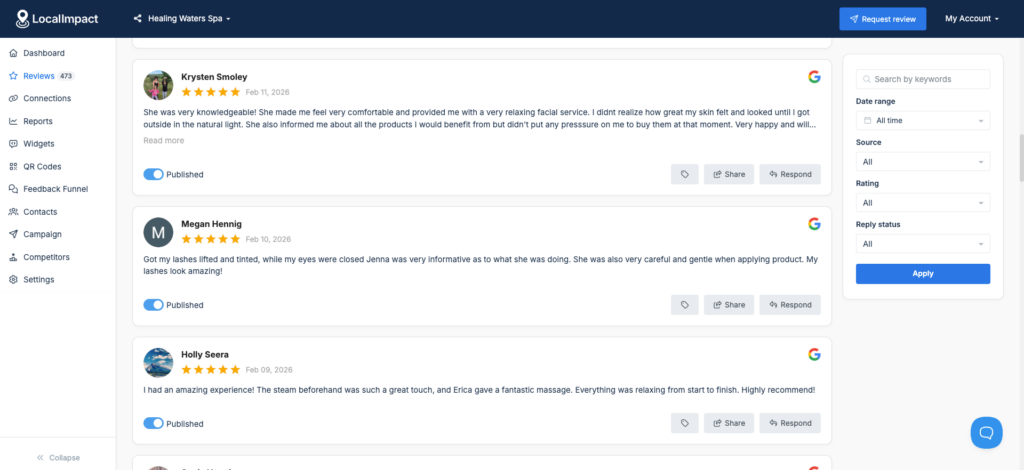
Pro tip: You can use LocalImpact to track and reply to all the reviews your business gets across 30+ platforms from one central location.
2. Generating a steady flow of reviews
A steady stream of fresh reviews strengthens your rating, feeds your local rankings, and dilutes the impact of the occasional bad one. The willingness is already there, since 72% of consumers have left an online review at some point.
Consistency matters as much as volume. 62% of businesses now ask for reviews actively and consistently, so an occasional half-hearted ask leaves you behind the pack.
Here's how to build a reliable flow of new reviews:
Ask on the same day as the purchase
Timing is the single biggest factor in whether a customer follows through. Over a third of reviews are written on the day of purchase, and most within a week, so the window is short and worth catching.
The best moment sits inside that window: right after a customer compliments your work, sees the finished result, or expresses relief that a problem's solved. Once they've moved on with their day, the request starts feeling like a chore.
The right moment varies by business. A home service company might ask right after finishing the job, a retailer at checkout, and a clinic once treatment wraps up, with the common thread being that satisfaction is at its peak.
Send a direct review link
Every extra step costs you responses, and even happy customers abandon the process if it means searching for your business and hunting for the review tab. Link customers straight to your review form so leaving feedback takes one tap.
For in-person customers, a QR code does the same job. Print it on receipts, invoices, business cards, and counter signage so a customer can scan it and land on your review form while the experience is still fresh.
Both are quick to set up. Our free Google review link generator creates the direct link, and our QR code generator tool turns it into a scannable code for print.
Train your team to ask in person
A direct request from the person who just served the customer converts better than any message, since people feel a natural pull to follow through when a real person asks them face to face. That pull simply doesn't exist in an inbox.
The timing within the visit matters as much as the ask itself. Requests at checkout often fall flat because the customer is mentally already out the door, so teach staff to ask right after a customer expresses satisfaction, like a compliment about the work or a comment on how easy the process was.
Give your team flexible phrasing to adapt to their own voice, and keep it motivating by tracking which team members generate reviews and recognizing the ones who do it well.
Automate follow-ups via email and SMS
Manual review requests fall apart over time because they depend on someone remembering to send them. Customers forgetting is the top obstacle businesses report, and a well-timed automated reminder solves most of it.
The setup is straightforward. When a job is marked complete or a purchase closes, a text or email goes out with a direct link to your review page, followed by one or two follow-up nudges for customers who don't act on the first message.
SMS deserves a place alongside email, since texts get opened fast and suit the same-day ask. This is easy to set up with LocalImpact's automated email and SMS review requests.
Keep every request policy-compliant
Ask every customer the same way. Filtering customers so only happy ones reach the public review form counts as review gating, which violates Google's policies and can get your reviews removed.
Incentives are the other trap. The FTC's consumer reviews rule bans fake reviews and any incentive tied to a positive review, with civil penalties reaching tens of thousands of dollars per violation, so keep any incentive unconditional and clearly disclosed.
Platform rules vary too. Yelp discourages direct review solicitation altogether, so adjust your approach per platform before rolling one request template out everywhere.
Further reading: How to Get Google Reviews for Your Business: 6 Expert Tips
Why review velocity matters as much as review count
Review velocity is the rate at which your business earns new reviews over time. Google looks beyond your total count and average rating to evaluate momentum, meaning whether your business looks active right now.
A business earning a few reviews every week reads as alive and engaged. A business with 300 reviews and nothing new in six months reads as stagnant, even with the bigger total.
Velocity carries weight for three reasons:
- It feeds your local rankings: Review signals contribute to prominence, one of the three core factors in Google's local ranking system. When two businesses are similar in relevance and distance, steady review momentum often becomes the tiebreaker for a map pack spot.
- It reassures the people reading your profile: 68% of consumers say recent reviews are very important when choosing a provider. A profile where the newest review is months old plants doubt about whether quality has slipped or whether you're even still operating.
- Every new review adds fresh, relevant content: Customers describe real experiences in natural language, mentioning your services, neighborhoods, and outcomes. Each review reinforces your relevance for searches you never explicitly targeted.
The pattern matters as much as the pace.
A sudden burst of dozens of reviews in a couple of days can trigger Google's spam filters and look suspicious to shoppers, so aim for an even flow that mirrors your actual customer volume, whether that's 3 reviews a month for a small shop or 15 for a busy restaurant.
Manage your online reputation with ease
Monitor, manage, and get more online reviews for your business with LocalImpact.
3. Responding to feedback
Every review response is public, and future customers read your replies as closely as the reviews themselves. Responding consistently has become standard practice, with 60% of businesses replying to every review they get.
Here's how to make responding a reliable habit:
- Reply to every review, positive and negative: 20% of businesses only respond to negative reviews, which leaves the easiest trust building on the table. A warm reply to praise reinforces loyalty and shows every future reader that someone behind the business is paying attention.
- Respond within 24 to 48 hours: 70% of consumers expect a response within 1 to 3 days, so replies that sit for a week read as indifference. Most businesses are keeping pace, with 45% responding within 1 to 2 days and 34% within a few hours.
- Set up alerts so nothing slips through: You can't hit a 24-hour target if you only check your profiles on Fridays. Turn on notifications for every platform you're active on, or use a review management tool that pulls new reviews into one feed.
- Personalize every reply: Use the reviewer's name and reference a specific detail from their review, since identical copy-paste responses read as robotic the moment someone scrolls through a few of them. One specific detail per reply is usually enough to feel genuine.
- Use templates and AI as a starting point: A saved template or AI-generated draft handles the structure so you're never facing a blank box. 33% of business owners already use AI to draft review responses, and a quick personalization pass before posting keeps the reply sounding like you.
- Route sensitive reviews to a human: Complaints alleging safety issues, legal claims, or staff misconduct deserve a careful manual response, sometimes with a second set of eyes. Flag these for the owner or a senior team member before anything goes public.
We'll cover how to handle each review type later in this guide, and our full walkthrough on how to respond to Google reviews includes templates and examples for every scenario.
Pro tip: You can streamline review responses using LocalImpact’s automated and AI-assisted review reply feature.
4. Showcasing positive proof
Reviews work hardest when they sit where buying decisions happen. Featuring your best feedback on your homepage, service pages, social channels, and ads puts social proof in front of every prospect at the moment they're deciding.
The effort is worth it because buyers do their homework. 43% of consumers read 4 to 6 reviews before trusting a business, and nearly a third read 7 or more.
Here's where to put your reviews to work:
- Feature reviews on your high-intent pages: Place recent reviews on your homepage, service pages, and location pages, right beside your quote forms and booking buttons. A hesitant visitor weighing you against a competitor gets their final nudge exactly where they need it.
- Add review schema markup to your site: Schema is what produces the star ratings that appear under your pages in Google search results. Those stars lift your click-through rate before anyone even reaches your website.
- Turn strong reviews into social posts: A quote card with a customer's words and a five-star graphic is quick to produce and easy to schedule as a recurring format. Sharing reviews publicly also nudges other happy customers to leave their own.
- Drop reviews into email and SMS campaigns: A short customer quote under a promotional offer adds proof at the moment someone's weighing whether to book. Match the review to the service being promoted so prospects see feedback from customers just like them.
- Use reviews in your paid ads: Review quotes in ad creative tend to outperform polished marketing copy because they read like a real person. If you run Local Services Ads, your Google Business Profile rating displays right on the ad, which makes your review profile part of your ad performance.
- Include reviews in quotes and proposals: Two or three relevant reviews inside an estimate or engagement letter deliver social proof at the exact moment a prospect decides whether to sign. Most businesses overlook this placement entirely.
- Get permission and disclose properly: Ask before featuring a customer's name or words in your marketing, and disclose any material connection like an employee or paid partner.
Our review marketing guide covers each of these placements in more detail, including how to set up review widgets and measure the conversion impact.
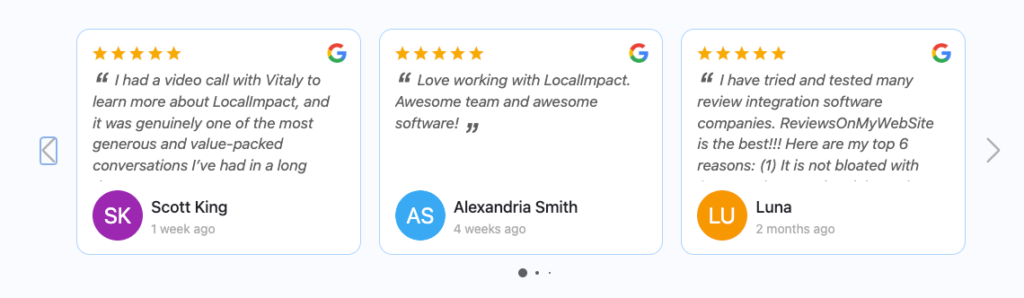
Pro tip: Use LocalImpact’s review widget feature to showcase your top customer reviews on your site with ease.
5. Managing your search presence
What ranks for your business name shapes perception before anyone clicks. Claiming your profiles, keeping your listings accurate, and publishing helpful content give you more control over that first page of results.
Here's how to strengthen what people find when they search for you:
Claim and complete every profile that ranks for your name
Your Google Business Profile, Facebook page, Yelp listing, and industry directory profiles usually fill several page-one spots for your business name. A claimed, complete profile with photos, hours, and services beats an empty auto-generated one on every result a customer sees.
Verifying each profile matters as much as claiming it, since verification is what unlocks responding to reviews and updating your details.
Keep your name, address, and phone details consistent
Your business information should match exactly across every platform and directory. Google rewards consistent details and penalizes contradictions, and mismatched listings also confuse the customers trying to reach you.
Run a quick audit twice a year, since old addresses and outdated phone numbers have a way of lingering in directories you've forgotten about.
Publish content that answers customer questions
Blog posts built around the questions prospects ask before booking give search engines more quality pages to rank for your name and your services. The questions you hear on sales calls are the best content ideas you have.
Answering those questions in the same wording customers use also removes doubt before anyone picks up the phone, so the content converts as well as it ranks.
Create dedicated pages for your services and areas
A page for each service and each area you serve helps you rank for the searches customers actually type, like "electrician in [suburb]." Those pages also give your reviews and testimonials more high-intent places to live.
Add unique detail about each area so the pages read as genuinely local, and link them all from a central "areas we serve" page to aid discovery.
Crowd out anything unflattering
When a negative article or old complaint ranks for your name, the realistic fix is publishing and promoting stronger pages until they take its place. Since most people never look past page one, pushing a negative result down a few spots often solves the problem in practice.
Think of it as a long game, where each new page, profile, and fresh review adds another layer of positive presence that protects you over time.
6. Preparing for a crisis
A wave of negative attention can hit any business, whether from a service failure, a viral complaint, or a coordinated fake review attack. A short documented plan turns a scramble into a process.
Most businesses are exposed here. Our research found that 37% have only an informal crisis plan and 30% have none at all, which means a single incident can spiral before anyone knows who's supposed to respond.
A workable plan for a local business fits on one page and answers four questions:
- Who speaks for the business: Name one person who owns reputation incidents and a backup for when they're unavailable. A single clear voice keeps your message consistent while the pressure's on.
- How fast you acknowledge: Set a target like responding to the initial complaint or review wave within a few hours. A quick first response buys you time to gather facts before saying anything substantive.
- What you say first: Keep a pre-written holding message your team can adapt on the fly, so you can respond immediately without scrambling for words. Personalize it before posting, since identical copy-pasted responses read as insensitive during a crisis.
- When to escalate: Define which scenarios go straight to the owner or legal counsel, like safety allegations, staff misconduct claims, or a sudden cluster of suspicious reviews. Spelling out the triggers in advance means serious problems reach the right people fast.
Store the plan somewhere your whole team can find it instantly, and revisit it once or twice a year. A crisis you've rehearsed, even loosely, stays manageable, and a calm, transparent response can leave your reputation stronger than before.
Manage your online reputation with ease
Monitor, manage, and get more online reviews for your business with LocalImpact.
How to build your reputation management strategy
The six components above tell you what ORM involves. Turning them into a working system takes five practical steps.
- Start with an audit: Search your business name in an incognito window, review your profiles on Google, Facebook, Yelp, and your industry sites, and note your rating, review count, and response coverage on each. Screenshot the results so you have a baseline to measure against.
- Set measurable goals: Pick two or three targets like reaching a 4.5 rating, earning 10 new reviews per month, or replying to every review within 24 hours. Goals tied to numbers keep the work from drifting into vague "check the reviews sometimes" territory.
- Assign clear ownership: In 51% of businesses, the owner personally manages reviews, which becomes a bottleneck as volume grows. Name a primary owner and a backup so reviews never sit unanswered because someone was busy.
- Document a response playbook: Write down your tone rules, response time targets, and templates for common situations like praise, complaints, and suspected fakes. A one-page playbook keeps replies consistent even when different people write them.
- Build the review generation engine: Set up automated email and SMS requests triggered by completed jobs or purchases, with a follow-up reminder for customers who forget. Only 23% of businesses use automated software to request reviews, so putting this on autopilot immediately separates you from most local competitors.
Chris Kirksey, founder and SEO strategist at Direction.com, has measured what consistent execution produces across the healthcare practices his agency manages:
"Practices that obtain between 6 to 10 new reviews each month maintain or improve their position in the map pack in more than 80% of audits.
Practices dropping below 2 new reviews in a particular month exhibit ranking slippage within 45 to 60 days in about 65% of cases."
The lesson transfers to any local business. A modest, steady pace of new reviews protects your visibility far better than an occasional big push.
Responding to reviews the right way
How you reply to feedback shapes trust with everyone who reads the exchange later. In our research, 78% of consumers said a thoughtful response to a negative review made them more likely to trust a business.
Jacob Rhodes of TrueTrac keeps his focus on the real audience:
"I'm not trying to win the reviewer back. I'm writing for the next person scrolling at 10pm, deciding whether to trust us."
A few principles cover the vast majority of situations:
- For positive reviews, be specific: Thank the customer by name, echo a detail they mentioned, and invite them back. A generic "thanks for the kind words" pasted under every review reads as automated.
- For negative reviews, stay calm and own what's true: Acknowledge the experience, apologize where warranted, and offer a direct contact to continue offline. Arguing the details in public damages you with every future reader.
- For neutral reviews, treat them as soft negatives: A three-star "it was fine" deserves a reply that thanks the reviewer, acknowledges what fell short, and opens the door to learn more. A thoughtful response here can nudge a lukewarm customer toward a better opinion.
- For every review, respond within 24 to 48 hours: Quick replies signal an attentive business to both customers and platforms. Templates and AI drafts make this pace realistic even at higher volumes, as long as you personalize each one before posting.
Further reading: How to Respond to Google Reviews (with Examples & Templates)
Dealing with negative content, fake reviews, and extortion
This is the part of ORM where honest expectations matter most. Plenty of providers promise to "delete" negative content, and for the most part, that promise doesn't hold up.
Here's what you can realistically do about each type of problem:
- Genuine negative reviews: These can't be removed, and trying to silence them backfires. Your levers are a professional public response, an offline resolution, and a steady flow of fresh positive reviews that puts the complaint in context.
- Fake reviews: Reviews that violate Google's content policies can be reported and removed, though the process is slow. In our research on fake reviews, only 28% of reported fake reviews were removed promptly, so a calm public reply does the protective work while you wait.
- Negative search results: Articles and forum threads on sites you don't control usually can't be taken down. The realistic play is suppression, meaning you publish and promote stronger content until it outranks the negative result on page one.
- Review extortion: When someone demands payment to remove fake reviews, don't pay, document everything, and report the threat through Google's dedicated extortion form. Our article on review extortion covers the full playbook.
Fake reviews in particular have become a routine operational risk. 72% of local business owners received a fake review in the past 12 months, and 79% believe they've been targeted by a coordinated attack at some point.
The most reliable long-term defense is volume. A profile with dozens of recent, authentic reviews absorbs a fake far better than one with a thin, stale history.
Further reading: Fake Google Reviews: How to Spot, Report, and Remove Them
How AI search is changing reputation management
AI tools have become part of how people research local businesses. Our research on AI and the buying journey found that that 6 in 10 consumers use AI often or almost always when researching purchases, and 38% use it to research local services specifically.
The good news for local businesses is that AI expands discovery. 44% of consumers would consider a business they'd never heard of if an AI tool recommended it, which means AI can put you on shortlists you'd never reach through search alone.
The catch is that AI attention brings fresh scrutiny, and reviews decide the outcome:
- Reviews win the tiebreaker: When an AI recommendation and online reviews conflict, 41% of consumers trust the reviews. An AI mention of a poorly reviewed business sends 46% of people to read the reviews more carefully before deciding.
- Trust in AI depends on review signals: Over half of consumers said recent reviews, strong overall feedback, and high ratings would make them comfortable trusting an AI-recommended business. Thoughtful responses to reviews also ranked among the top trust builders.
- AI reads your review content: These tools pull language directly from your public reviews and your replies when describing your business. The words your customers use become the words AI uses to recommend you.
The practical takeaway is that AI visibility and reputation are now tightly linked. Everything in this guide, from review generation to response quality, feeds the signals that decide whether AI-driven attention turns into a customer.
Reputation management for multi-location businesses
Reputation work compounds with every location you add. When we asked owners about their toughest reputation challenge, coordinating reviews across multiple teams and locations came out on top, ahead of budget and time.
Each location brings its own profile, its own rating, and its own stream of reviewers. One underperforming branch can drag down how people see your whole brand, and inconsistent response styles across locations read as sloppiness to anyone comparing them.
Volume creates its own problem too. Ten locations averaging 15 reviews a month means 150 responses monthly, which is most of a part-time role at 5 to 8 minutes per reply.
Here's how to keep every location consistent without losing the local touch:
- Centralize every review into one dashboard: Logging into separate Google, Yelp, and Facebook accounts per branch is how reviews get missed and response times slip. A unified view also lets you compare locations at a glance and spot a branch trending down before it becomes a crisis.
- Choose an ownership model and stick to it: A hybrid split works best for most brands, with local teams handling routine and positive reviews while corporate takes negative, sensitive, or brand-level cases. Fully centralized control loses local context, and fully local control risks voice drift across branches.
- Set tiered response protocols: Routine four and five-star reviews can clear at the location level, mixed reviews route to a regional lead for a quick check, and high-risk reviews alleging safety issues or misconduct go to corporate, sometimes with legal input. Sorting by risk keeps senior people focused where a rushed reply could do real damage.
- Write voice guidelines with a localization layer: Shared tone rules, do and don't language lists, and response templates keep every branch sounding like one brand. Each location then adds a line only they could write, like a team member's name or a local detail, so replies never read as corporate boilerplate.
- Give struggling locations extra review generation: Branches with thin or low ratings need fresh reviews the most, since most consumers read 4 to 10 reviews before trusting a business. A focused push on a weak location breaks the cycle of low volume and low ratings.
Further reading: Multi-Location Review Management: The Complete Guide for 2026
Industry rules you need to know
A careless review reply can create real liability in regulated industries, and a few rules apply to every business regardless of industry. These are the ones worth knowing:
- HIPAA for healthcare providers: Under the Health Insurance Portability and Accountability Act, medical and dental practices can't confirm that someone is a patient in a public reply, even when the reviewer shared those details themselves. Keep responses warm and generic, then move anything specific to a private channel.
- The Consumer Review Fairness Act: The CRFA protects consumers' right to leave honest reviews and bars contract clauses that penalize or silence negative feedback. You can always respond and ask a customer to revise a review after fixing their problem, since persuasion is fair game.
- The FTC's rule on fake and incentivized reviews: The FTC's consumer reviews and testimonials rule bans fake reviews and any incentive tied to a positive review, with civil penalties reaching tens of thousands of dollars per violation. Any incentive you offer must be unconditional and clearly disclosed.
- Platform policies on gating and solicitation: Google prohibits review gating, meaning you can't filter customers so only happy ones reach the review form. Yelp goes further and discourages direct review solicitation altogether, so adjust your approach per platform.
Regulated practices can still build reviews into their workflow safely.
Dr. Angela Leung, an implant and cosmetic dentist, ties requests to moments of positive patient outcome:
"In endodontic and implant dentistry, there is almost always an identifiable moment of relief.
Our team identifies that moment, the front desk confirms the next steps with the patient, and within 24 hours a brief follow-up message goes out that includes both a post-operative check-in and a review link."
For industry-specific guidance, see our guides to reputation management for lawyers, dentists, and doctors.
How to measure your reputation
Most businesses measure their reputation too narrowly. In our research, 36% judge success by star rating alone and 31% by total review count, which misses much of what reputation work actually delivers.
A fuller picture tracks four metrics together, reviewed monthly:
- Review volume and velocity: Count new reviews per month, per platform, and watch whether the pace is holding steady. Consistent momentum feeds Google's prominence signal and reassures shoppers that you're active.
- Rating trend: Track where your average is heading over time on each platform. A sudden drop points to a specific incident, while a slow slide suggests something systemic like staff turnover or a process problem.
- Response rate and speed: Measure the percentage of reviews you answer and your median time to reply. Aim for full coverage within 24 to 48 hours, since that's the window customers expect.
- Recurring themes: Read for the patterns in what people praise and criticize, since repeated comments point at operational fixes worth making. This turns your reviews into a free focus group.
Set a recurring monthly slot to review the numbers and pick one or two adjustments. Small corrections compound, and over a year they add up to a visibly stronger reputation.
DIY, software, or an agency?
There's no single right way to run reputation management. The right setup depends on your review volume, your team, and how much of your week you can give it.
- Doing it yourself: Manual management works for a low-volume business willing to spend 2 to 3 hours per week checking platforms, replying, and requesting reviews. The risk is consistency, since the checking tends to stop the moment things get busy.
- Using software: 78% of businesses already use tools to manage reviews, and it's the natural next step once volume grows. A platform centralizes monitoring, automates review requests, drafts replies with AI, and keeps response times tight without adding headcount.
- Hiring an agency: 27% of local business owners have hired a third-party service to help manage their reputation. Outsourcing makes sense during a crisis, at high review volumes, or when nobody on the team can own the work consistently.
Manage your online reputation with ease
Monitor, manage, and get more online reviews for your business with LocalImpact.
Frequently asked questions
What is online reputation management?
Online reputation management is the practice of monitoring and improving how your business appears online. It includes generating and responding to reviews, managing your business profiles, promoting positive content, and addressing negative or false information about your business.
Why is online reputation management important?
Your reputation shapes buying decisions before customers ever contact you. Nearly all consumers read reviews when evaluating a business, and a weak rating or a string of unanswered complaints quietly caps the return on every marketing dollar you spend.
Is online reputation management the same as SEO?
They overlap without being the same discipline. SEO focuses on ranking your website for the keywords customers search, while ORM focuses on making everything that appears for your business name, including reviews, listings, and articles, build trust with the people who find it.
How much does online reputation management cost?
DIY management costs mostly time, and software typically starts at a modest monthly subscription per location. Full-service agencies usually charge several hundred to a few thousand dollars per month depending on scope, review volume, and location count.
How long does reputation management take to show results?
Businesses starting from a thin review profile often see measurable improvement within 60 to 90 days of consistent review generation and responding. Building a strong long-term reputation, including search presence and a deep review history, tends to take 6 to 12 months.
Can you remove negative reviews?
Genuine negative reviews can't be removed, though you can respond publicly and resolve the issue offline. Reviews that violate platform policies, such as fake reviews, spam, or conflicts of interest, can be reported for removal, and our fake Google reviews guide explains the process.
What's the difference between reputation management software and review management software?
Review management software focuses on collecting, monitoring, and responding to customer reviews. Reputation management software covers that plus broader capabilities like brand mention monitoring, sentiment analysis, and multi-location reporting, though for local businesses the two categories largely converge on reviews.
Take control of your online reputation
Your reputation is the layer between your marketing and your revenue.
Everything in this guide comes down to a repeatable loop: monitor everywhere your customers talk about you, generate fresh reviews consistently, respond quickly and thoughtfully, showcase your best feedback, and measure the results monthly.
LocalImpact handles the whole loop from one place, with review monitoring across 30+ platforms, automated email and SMS review requests, AI-powered replies, and widgets that put your best reviews on your website.
Start your free trial today and turn your reputation into your strongest growth channel.