Almost every customer you want to win is reading reviews before they decide, which means your reputation is often doing the talking long before you get the chance to.
Review marketing is how you take control of that conversation. This guide covers what it is, why it works, how to generate reviews consistently, and how to put them to work across your marketing.
What is review marketing?
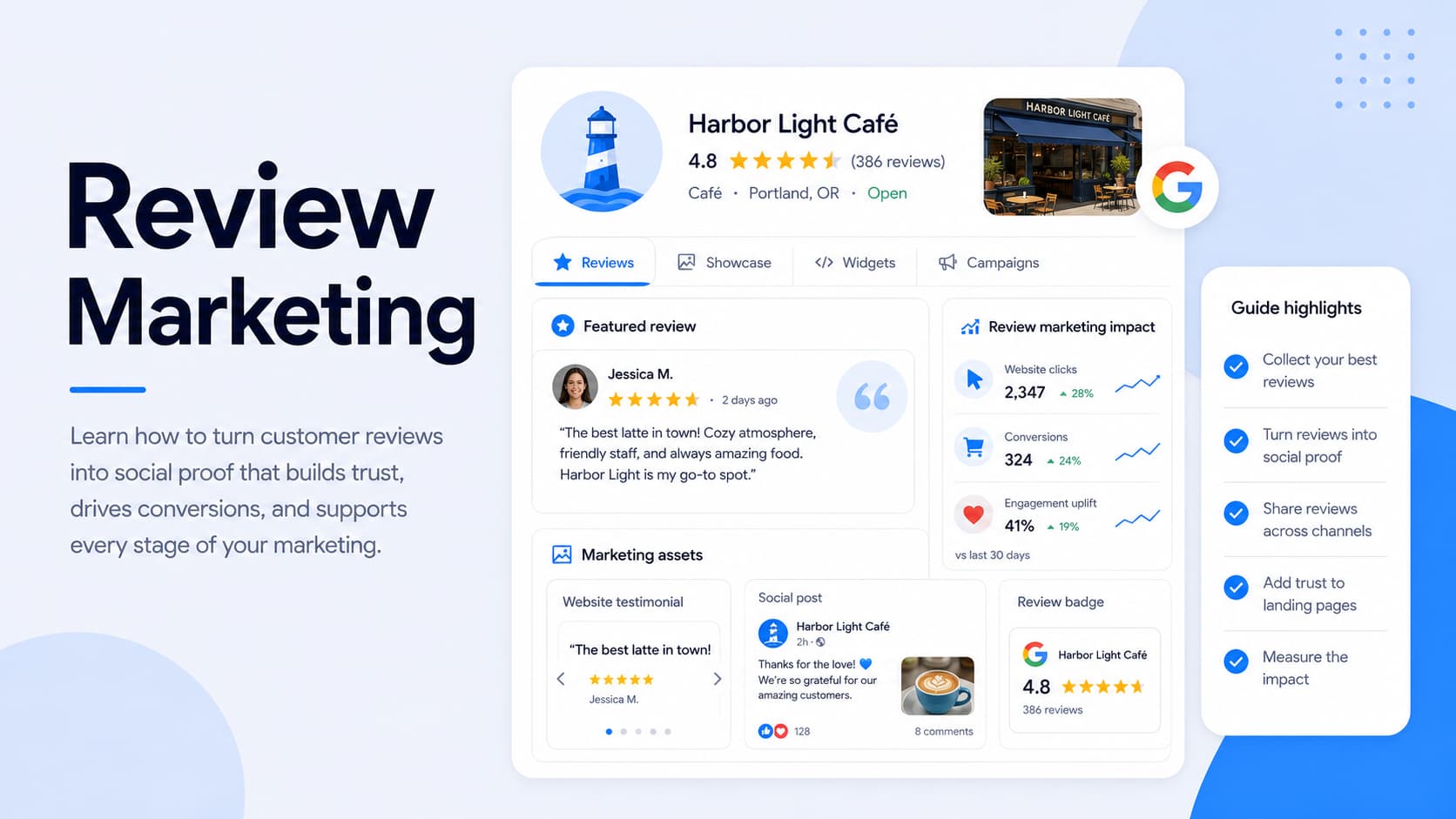
Review marketing is the practice of proactively collecting customer reviews and using them across your marketing to build trust and win new customers.
It treats reviews as owned content you can put to work, the same way you'd use a case study or a testimonial.
There are two parts to it:
- Generation: building a steady stream of fresh reviews from real customers
- Amplification: putting those reviews to work on your website, in email and SMS, on social, and in your ads
Do one without the other and you leave results on the table. A pile of reviews nobody sees won't move the needle, and a beautifully placed testimonial widget runs dry if you're not collecting new feedback.
Review marketing vs. reputation management
These two overlap, though they pull in different directions. Reputation management is largely defensive, focused on monitoring what's out there and protecting your brand when something goes wrong.
Review marketing plays offense. You're actively generating reviews and using them to drive awareness, trust, and conversions.
Why review marketing matters
Reviews earn their place in your marketing for a handful of concrete reasons:
- Reviews drive purchase decisions: 1 in 5 consumers always check reviews before buying and 47.6% check them often, typically reading 4 or more before they commit.
- Your star rating sets the floor: More than 78% of consumers won't consider a business rated below 4 stars, and 27% only buy from businesses rated 4.5 or higher. Consistent 4-star-plus ratings, plus quick responses to the occasional bad review, keep you on the shortlist.
- Reviews improve your local search visibility: Google says its local rankings are based on relevance, distance, and prominence, and that more reviews and positive ratings can help your ranking. A steady flow of fresh reviews keeps that prominence signal strong,
- Reviews are a goldmine of customer insight: Every review is direct feedback that points you toward the service issues worth fixing and the strengths worth promoting. The exact words customers use to describe what they love become ready-made copy for your website, ads, and email subject lines.
How to generate a steady stream of reviews
Deliver an experience worth reviewing
The reviews you want start with the service you provide. For 65% of consumers, the main motivation to leave a review is having a great customer experience, so a genuinely good visit does a lot of the work for you.
The willingness is already there. 72% of buyers have left an online review for a business, which means you're mostly removing friction and remembering to ask, rather than convincing people from scratch.
Ask at the right moment
Timing shapes how many reviews you actually get. Over a third of reviews are written the same day as the purchase, and most are written within a week, so the window is short and worth catching.
Aim to ask the same day, or a week later at the latest, while the experience is fresh. Consistency helps here: 62% of businesses now ask for reviews actively and consistently, so an occasional, half-hearted ask leaves you behind the pack.
Automate requests via email and SMS
The single biggest obstacle to more reviews is simple forgetfulness. 52% of businesses say customers forgetting is their top challenge, and a well-timed automated reminder solves most of it.
There's room to gain an edge here. 69% of businesses request reviews by email, yet only 23% use automated software to do it, so automating your requests across both email and SMS puts you ahead of most local competitors.
SMS in particular tends to get opened fast, which suits the same-day ask.
Pro tip: You can use LocalImpact to set up automated email and SMS review requests and generate reviews on autopilot.
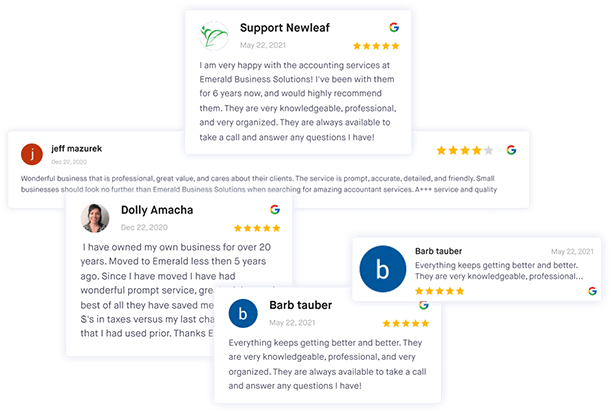
Manage online reviews with LocalImpact
Track, manage, and grow your online reviews with LocalImpact.
Make leaving a review frictionless
Every extra tap costs you responses. Send customers straight to your review page with a direct link, and put a QR code on receipts, packaging, and counter signage so leaving feedback takes seconds.
A couple of free tools make this quick to set up:
- Our Google review link generator creates a direct link to your review form
- Our QR code generator turns that link into a scannable code for print
What not to do: review gating and incentives
Review gating, where you filter customers so only happy ones reach the public review form, violates Google's policies and can get your reviews removed.
The FTC's consumer reviews and testimonials rule also bans fake reviews and any incentive tied to a positive review, with civil penalties reaching tens of thousands of dollars per violation, so keep any review incentive unconditional and clearly disclosed.
Where to focus your review generation efforts
Google Business Profile comes first
For a local business, Google is the priority platform, full stop. It's where the largest share of your customers are already reading reviews, and where your rating feeds directly into local search results.
Claim and fully optimize your Google Business Profile before you spread your attention elsewhere.
Further reading: Google Business Profile Optimization: 7 Essential Tips
Secondary platforms by industry
Once Google is solid, expand to the platforms your specific customers trust. Beyond Google, consumers rely on Yelp (34%), Facebook (28%), and Trustpilot (15%) to check on businesses.
Industry-specific sites matter just as much for many verticals:
- Legal: Avvo and Martindale-Hubbell
- Healthcare and dental: Healthgrades and Zocdoc
- Home services: Houzz and Angi
- Real estate: Zillow and Realtor.com
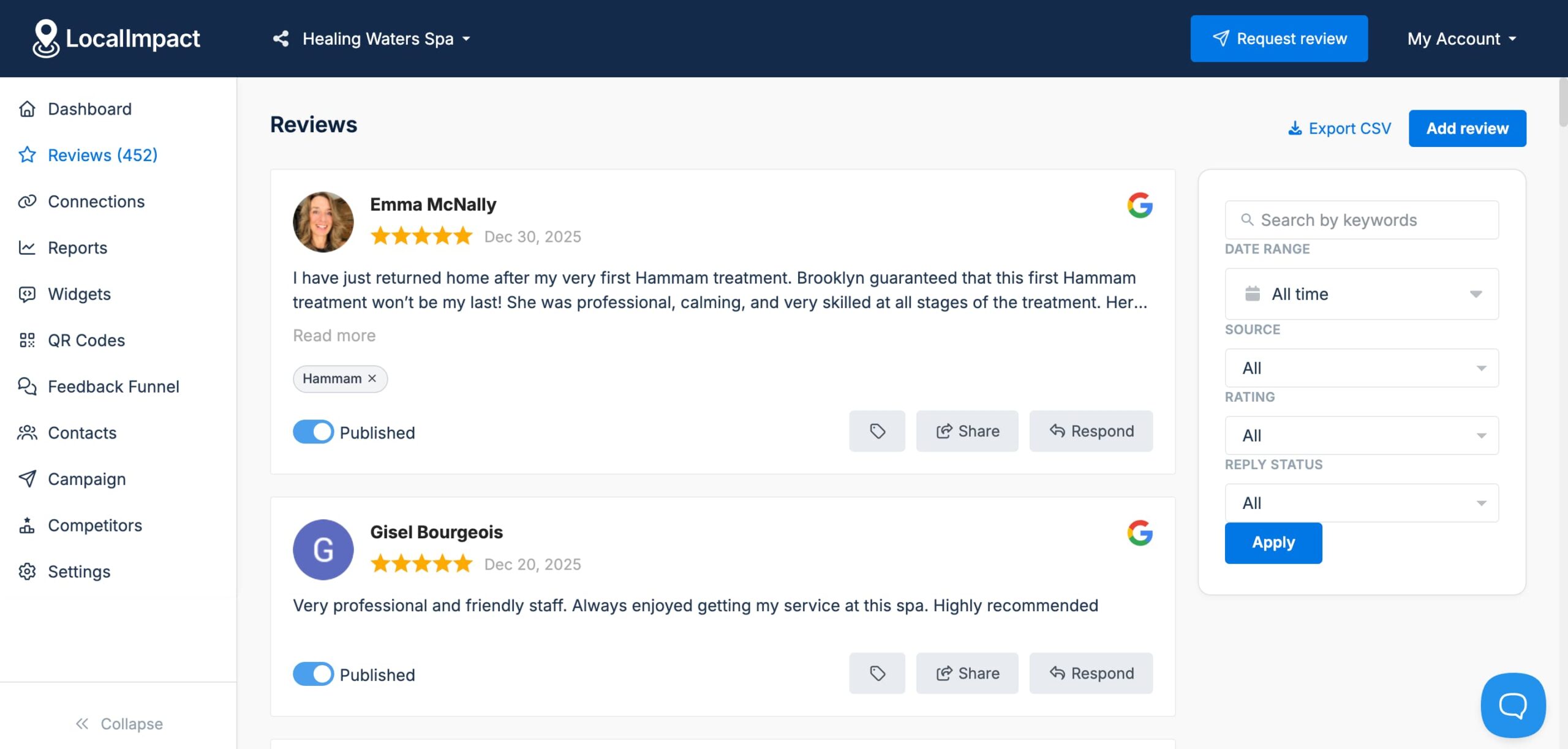
Pro tip: LocalImpact tracks reviews across 30+ popular review platforms, and lets you read and respond to all of them from one central location.
Your own website
Reviews on your website are the one surface no platform can alter or bury. Algorithm changes and platform removals can reshuffle or hide what shows on your profiles, but reviews you host yourself stay exactly where you put them.
Collecting first-party reviews and testimonials gives you a bank of social proof you fully control:
- Full control over display: You choose which reviews to feature and where they sit, so your strongest social proof lands next to your highest-intent calls to action.
- Richer formats: You can gather written quotes, star ratings, photos, and video in one place, rather than whatever a given platform supports.
- A permanent, owned asset: These reviews survive platform policy changes and feed the display tactics in the next section.
Keep them as a complement to your Google and Yelp profiles, since self-hosted reviews carry less independent weight than a public listing.
Manage online reviews with LocalImpact
Track, manage, and grow your online reviews with LocalImpact.
How to use reviews in your marketing
Collecting reviews is half the job. Putting them where customers make decisions is where review marketing earns its name, so here's where to place them.
On your website
Feature reviews on the pages that carry buying decisions: your homepage, individual service pages, and location pages. A roofing company might place three recent reviews right beside the "request a quote" button on its main service page.
Add review schema markup while you're at it. It's what produces the star ratings that show up in Google search results, and those stars lift your click-through rate before anyone even reaches your site.
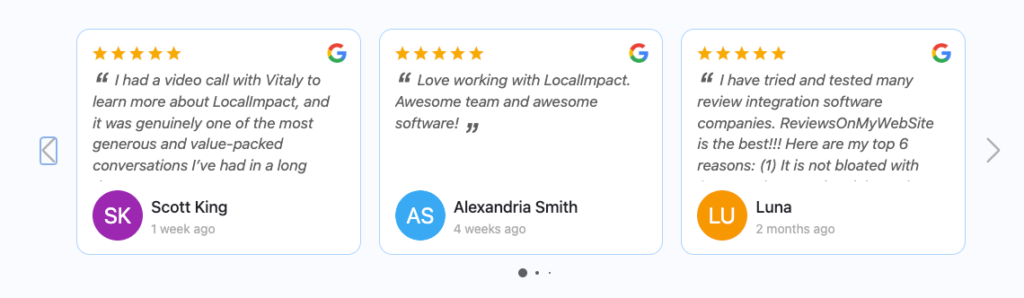
You can use LocalImpact’s review widget to add your top reviews to your website in just a few clicks.
In social media content
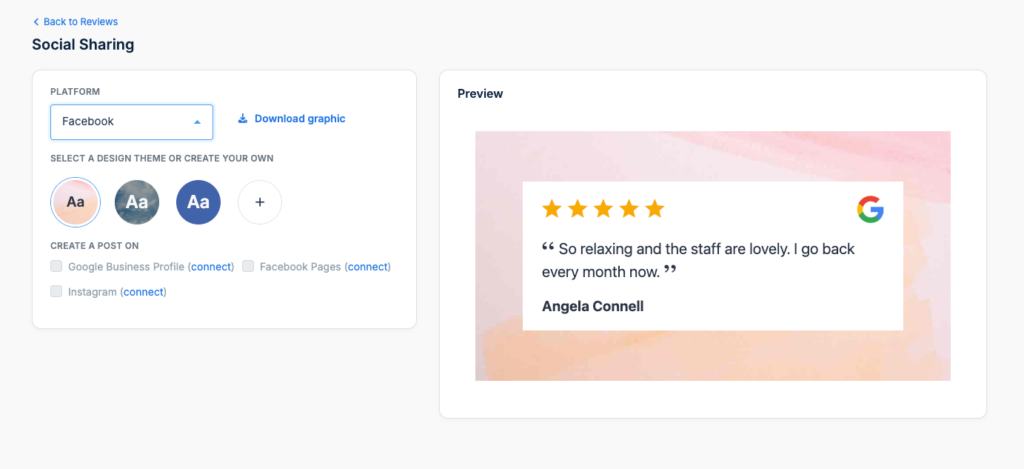
Turn strong reviews into simple, recurring social posts. A quote card with a customer's words and a five-star graphic is quick to produce and easy to schedule.
A dental practice could run a weekly "patient of the week" post built around a recent review, tagging the treatment mentioned. Rotating through fresh reviews keeps the format from getting stale.
Pro tip: LocalImpact’s social sharing feature makes it easy to turn your customer reviews into engaging social media posts.
In email and SMS campaigns
Drop reviews into the messages you're already sending. A short customer quote in a promotional email or a follow-up text adds proof exactly when someone's weighing whether to book.
For a home services business, a seasonal email offering a tune-up lands harder with a review from a customer who raved about last year's service sitting right underneath the offer.
In paid ads
Reviews make ads more believable and cheaper to run. Add review quotes and star ratings to your ad creative, and turn on Google Seller Ratings so your star average shows beneath your search ads.
A short, specific customer quote in a Facebook ad tends to outperform polished marketing copy, because it reads like a real person rather than a pitch.
In sales conversations, quotes, and proposals
Reviews belong in your direct sales materials too, which most businesses overlook. A law firm sending an engagement letter, or an HVAC company emailing a repair estimate, can include two or three relevant reviews right in the document.
It's social proof delivered at the exact moment a prospect is deciding whether to sign. The reviews you choose should match the service being quoted, so a prospect sees feedback from customers just like them.
The rules: permission, disclosure, and FTC compliance
Using customer content comes with a few obligations worth respecting:
- Get permission before featuring a customer's name, photo, or words in your ads or marketing materials
- Disclose any material connection between your business and a reviewer, such as an employee or a paid partner
- Divulge incentives clearly and prominently if a reviewer received anything in exchange for their feedback
- Don't materially edit a review's meaning without the customer's approval
Following these keeps you on the right side of the FTC's endorsement guidelines and protects the credibility that makes reviews valuable in the first place.
Responding to reviews as marketing
Every review response is public. Future customers read how you handle feedback, which makes your replies a marketing asset rather than a private customer-service chore.
The trust payoff is measurable. 78% of buyers say seeing a thoughtful response to a negative review made them more likely to trust a business, and thoughtful responses also rank among the things that make consumers comfortable trusting an AI-recommended business.
Responding to positive reviews
Don't leave your happy customers on read. A quick, warm thank-you reinforces the relationship and nudges people toward coming back.
Keep it specific and human. Reference what the customer mentioned, thank them by name, and invite them to return, rather than pasting the same generic line under every review.
Further reading: How to Reply to Good Reviews + 3 Positive Review Response Examples
Responding to negative reviews
Speed matters as much as substance when replying to negative reviews. 70% of consumers expect a business to reply to a review within 1 to 3 days, and most businesses now move fast, with 45% responding within 1 to 2 days and 34% within a few hours.
A few principles keep negative responses from backfiring:
- Acknowledge the customer's experience and apologize where it's warranted
- Avoid getting defensive or arguing the details in public
- Offer to take the conversation offline with a direct contact
- Focus on the fix rather than assigning blame
Using AI to respond at scale
Keeping up with every review by hand gets tough as your volume grows. AI helps close the gap, and owners are already leaning on it: 33% use AI to draft review responses, and 71% mostly or completely trust AI to communicate with customers.
AI gives you a professional, on-brand first draft in seconds, which you can personalize before posting. LocalImpact's AI review replies do exactly this, so you can respond quickly to nearly every review without starting from a blank box each time.
Handling fake and malicious reviews
Fake reviews have become a routine cost of running a local business. 72% of owners received a fake review in the past 12 months, and 79% believe they've been targeted by a coordinated attack at some point.
Reporting works, though slowly. Only 28% of reported fake reviews get removed promptly, so a steady flow of authentic reviews is your best defense, diluting the impact of any single fake while you wait on removal.
How to measure review marketing
Most businesses measure reviews too narrowly. 36% judge success by star rating alone, 31% by total review count, and just 15% track the impact on local SEO, which misses much of the value.
A fuller picture tracks a handful of metrics together:
- Review volume and velocity: New reviews per month, per platform
- Average rating trend: Where your star average is heading over time
- Response rate and time: How many reviews you reply to, and how fast
- Engagement: Clicks and impressions on your review widgets and review page
- Conversion impact: How pages with review content convert versus those without
- Calls and inquiries: Contacts coming in through your review profiles
Manage online reviews with LocalImpact
Track, manage, and grow your online reviews with LocalImpact.
Common review marketing mistakes
A few habits quietly undermine an otherwise good program:
- Only asking happy customers: It skews your reviews and crosses into gating, which platforms penalize.
- Ignoring negative reviews: Silence reads as indifference to every prospect who scrolls past.
- Letting reviews go stale: Old feedback loses weight fast, and consumers favor recent reviews.
- Buying or faking reviews: The credibility damage and platform penalties far outweigh any short-term bump.
- Collecting reviews but never using them: Feedback sitting untouched on a profile does nothing for your marketing.
Frequently asked questions
Is review marketing the same as reputation management?
They overlap but aren't identical. Reputation management is mostly defensive, focused on monitoring and protecting your brand, while review marketing actively uses reviews to drive awareness and conversions.
How many reviews do I need before it makes a difference?
Enough to clear the shortlist and satisfy a researching buyer. Since many consumers read 4 or more reviews and screen out businesses below 4 stars, aim for a healthy base of recent, positive reviews rather than a fixed number.
Can I offer incentives or discounts for reviews?
Most major platforms prohibit paying for reviews, and undisclosed incentives can violate FTC rules. Focus on making the ask easy and well-timed instead of paying for feedback.
How long until review marketing shows results?
Businesses starting from a low base often see measurable improvements within 60 to 90 days of consistent collection. Building a strong long-term presence tends to take 6 to 12 months.
Do reviews really affect local SEO?
Yes. Google factors review signals, including recency and volume, into local rankings, which is part of why an active review profile helps you surface in local search.
Do AI tools like ChatGPT use my reviews when recommending businesses?
AI increasingly shapes early research, and reviews heavily influence whether consumers trust an AI recommendation. Over half of consumers say recent, strong reviews and high ratings make them comfortable trusting an AI-recommended business.
Bringing it together
Review marketing runs on a simple loop: generate reviews consistently, respond to them like the public content they are, amplify them across your marketing, and measure what's working.
Keep the loop turning and reviews become one of your most durable sources of new customers.