Reputation management is one of the easiest services an agency can add. The delivery runs on software, the demand already exists, and 27% of local business owners have hired a third-party service to help manage reviews.
Most agencies stall on the practical decisions instead: what to include, how to price it, and who does the work.
This guide walks you through the full launch process in six steps. If you're still weighing whether the service is worth offering, start with our breakdown of why agencies should sell reputation management, then come back here.
Step 1: Define what your service includes
Before you pick a platform or set a price, decide exactly what clients get. A clear scope keeps delivery consistent and makes the service easy to pitch.
Build your offer from these four components:
- Review monitoring. Decide which platforms you'll track for each client and who gets alerted when a new review lands. Google is mandatory, and most local businesses also need Yelp, Facebook, and one or two industry-specific sites.
- Review generation. Automated SMS and email request campaigns are the core of the service because they produce the most visible result: review count growth. Define how requests get triggered, whether from a customer list upload or an integration with the client's CRM or booking system.
- Review response. Set a response time commitment and stick to it, since 70% of consumers expect a reply within 1 to 3 days. Decide whether responses are AI-assisted with human review, fully manual, or automated for positive reviews only.
- Reporting. Commit to a monthly report covering review growth, rating trends, and response activity. Competitor benchmarks make the report considerably more compelling, so include them if your platform supports it.
Write the scope down as a one-page service description. You'll reuse it in proposals, onboarding, and your pricing page.
Step 2: Choose a white-label platform
The platform decision shapes your margins, your delivery workflow, and how professional the service looks to clients. Evaluate options against these criteria:
- Full white labeling. The dashboard should carry your logo, favicon, and custom domain with no vendor branding visible anywhere. Clients should experience the platform as your product.
- Multi-client management. You need to run every client and location from a single account. Switching between separate logins per client stops scaling past your first handful of accounts.
- Automation depth. Look for automated review request sequences via both SMS and email, plus AI-generated response drafts. The more the platform automates, the fewer hours your team spends per client.
- Role-based access. Your account managers, your clients, and their staff all need different permission levels. Granular access controls let you invite clients into their own dashboard without exposing other accounts.
- Client-ready reporting. Reports should be brandable and easy to share or embed. Bonus points for reputation score reports you can use as sales collateral with prospects.
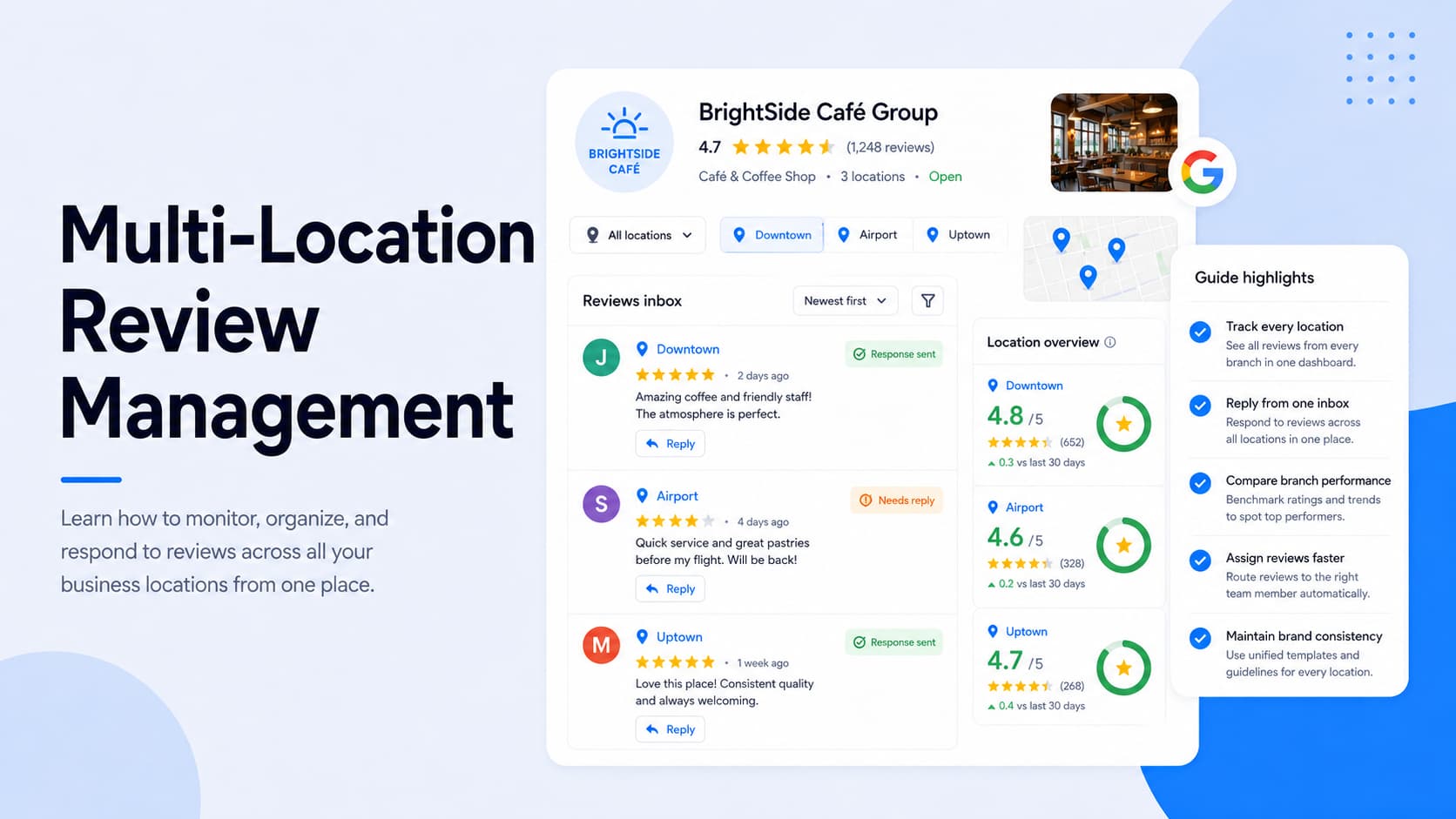
LocalImpact’s white label reputation management software checks all five boxes, with custom branding on your own domain, a single dashboard for managing every client and location, automated SMS and email review requests, AI-powered responses, and competitor comparison reports built in.
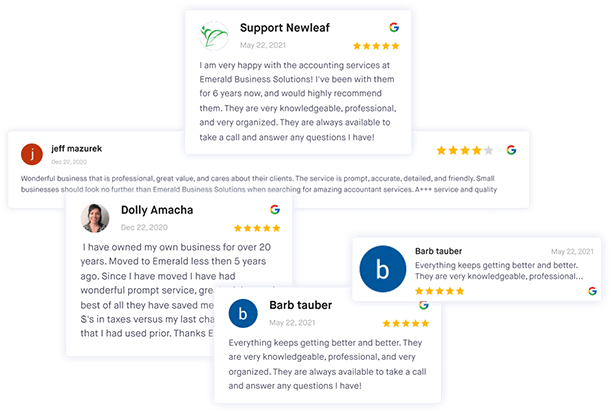
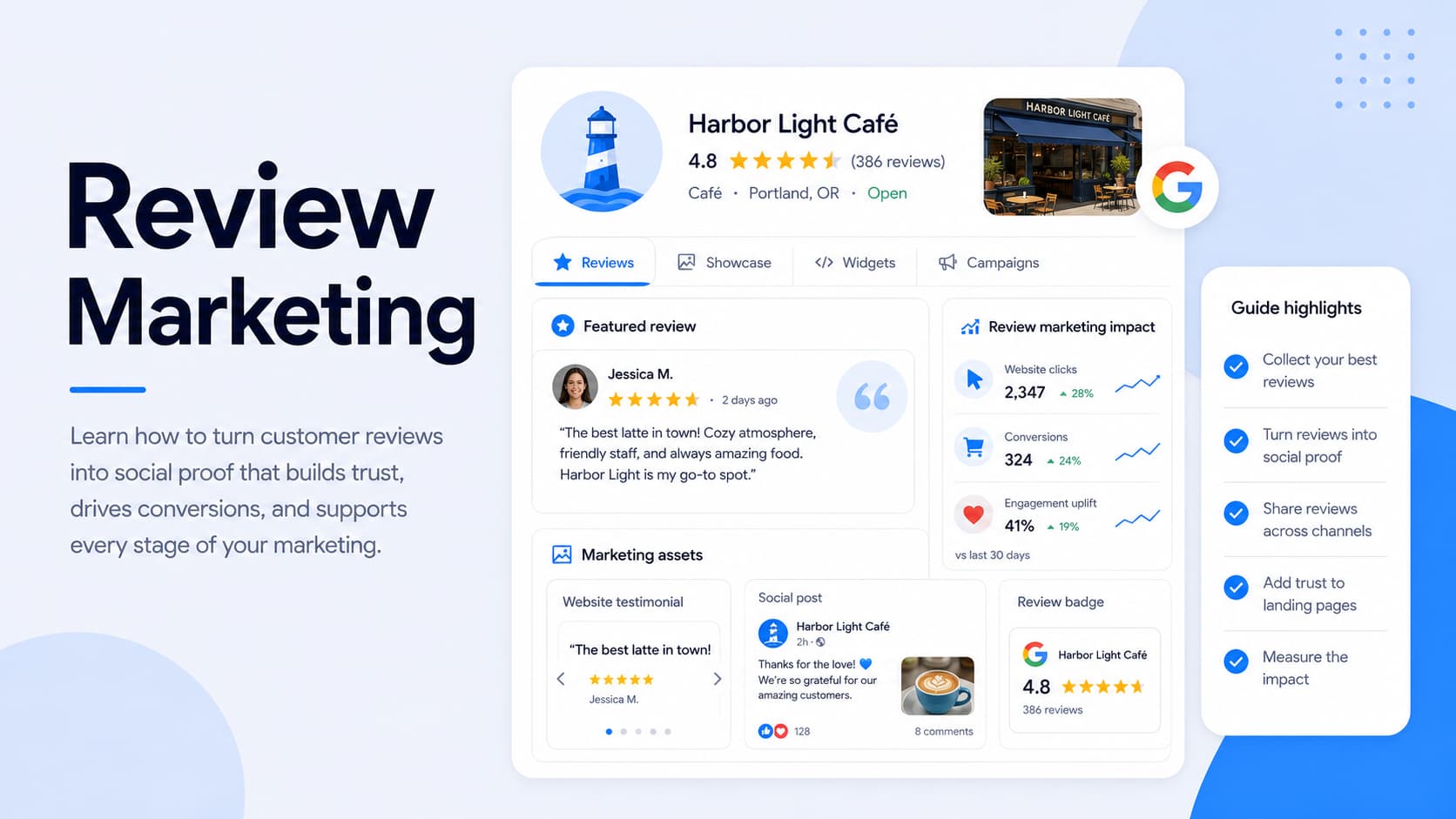
Offer reputation management under your own brand
Use our white label reputation management solution to help clients collect reviews, monitor feedback, and build trust in one place.
Step 3: Price and package the service
Charge per location. It's the simplest model for clients to understand, and it means your retainers grow automatically when a client opens a second office or you sign a multi-location brand.
Here's how to structure it:
- Set a per-location base retainer. Cover monitoring, automated review requests, responses, and the monthly report. Your platform cost per location is fixed, so everything above it and your oversight hours is margin.
- Split tiers by service depth. A basic tier might cover monitoring and review generation, a standard tier adds managed responses, and a premium tier adds competitor benchmarking and quarterly strategy calls. Tiering by review volume or platform count also works if your clients vary widely.
- Decide how it bundles. Folding the service into an existing SEO or PPC retainer at a discount lifts the whole engagement's value and makes the retainer harder to cancel. Standalone pricing works better for net-new clients you're acquiring through the reputation offer itself.
Keep the pricing page simple either way. Clients are buying an outcome, so lead with review growth and time saved rather than a feature list.
Step 4: Set up your delivery workflow
The service runs on software, and it still needs an owner. Assign each client to an account manager and document the workflow so delivery stays consistent as you grow.
Your workflow needs three pieces:
- An onboarding checklist. Connect the client's review platforms, configure the SMS and email request sequences, set response rules and approval flows, and schedule the first report. A documented checklist gets new clients live in days and lets you hand onboarding off to anyone on the team.
- A weekly oversight rhythm. Account managers should spend a few hours per client per month reviewing flagged reviews, approving AI-drafted responses where needed, and checking campaign performance. Everything else runs automatically.
- An escalation path for negative and fake reviews. Define what happens when a suspicious review lands: who documents it, who reports it to the platform, and who briefs the client. Only 28% of reported fake reviews get removed promptly, so your value lies in fast documentation, reporting, and offsetting the damage with fresh authentic reviews.
Put the whole workflow in a shared playbook. It's what turns the service from one person's side project into a repeatable offering.
Step 5: Sell it to existing clients first
Your current client book is the fastest path to revenue because the trust is already built. New business can come later, once you've got case studies.
Work through your roster in this order:
- Start with clients who already mention reviews. Anyone who's complained about a bad review, asked how to get more reviews, or has a visibly thin Google profile is a warm lead. For 51% of businesses, the owner personally manages reviews, so a pitch built on time savings lands with most of them.
- Open with a free reputation report. Run the client's business through your platform and present their review count, rating trends, and competitor comparison. Their own data makes the gap concrete and does most of the selling for you.
- Pitch during quarterly reviews. You've already got the meeting, the performance context, and the budget conversation. Position reputation management as the layer that protects and amplifies the results of the work you're already doing.
Aim for three to five pilot clients in the first month. They'll generate the before-and-after numbers your future sales conversations run on.
Offer reputation management under your own brand
Use our white label reputation management solution to help clients collect reviews, monitor feedback, and build trust in one place.
Step 6: Report results and expand
The first 90 days set the tone for the whole engagement. Review count growth shows up fastest, so make it the headline of every early report.
Each monthly report should cover:
- Review growth. New reviews per platform against the pre-launch baseline. This number is the clearest proof the service works.
- Rating and response trends. Average star rating over time, response rate, and average response time. These show the service's quality dimension beyond raw volume.
- Competitor benchmarks. Where the client stands against two or three named local competitors on review count and rating. Nothing motivates a renewal like a rival pulling ahead.
Use those numbers to grow each account: more locations, deeper tiers, or added services like review widgets on the client's website. And once you've got two or three strong before-and-after stories, package them as case studies to bring the service to new prospects.
Launch your reputation management service this week
The whole process comes down to six steps: scope the service, pick your platform, price it, document delivery, sell to existing clients, and report the results.
LocalImpact's white-label platform handles the delivery layer, with your branding on every screen, automated review generation, AI-powered responses, and client-ready reporting from one dashboard.
Start your 14-day free trial today and have your first client onboarded before the week's out.