
Most of your customers will look you up before they ever call. They'll check your business’s star rating, skim a few reviews, and glance at what shows up when they search your name.
In our State of Online Reviews survey, 92.5% of consumers said they'd read an online review in the past year, so this habit is close to universal.
What they find in those few minutes often decides whether they pick you or the shop down the street. The good news is that you have more control over this than it feels like.
A handful of consistent habits will shape how your business looks online and keep it that way. Here are twelve reputation management best practices worth building into your routine.
1. Claim and verify your business profiles
Before you can manage your reputation, you need to own the places where it lives.
The most common gap we see is a business that's never claimed its own Google Business Profile, which means someone searching their name finds outdated hours, a wrong phone number, or no way to leave a review at all.
Google is where this starts, since 86.2% of consumers use it to check reviews. From there, work through the profiles that carry the most weight for local search:
- Google Business Profile: This is the one that powers the map pack and the review snippet buyers see first. Claiming and filling it out is the single highest-impact move on this list.
- Facebook: Customers tag you and leave reviews here whether you're watching or not. An active page also gives people another trusted place to find your hours and contact info.
- Yelp: This one carries real weight if you're in food, retail, or home services. Even if it's not your main channel, a claimed profile lets you respond and keep your details accurate.
- Industry-specific sites: Think Zillow for real estate, Healthgrades for healthcare, or Angi for home services. These often rank high for your name and feed the review data customers in your field trust most.
Verifying each one matters as much as claiming it. Google typically sends a postcard or places a call to confirm you're the real owner, and that verification unlocks responding to reviews and updating your details.
Once you're verified, fill the profile out completely with photos, hours, services, and a link back to your site. A complete profile builds trust and gives you more room to show up in local results.
2. Monitor your reviews across every platform
Your reputation is being written across a dozen places at once, and most of it happens whether you're watching or not.
A customer rates you on Google today, vents on Facebook tomorrow, and mentions you in a local forum next week. You can't respond to feedback you never see, so the first job is simply knowing it exists.
Catching reviews early is what makes the difference. A fresh complaint is something you can still fix before it shapes anyone else's opinion, while one that sits unanswered for two weeks has already done its damage.
The same goes for praise worth amplifying and patterns worth acting on.
You don't have to watch every corner of the internet equally. Start with the sites that carry the most weight for a local business: Google, Facebook, and Yelp.
Doing this by hand is where most owners get stuck. Logging into each site on a schedule eats time you don't have, and the moment things get busy, the checking stops.
A review slips through, then another, and you only find out when a customer mentions the bad rating you never saw.
A few things worth tracking beyond star ratings:
- Mentions of your business name on social media and blogs
- Recurring themes in what people praise or criticize
- Sudden spikes in negative activity, which can signal a real problem or a coordinated attack
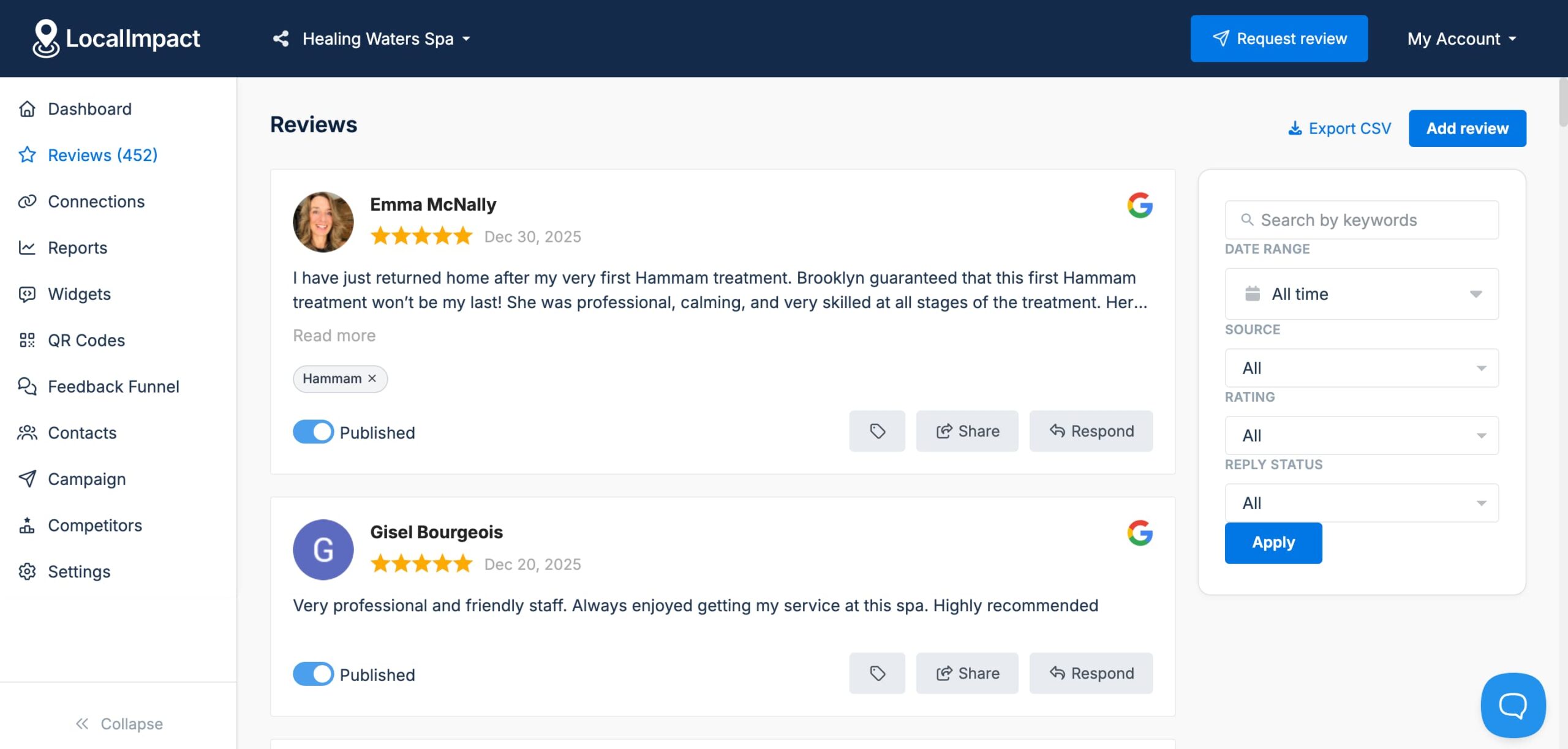
Pro tip: LocalImpact pulls reviews from across 30+ platforms into one dashboard lets you manage and respond to everything from one place.
3. Respond to every review you get
Replying to reviews isn't just good manners. Every response is a small signal to future customers that someone behind the business is paying attention, and that someone cares enough to show up in the comments.
Speed counts too, since 70% of consumers expect a reply within one to three days.
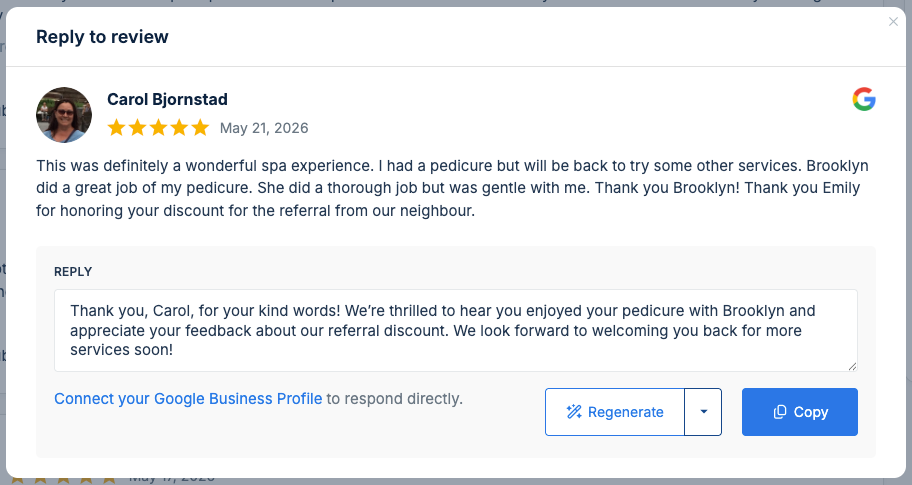
When you respond to a happy customer, keep it specific. A quick "thanks" reads as automated, so point to something they actually mentioned:
"Hi Maria, we're so glad the team got your AC running again before the weekend heat hit. Thanks for trusting us, and give us a shout anytime."
Responses to positive reviews do double duty as light SEO, since naturally working in your service and location reinforces what you do for anyone reading later. Aim to reply within a day or two while the experience is still fresh.
Justin Herring, founder of YEAH! Local, puts it simply:
"I tell my clients to reply to every single review, good or bad. It works. Their local search rankings climb, and more importantly, they get more phone calls.
People just want to know that someone's listening."
Pro tip: LocalImpact can draft a personalized review reply with AI that you tweak and publish in seconds, so volume stops being an excuse to leave reviews sitting unanswered.
4. Turn negative reviews into wins
A negative review stings, and the instinct is to defend yourself. Resist it.
Our research found that 78.3% of buyers were more likely to trust a business after seeing a thoughtful response to a negative review, so how you handle one in public says more to future customers than the review itself.
It helps to picture who's really reading. Jacob Rhodes of TrueTrac keeps his focus there:
"I'm not trying to win the reviewer back. I'm writing for the next person scrolling at 10pm, deciding whether to trust us."
Here's a simple flow that works almost every time:
- Acknowledge the issue: Open by recognizing their experience directly, without excuses. A line like "We're sorry your install ran behind schedule" shows you're actually listening.
- Apologize and stay professional: You can empathize with how they felt even if you see the situation differently. Keep the tone warm and steady, no matter how heated their review gets.
- Move it offline: Invite them to continue privately so you can solve the real problem. Share an email or phone number and offer to make it right.
- Follow through: Fix what you can, then circle back to let them know. Plenty of customers update or soften a review once you've resolved things.
A couple of hard rules: don't argue in the thread, and never get personal.
If a review is clearly fake or violates platform policy, flag it through the proper reporting tools rather than firing back. Public composure protects your reputation far better than winning an argument ever could.
Manage your online reputation with ease
Monitor, manage, and get more online reviews for your business with LocalImpact.
5. Ask for more customer reviews
The strongest defense against the occasional bad review is a steady stream of good ones.
Most happy customers are glad to leave a review when you ask, and our research found 72% of buyers have left one at some point. The trick is asking at the right moment and making it effortless.
Timing beats everything. Ask right after a clear win, like a finished job, a resolved issue, or a delivery that landed on time. That's when goodwill is highest and a kind word comes naturally.
Then remove every ounce of friction with a mix of these:
- Follow up by email or SMS: Send a short message with a direct link to your review page, so leaving feedback takes one tap.
- Put a QR code where customers are: A code at the counter, on the receipt, or on a table tent opens the review form in a single scan. You can generate a QR code with our free tool here.
- Train your team to ask in person: A quick "it'd mean a lot if you'd share that on Google" at checkout converts better than almost anything.
- Add a link to your email signature: Every message you already send becomes a gentle, standing invitation to review.
- Drop a reminder on your website and social profiles: A simple call to action catches the customers who'd happily review but never thought to.
The exact moment you ask makes a difference here. Tyler Desjardins of Pivot Creative Media trains teams to catch it:
"The strategy which proved to be the most effective with one client of mine was to train the employees to request a review immediately after a customer has given them a compliment, instead of at the end of the visit.
Most businesses ask for review during checkout. At this point, the customer is already mentally gone and the request comes out as an additional chore to him before he or she reaches the parking lot."
One compliance note worth respecting: most platforms let you ask for reviews, but they prohibit paying for them or gating out unhappy customers. Keep your requests open and honest to stay on the right side of the rules.
LocalImpact automates the whole loop, sending email and SMS review requests on a delay you set, so new reviews keep arriving without you lifting a finger after setup.
6. Show off your best reviews
Reviews work hardest when they're sitting right where someone's deciding whether to buy. Tucked away on a third-party site, a glowing review reaches only the people who go looking.
On your homepage or service page, it reassures every visitor at the exact moment they're weighing you against a competitor.
That moment carries real weight, since 43% of buyers read four to six reviews before purchasing and nearly a third read seven or more. Put your strongest ones to work in a few places:
- Your website: Add a review widget to your homepage and key service pages where buyers make decisions. This is the highest-value spot, since it catches everyone who's already considering you.
- Social media: Turn standout reviews into shareable graphics for your feed. A real customer quote stops the scroll in a way a promo post can't.
- Online ads: Drop authentic social proof into your paid campaigns. Reviews can lift click-through and conversion rates while keeping your ad spend working harder.
When you reuse a review in marketing, ask permission first and lean toward recent ones, since fresher feedback reads as more trustworthy. A review from last month carries more weight than a glowing quote from three years back.
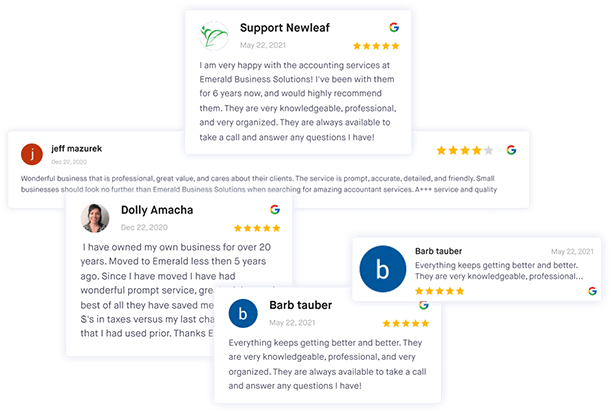
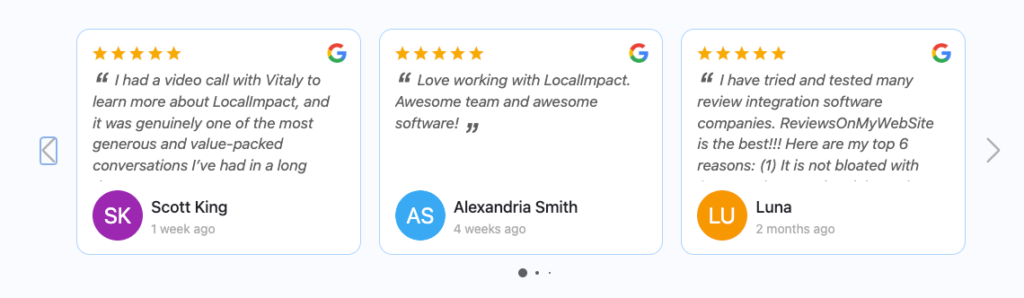
Pro tip: LocalImpact's review widget makes showcasing reviews a quick copy-and-paste job. You pick the layout, the minimum rating, and the colors, then drop a snippet of code onto your site and your best reviews display automatically.
7. Keep your brand voice consistent
When more than one person responds to reviews and messages, your business can start to sound like several different businesses. One reply is warm and casual, the next is stiff and corporate, and customers notice the seams.
A documented voice keeps everyone sounding like the same trustworthy company.
You don't need a fifty-page brand bible. A one-page guide covers the essentials and gives your team something to lean on when they're not sure how to word a tricky reply.
Spell out a few basics:
- Your tone, whether that's friendly and down-to-earth or polished and formal
- Words or phrases to avoid
- How to thank someone for a positive review
- How to acknowledge a complaint without sounding defensive
Frameworks beat rigid scripts here. Give people adaptable patterns to follow so replies stay consistent without reading like a robot pasted the same line ten times.
A handful of example responses for common situations, both good and bad, helps your team feel confident and reply faster.
Consistency carries across channels too. The voice a customer hears in an email should match what they read in a review reply and a social comment, so your business feels like one steady presence wherever they run into it.
8. Use SEO to push positive content up
Sometimes the problem isn't a review at all. It's an unflattering article, an old news story, or a competitor comparison ranking high when someone searches your name.
You usually can't delete that content, but you can outrank it by building a wall of positive material you control.
The strategy is straightforward: create and promote enough strong, brand-aligned content that the good results crowd the bad ones off the first page.
Most people never click past page one, so pushing a negative result down a few spots often solves the problem in practice.
A few moves that move the needle:
- Publish helpful blog posts that answer the questions your customers actually search
- Fully optimize your profiles and key pages with your business name and location
- Claim your business directory listings so they rank for your name
- Earn quality backlinks from reputable local and industry sites
Local SEO deserves special attention, since claiming and optimizing your Google Business Profile feeds directly into both your search visibility and your reputation. The same positive reviews you're collecting also count as trust signals that help you rank.
Think of this as a long game. Each piece of content and every fresh review adds another layer of positive presence that protects you over time.
Manage your online reputation with ease
Monitor, manage, and get more online reviews for your business with LocalImpact.
9. Watch what your competitors are doing
Your competitors' reviews are a free research report on your own market. The complaints customers leave for the shop across town point straight at gaps you can fill, and the praise shows you what your shared audience values most.
Make a habit of checking in on the top players in your area. You're looking for patterns, not one-off comments, so read enough to spot what comes up again and again.
Pay attention to a few things:
- Recurring complaints: These point straight at openings where you can do better and say so in your marketing. If customers keep griping about a rival's slow response, speed becomes your selling point.
- Common praise: This tells you what customers in your category care about most. Lean into those same strengths in how you describe your own service.
- How rivals handle negative feedback: Watch whether they reply with composure or get defensive. You'll pick up cues on what builds trust and what drives customers away.
When a competitor stumbles publicly, study the response rather than celebrating. The way they recover, or fail to, is a free lesson in what works and what backfires for a business like yours.
10. Follow the review rules for your industry
Some businesses operate under rules that turn a careless review reply into a real liability. If you're in healthcare, law, or financial services, what you can say in public is tightly limited, and a single slip can cost you trust or worse.
The big ones to know:
HIPAA
If you run a medical or dental practice, HIPAA shapes every word you put in a public reply. You can't confirm that someone is even a patient, never mind reference their visit, condition, or treatment, and that holds even when the reviewer has openly shared those details themselves.
A response like "we're glad your knee is feeling better" seems harmless, but it confirms a care relationship and can count as a disclosure.
The safe move is to keep replies generic and warm, then move anything specific to a private channel. Thank the person for the feedback, note that you take patient care seriously, and invite them to call the office directly so you can talk properly.
CRFA
The Consumer Review Fairness Act protects a customer's right to leave honest feedback.
It bars you from using contract language, like a clause in your terms or an intake form, that penalizes or silences customers for posting negative reviews. Provisions that try to do this aren't just unenforceable, they can expose you to action from the FTC.
In practice, this means you can't require a customer to stay quiet as a condition of doing business, and you can't threaten a fine or fee over an unflattering review.
You're always free to respond to a review and ask the customer to revise it once you've fixed the problem, since that's persuasion rather than a contractual gag.
Platform policies
Google, Yelp, and the rest each set their own rules on fake reviews, incentives, and conflicts of interest. Flag genuine violations through their reporting tools, but avoid mass-reporting every review you dislike, since that can backfire on your own standing.
A safe default for regulated fields: thank the person, acknowledge their concern in broad terms, and ask them to reach out directly. Train anyone who touches your reviews on these boundaries, because a compliance mistake in public can escalate fast.
11. Build a crisis management plan
Most days, reputation management is quiet and routine. Then something goes sideways, like a service outage, a viral complaint, or a mistake that draws a wave of negative attention.
Having a plan ready before that day comes is what keeps it from turning into a scramble, and our research found only a third of businesses have a documented one.
A small business needs something short and clear that answers the basic questions when the pressure's on:
- Who responds: Name the person who speaks for the business, so there's no confusion in the moment. A single clear voice keeps your message consistent.
- How fast: Set a target, like acknowledging the issue within a few hours. A quick first response buys you time to gather the facts.
- What you say first: Keep a pre-written holding message you can adapt on the fly. It lets you respond right away without scrambling for words.
- When to escalate: Spell out who gets looped in for anything serious. That way a big problem reaches the right people fast.
Speed and consistency carry you through. The goal in those first hours is to respond quickly, sound human, and stay calm while you sort out the facts.
Keep the plan somewhere your team can find it instantly, and revisit it once or twice a year. A crisis you've rehearsed, even loosely, feels manageable, and a calm, transparent response can leave your reputation stronger than before.
12. Track your results and adjust
Reputation management is a loop you keep running, and tracking a few simple numbers tells you whether your habits are paying off or need a tune-up.
A handful of metrics, checked monthly, gives you a clear read on where you stand:
- Average star rating: Watch it across your main platforms to see the big-picture trend. A slow climb means your efforts are landing, and a dip flags something worth chasing down.
- Review volume: Track how many new reviews come in each month. A steady increase tells you your review requests are doing their job.
- Response time: Measure how quickly you're replying to new feedback. Keeping this tight confirms you're staying on top of every review as it lands.
- Recurring themes: Read for the patterns in what people praise or complain about. This turns your reviews into a free focus group pointing at exactly what to improve.
Star rating and review volume are the two metrics business owners lean on most, and they're a fine place to start.
Recurring themes are worth the closest attention, though, since they're easy to overlook one review at a time.
When the same comment surfaces over and over, it's pointing at something in your operation worth addressing, whether that's wait times, communication, or a product issue.
Use what you learn. If reviews keep mentioning slow scheduling, that's a cue to rethink how you book appointments. If a particular service draws consistent praise, lean into it in your marketing.
Set a recurring time each month to review the numbers and decide on one or two adjustments. Small, steady corrections compound, and over a year they add up to a reputation that keeps getting stronger.
Where to start
Twelve practices is a lot to take on at once, and you don't have to. Each one stands on its own, so picking a single place to begin and getting consistent with it beats half-implementing all of them.
If you're starting from scratch, claim your profiles and turn on review monitoring first. Those two give you a complete picture of what's out there and make sure nothing new slips past you.
From there, build the habit of responding to every review, then layer in a steady way to ask for new ones.