
Every business is bound to get a negative review from time to time. What separates successful businesses from those that struggle is the way they respond when something goes wrong.
We asked 16 successful founders, business operators, and marketers on their top tips for responding to negative reviews. Here’s what they said.
1. Write your response with future customers in mind
When your business gets a negative review, it’s easy to focus on the reviewer and their specific situation. But you need to keep in mind that potential customers will be reading your response.
Don’t try to win the argument or correct every little detail. You want to show how your business behaves under pressure and leave a good impression for future customers.
Geremy Yamamoto, founder of Eazy House Sale, puts it plainly:
“Forget about the reviewer and write for your future customers. Thousands of leads are going to read your response and watch how you handle a confrontation.”
Jacob Rhodes of TrueTrac reinforces this perspective:
“I’m not trying to win the reviewer back. I’m writing for the next person scrolling at 10pm, deciding whether to trust us.”
Need more proof? 78% of consumers state that seeing a thoughtful response to a negative review made them more likely to trust a business.
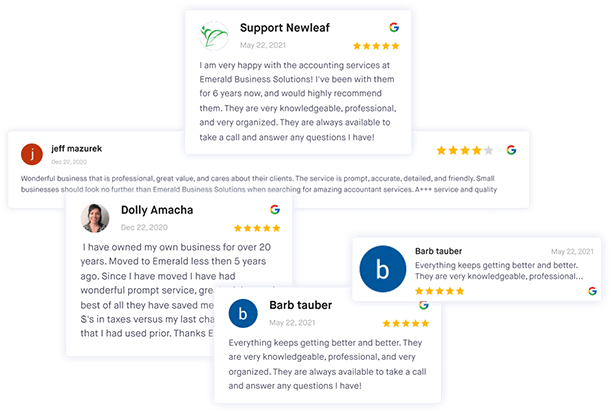
Manage online reviews with ease
Monitor, manage, and get more online reviews for your business with LocalImpact.
2. Pause before responding so you don’t sound defensive or robotic
While you might be looking to respond to a review as quickly as possible and get on with your day, you need to be careful not to cause more damage. Take a short pause before writing your response to avoid saying something you’ll regret later.
You want your response to sound mature, measured, and professional.
Brandon Perton, owner of The Old School Game Vault, recommends stepping back before replying:
“Step away before you respond. That brief pause helps you break down the issue and draft a professional reply that protects your brand.”
3. Respond quickly before things spiral out of control
When it comes to negative reviews, it’s important to respond as soon as possible to prevent the customer from becoming even more frustrated and damaging your online reputation even further.
Jonathan Palley, CEO of QR Codes Unlimited, puts it plainly:
“Speed is essential. If a negative review goes viral before you get a chance to address its complaints, you’ve already lost control of the narrative and your job will shift to much more difficult damage control.
Make sure you’re using Google Alerts and other tools to monitor your mentions, and treat these reviews with the urgency they deserve.”
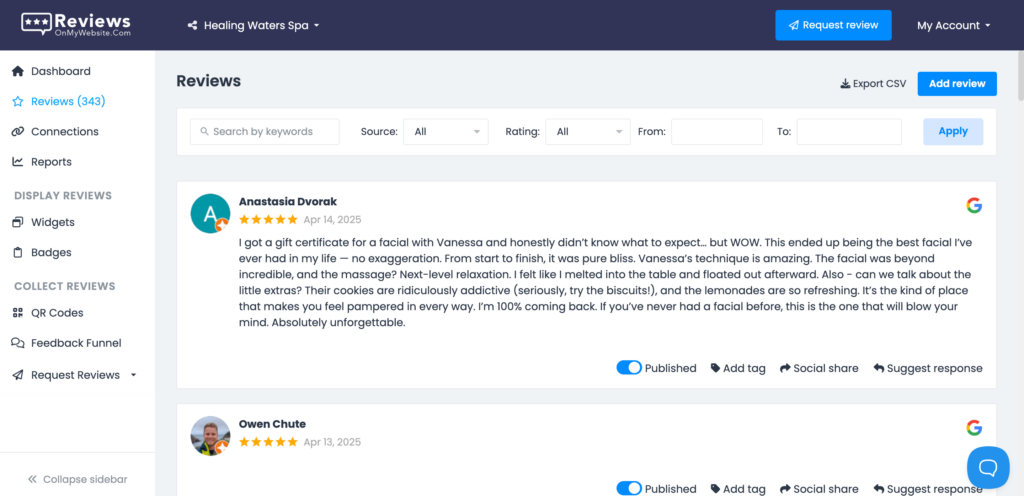
You can use LocalImpact to monitor the web for reviews of your business. It will notify you about new reviews so that you can react as quickly as possible.
There’s also the option to read and respond to all the reviews from LocalImpact’s review feed.
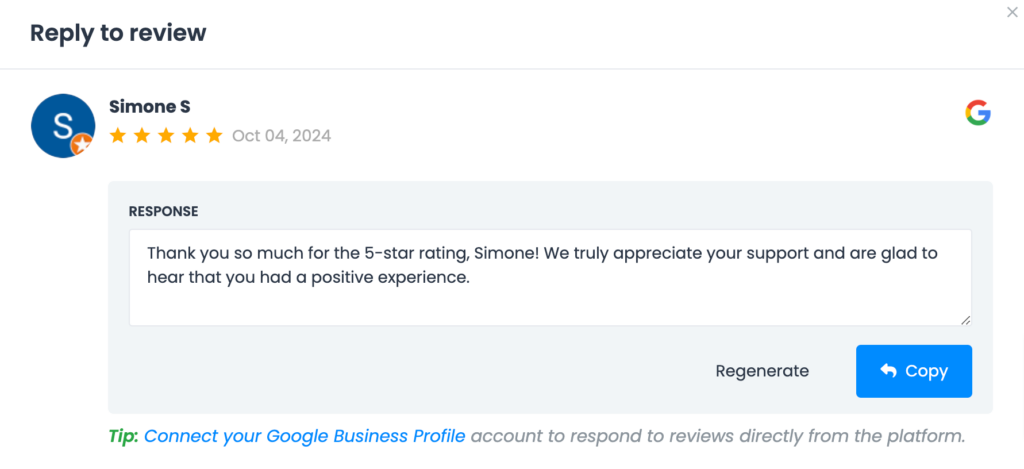
You can even use the AI-powered response feature to generate a personalized reply in seconds.
4. Acknowledge their frustation first (before explaining anything)
Customers who leave negative reviews are often frustrated, disappointed, or even angry. Before anything else, you should acknowledge what they’re feeling.
Don’t try to minimize their bad experience. Show that you’re seeing their perspective.
Arsh Sanwarwala, founder of ThrillX, explains why this matters:
“Start by naming the emotion, not defending the problem. People aren’t judging your systems. They’re judging your humanity.”
5. Reference specific details to prove you actually remember
Using generic, templated responses can hurt trust and frustrate the reviewer even further.
Try to reference a specific detail from the customer interaction or the review itself in your response. This will show that you actually remember the customer and know what they’re talking about.
Len Berkowitz, who runs a men’s health clinic, makes this a rule:
“I always mention something specific from their review. It proves you’re not copy-pasting corporate garbage.”
Karl Threadgold, Managing Director of Threadgold Consulting, agrees:
“We always mention the specific project a client struggled with. That personal touch goes a long way.”
6. Take accountability without defending or explaining yourself
Avoid shifting blame and making excuses. This will only make your business seem less credible.
It’s always best to take accountability and acknowledge your mistake.
Jeff Tilley, founder of Muncly, sums it up:
“If you failed, you failed. Own it. A clear, honest reply builds more trust than a page of perfect five-star reviews.”
Nikita Sherbina, CEO of AIScreen, adds:
“People want to know what went wrong and what you’ve done to fix it. Defensiveness weakens trust.”
7. Explain exactly what you fixed (and how you’ll prevent it next time)
When it comes to reassuring potential customers that might be reading your response, providing an apology won’t do much by itself.
You need to explain what you fixed and how you’re going to make sure the same mistake doesn’t happen again.
Keith Sant of Kind House Buyers emphasizes prevention:
“Describe precisely how you will prevent the issue from occurring in the future.”
Bell Chen, founder of Superdirector, avoids vague promises entirely:
“People hate hearing ‘we’ll look into it.’ They want to know what you’re actually doing.”
8. Move the resolution offline without looking like you’re avoiding the issue
In most cases, you’ll want to take the conversation offline to resolve the issue. But simply asking the reviewer to email or call you without providing any context can seem like you’re trying to hide something.
You need to apologize and show accountability first, and then invite them to discuss the matter privately.
Daniel Kroytor, CEO of TailoredPay, explains the sequencing:
“Be helpful publicly, say what you’ve done, and only then offer a call or email.”
Amanda New, founder of Cash For Houses Girl, adds:
“Including a direct name and number shows you want resolution, not a public spat.”
9. Follow up and publicly close the loop once the issue is resolved
A lot of businesses make the mistake of responding to the review once and then never coming back with an update.
Internally, that might feel enough, but potential customers will notice that there wasn’t a visible follow-through.
Make sure to update your original response after resolving the issue.
Lawrence Irby of Bay Area House Buyer describes the impact:
“People trust you more when they see you actually fixed it.”
10. Thank reviewers for the feedback (even when it’s uncomfortable)
Thanking someone for a negative review can seem counterintuitive, but it’s a way to reframe the interaction and lower the reviewer’s defenses immediately.
And when it’s done sincerely, it shows confidence and openness.
Zubair Ahmed, owner of BowPurr, noticed an immediate shift:
“Saying thanks for the bad review changed the whole tone.”
Hendrika Ebregt of Survey Merchant saw longer-term benefits:
“Some of my biggest critics became regular customers.”
Use Negative Reviews to Your Advantage
Getting a negative review isn’t the end of the world. But, it’s crucial that you respond to it properly.
Use the tips outlined above to make sure a negative review doesn’t harm your online reputation and instead shows your business as credible and responsible.