How much do online reviews really influence what people buy? This roundup of online review statistics covers how consumers read reviews, what star ratings they expect, how businesses manage their reputation, and how widespread fake reviews have become.
92% of consumers have read an online review in the past year
Reading reviews has become a near-universal habit. 92% of consumers say they've read an online review in the past 12 months.
If your business has few reviews, most potential customers will notice before they ever contact you. Generating fresh reviews consistently needs to be a core part of your marketing routine.
More statistics on how consumers engage with reviews:
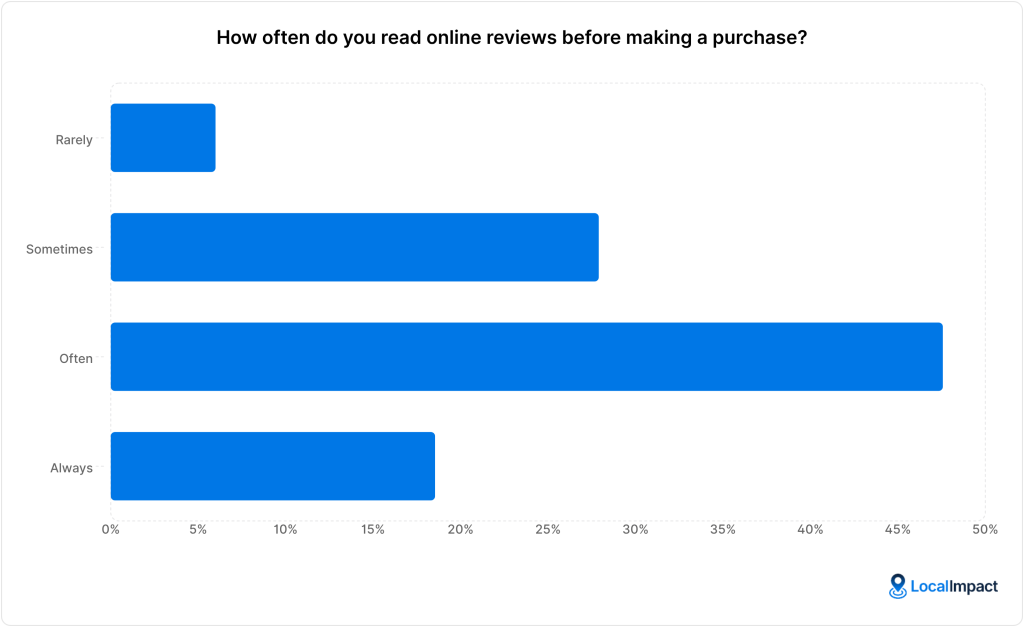
- 1 in 5 consumers always check reviews before making a purchase. Another 47% say they check reviews often. Combined, two thirds of buyers treat reviews as a standard step in the buying process.
- 72% of consumers have left an online review for a business. Most people are willing to write reviews when asked. A well-timed request, like right after checkout or a completed service, can noticeably boost your review count.
86% of consumers use Google to look up reviews
Google is by far the most popular platform for checking reviews, with 86% of consumers using it to research businesses. An optimized Google Business Profile should be your first priority.
At the same time, consumers spread their research across multiple platforms, so it pays to keep an eye on every site where your business gets reviewed.
Here's how the other platforms stack up:
- Yelp is the second most popular review platform at 34%. Facebook (28%) and Trustpilot (15%) round out the top four. Consumers also mention using Amazon, Reddit, and YouTube to look up reviews.
- 55% of businesses monitor only 2 to 3 platforms for reviews. Just 22% keep track of 4 to 5 review sites. Reviews posted on unmonitored platforms can sit unanswered for weeks and damage your reputation.
78% of consumers won't consider a business rated below 4 stars
Your star rating acts as a filter before anyone reads a single review. More than 78% of consumers rule out businesses rated below 4 stars, and 27% only buy from businesses rated 4.5 or higher.
To stay above the 4-star threshold, address negative feedback quickly and keep a steady flow of new positive reviews coming in to balance out the occasional bad one.
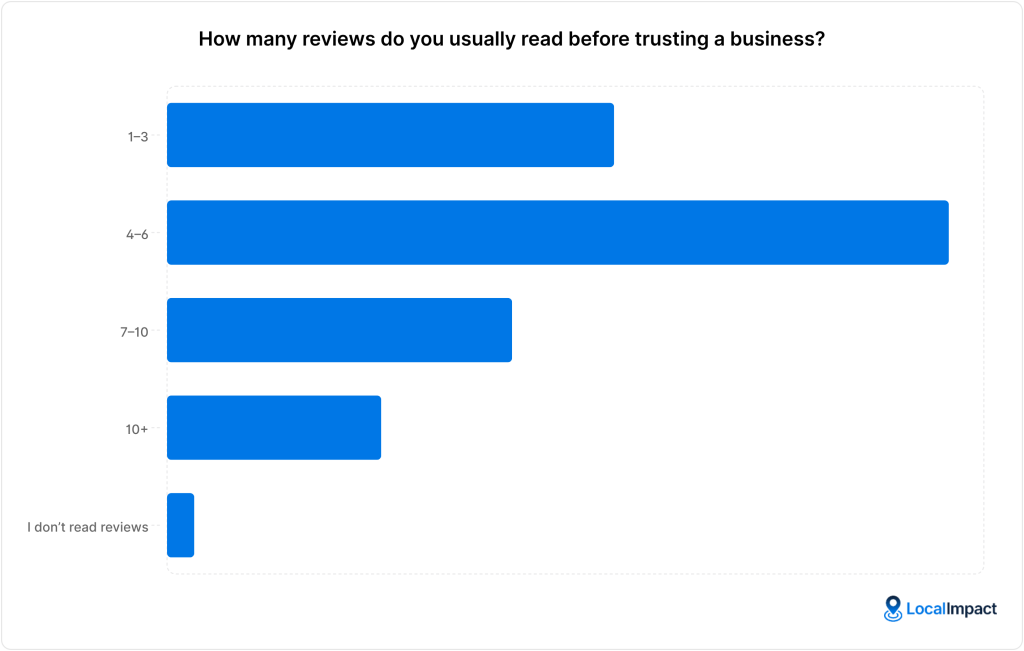
Consumers also do more homework than you might expect: 43% of consumers read 4 to 6 reviews before trusting a business. Nearly a third read 7 or more. A couple of glowing reviews won't carry the decision on their own, so aim for both volume and recency.
88% of consumers have avoided a business because of negative reviews
Negative reviews have real-world consequences. 88% of consumers say they've avoided a business after reading negative reviews about it.
The tricky part is that you'll rarely see this happening. Lost customers simply move on to a competitor without telling you why, which makes proactive review monitoring essential.
Set up alerts for new reviews so you can respond to negative feedback before it starts influencing potential customers.
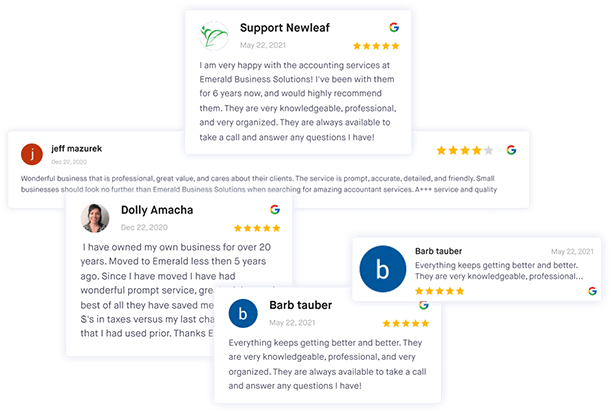
Get more Google reviews for your business
Generate more Google reviews for your business with LocalImpact's automated tools.
78% of consumers trust a business more after seeing a thoughtful response to a negative review
A negative review is recoverable. 78% of buyers say a thoughtful response to a negative review made them more likely to trust a business.
The keys are professionalism, empathy, and accountability. Acknowledge the issue, apologize where appropriate, and offer to make things right.
Speed matters just as much as tone:
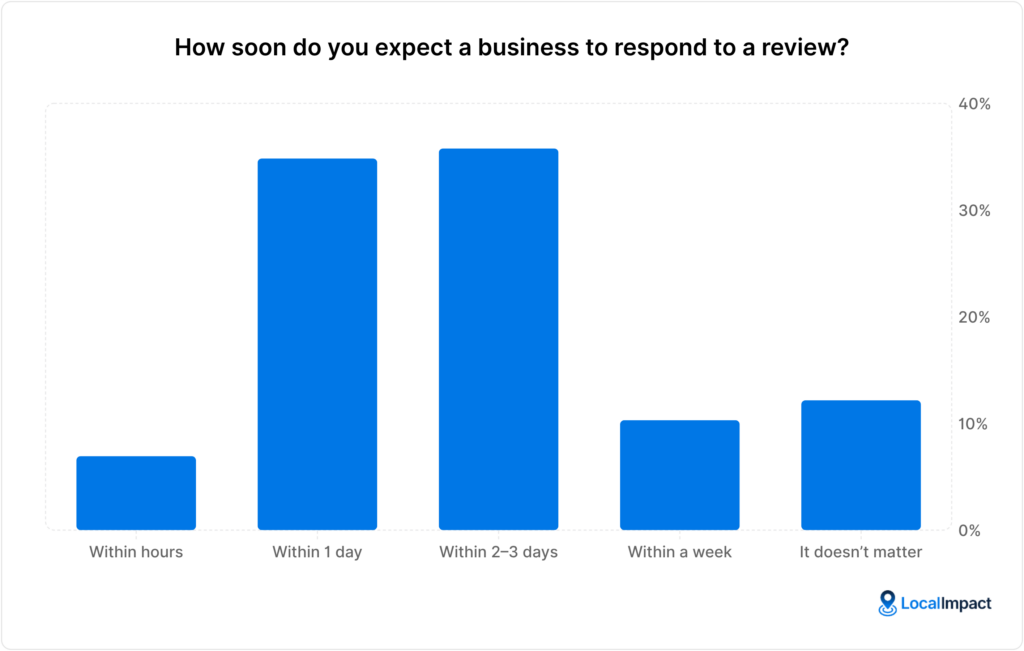
- 70% of consumers expect a response within 1 to 3 days. Slow replies signal indifference to both the reviewer and everyone reading along. Aim to respond within 24 hours whenever possible.
- 45% of businesses respond to reviews within 1 to 2 days. Another 34% respond within a few hours. Meanwhile, 4% of businesses never reply to reviews at all.
- 60% of businesses respond to every review they get. Another 20% only respond to negative reviews. Replying to positive reviews too helps reinforce loyalty and encourage repeat business.
65% of consumers leave reviews because of a great customer experience
Unhappy customers get a lot of attention, but positive experiences drive most reviews. 65% of consumers say a great customer experience is their main motivation for writing a review.
Deliver consistently good experiences and make it easy to leave feedback, and the reviews will follow.
Timing plays a big role in whether that review actually gets written:
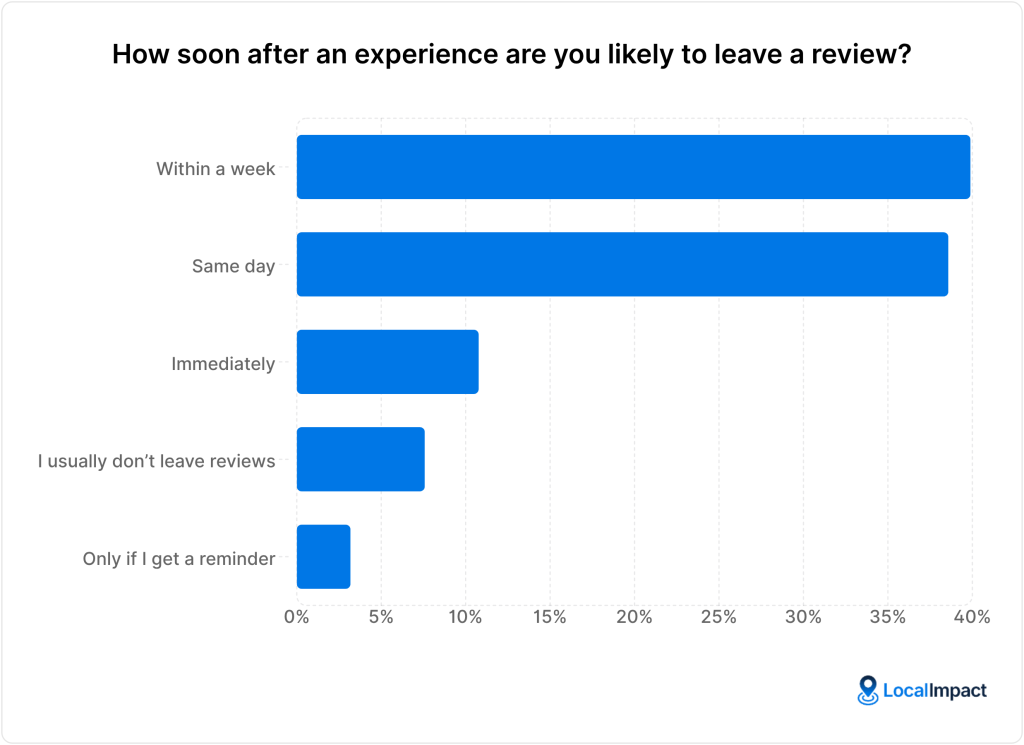
- Over a third of reviews are written on the day of purchase. Most of the rest come within a week. Send your review request the same day as the transaction, or within a few days at the latest.
- 52% of businesses say customers forgetting is their biggest obstacle to getting reviews. This beats every other challenge, including technical limitations and staff forgetting to ask. Automated email and SMS follow-ups solve this problem directly.
62% of businesses actively and consistently ask for reviews
Asking for reviews has become standard practice. 62% of businesses request reviews consistently, and another 27% do it occasionally.
If you're in the small minority that rarely asks, you're competing against businesses with much larger and fresher review profiles.
Here's how businesses are asking:
- 69% of businesses request reviews via email. Other popular methods include SMS, printed cards or receipts, and QR codes. Combining several channels helps you reach customers who ignore email.
- 23% of businesses use automated software to request reviews. Automation ensures every customer gets asked without relying on staff to remember. It also lets you time requests for the same day as the purchase, when customers are most likely to follow through.
72% of local businesses received a fake review in the past 12 months
Fake reviews have become a near-universal problem. 72% of local business owners received at least one fake review in the past year, and 25% received six or more.
Many owners believe the fakery is deliberate. The data paints a picture of reviews being weaponized in both directions, against businesses and in favor of their competitors.
The numbers behind the problem:
- 79% of owners believe they've been targeted by a coordinated fake review attack. 42% answered "yes, definitely" and another 37% said "yes, I suspect so." A coordinated attack means multiple fake negative reviews posted in a short period.
- 70% of owners suspect competitors of using fake positive reviews. Fake reviews cut both ways, inflating rivals' ratings while dragging yours down. Documenting suspicious patterns gives you a stronger case when reporting.
- Only 28% of reported fake reviews get removed promptly. The damage from a fake review is immediate, while the remedy is slow. While a report sits in review, the fake review keeps influencing potential customers.
- 52% of affected owners report damage to their star rating. 33% report lost potential customers and 28% report reduced revenue. Another 24% say fake reviews have caused staff stress or morale issues.
78% of businesses use software to manage online reviews
Manual review management is fading fast. 78% of businesses use tools or software to manage reviews, leaving just 1 in 5 doing it by hand.
Software helps with faster responses, centralized monitoring, and automated review requests, which frees up time for actually running the business.
More statistics on how businesses handle the workload:
- 47% of businesses check their reviews daily. Another 41% check weekly, and only 4% never check at all. Daily checks make it realistic to hit the 1 to 3 day response window consumers expect.
- Only 31% of businesses use a dedicated review management platform. Most still rely on manual monitoring or general-purpose tools. Only 36% of owners feel very well-equipped to handle a sudden spike in fake negative reviews.
- 34% of businesses use AI to detect fake or spam reviews. Another 33% use AI to draft review responses. Owners treat AI as a filter for bad actors and a starting point for professional replies.
Get more Google reviews for your business
Generate more Google reviews for your business with LocalImpact's automated tools.
86% of small businesses say online reviews are important for attracting new customers
Business owners understand the stakes. 48% of small business owners call online reviews extremely important for customer acquisition, and another 38% call them very important.
There's a disconnect, though. Despite rating reviews as critical, most businesses measure marketing success by other metrics entirely.
Here's where the gap shows up:
- Only 30% of businesses track reviews as a marketing success metric. Sales and revenue dominate at 64%, followed by website traffic and leads. Reviews are a leading indicator that predicts those sales, so ignoring them means optimizing too late in the funnel.
- 36% of businesses measure review strategy success by star rating improvements. Another 31% focus on total review count, with 15% tracking local SEO performance. Tracking review volume, sentiment, and conversion impact together gives you a much fuller picture.
Over to you
The data points in the same direction: reviews shape buying decisions at every stage, from the first Google search to the final purchase.
Here's what to prioritize based on the numbers:
- Keep your star rating above 4.0. Anything lower filters you out for 78% of potential customers. Address negative feedback fast and keep new positive reviews flowing.
- Respond to every review within 1 to 3 days. 70% of consumers expect it, and thoughtful responses to negative reviews build trust with 78% of readers. Templates and AI-generated drafts can speed this up considerably.
- Ask for reviews the same day as the purchase. Over a third of reviews are written on purchase day, and forgetting is the top obstacle. Automated email and SMS requests catch customers while the experience is fresh.
- Monitor more than 2 to 3 platforms. Consumers check Google, Yelp, Facebook, Trustpilot, and more. With 72% of businesses receiving fake reviews, broad monitoring also helps you catch attacks early.
LocalImpact makes all of this manageable from one place. You can monitor reviews across 36+ platforms, respond manually or with AI, and set up automated email and SMS campaigns to generate reviews on autopilot.