Many home service businesses are getting Google reviews without responding to the customers who leave them.
A homeowner looking for a plumber or an electrician can read what went well, what went wrong, and how the business handled the feedback. Your replies are part of that first impression.
To understand how businesses approach Google review management, LocalImpact examined 300 Google Business Profiles across HVAC, plumbing, and electrical services in 10 US cities. We analyzed more than 36,000 reviews from a 12-month period.
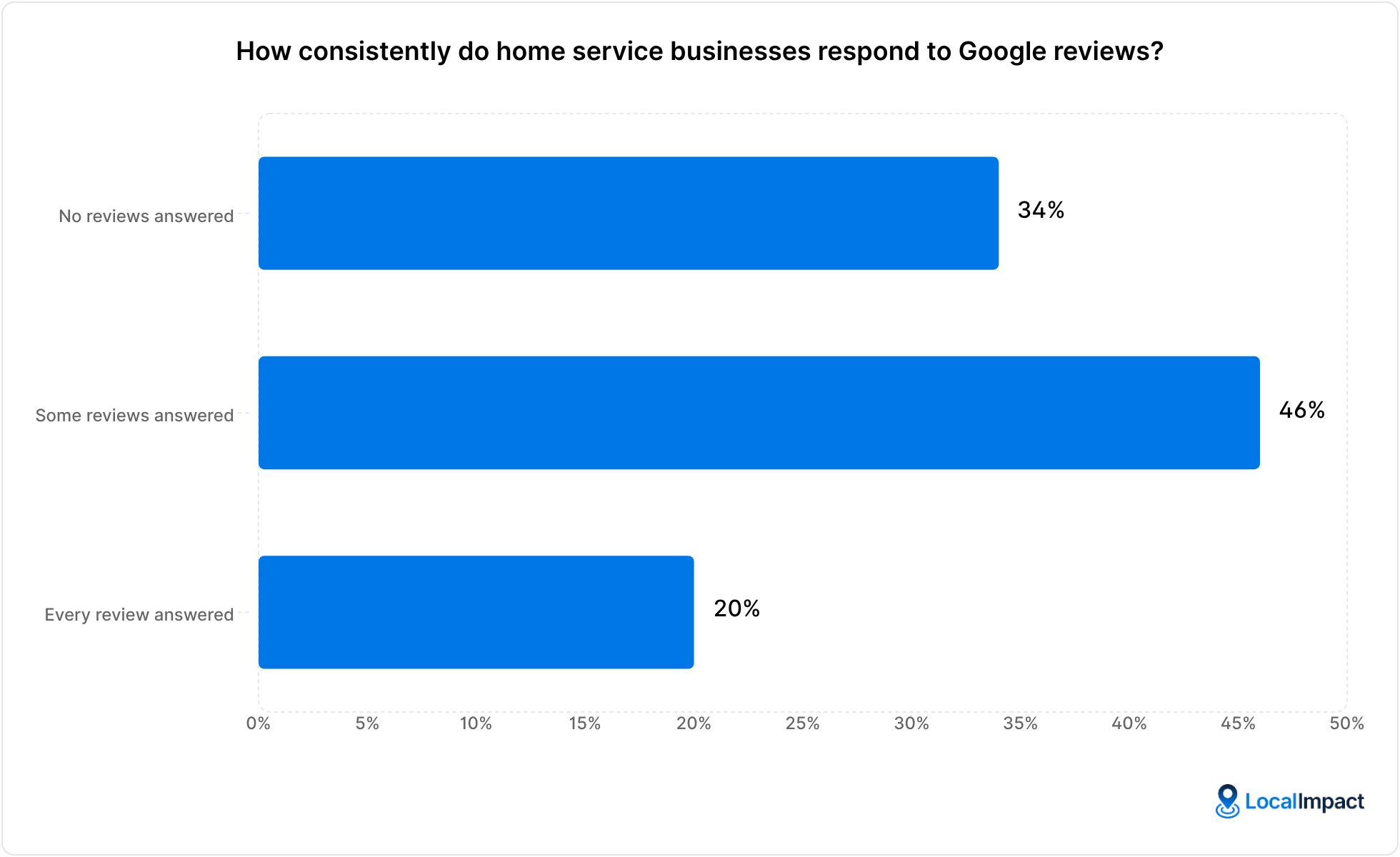
The clearest finding: one-third of the businesses with reviews during the study period had not replied to any of them.
Here’s what the findings mean for contractors and where there’s an opportunity to improve.
About this study
LocalImpact analyzed 36,438 Google reviews from a sample of 300 Google Business Profiles across 10 US cities, covering 100 profiles each for HVAC, plumbing, and electrical services.
The reviews were posted between October 1, 2025, and September 30, 2026. We checked whether each had a business reply when we collected the data on October 12, 2026.
Of the 300 profiles, 259 returned reviews during that period and were included in response-rate calculations. The other 41 returned no reviews for the period and were excluded from those calculations. Ratings without written comments were included.
The findings describe this sample, not all US contractors. We measured whether reviews had replies, not response speed or whether complaints were resolved.
Key takeaways
Among the businesses and reviews included in the response analysis:
- 34% of businesses had no replies to their reviews from the study period.
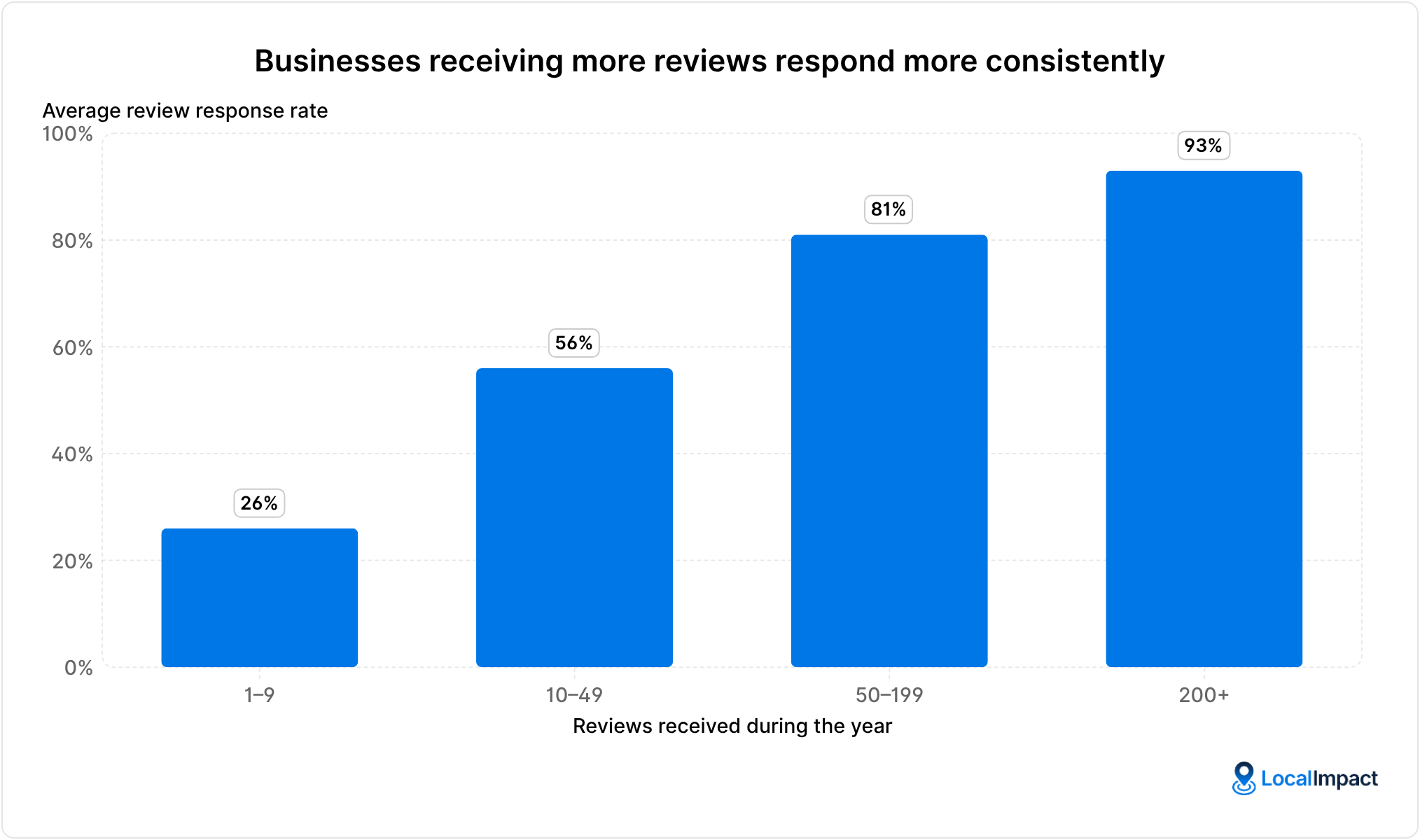
- Businesses receiving one to nine reviews during the year answered 26% on average, compared with 93% for those receiving 200 or more.
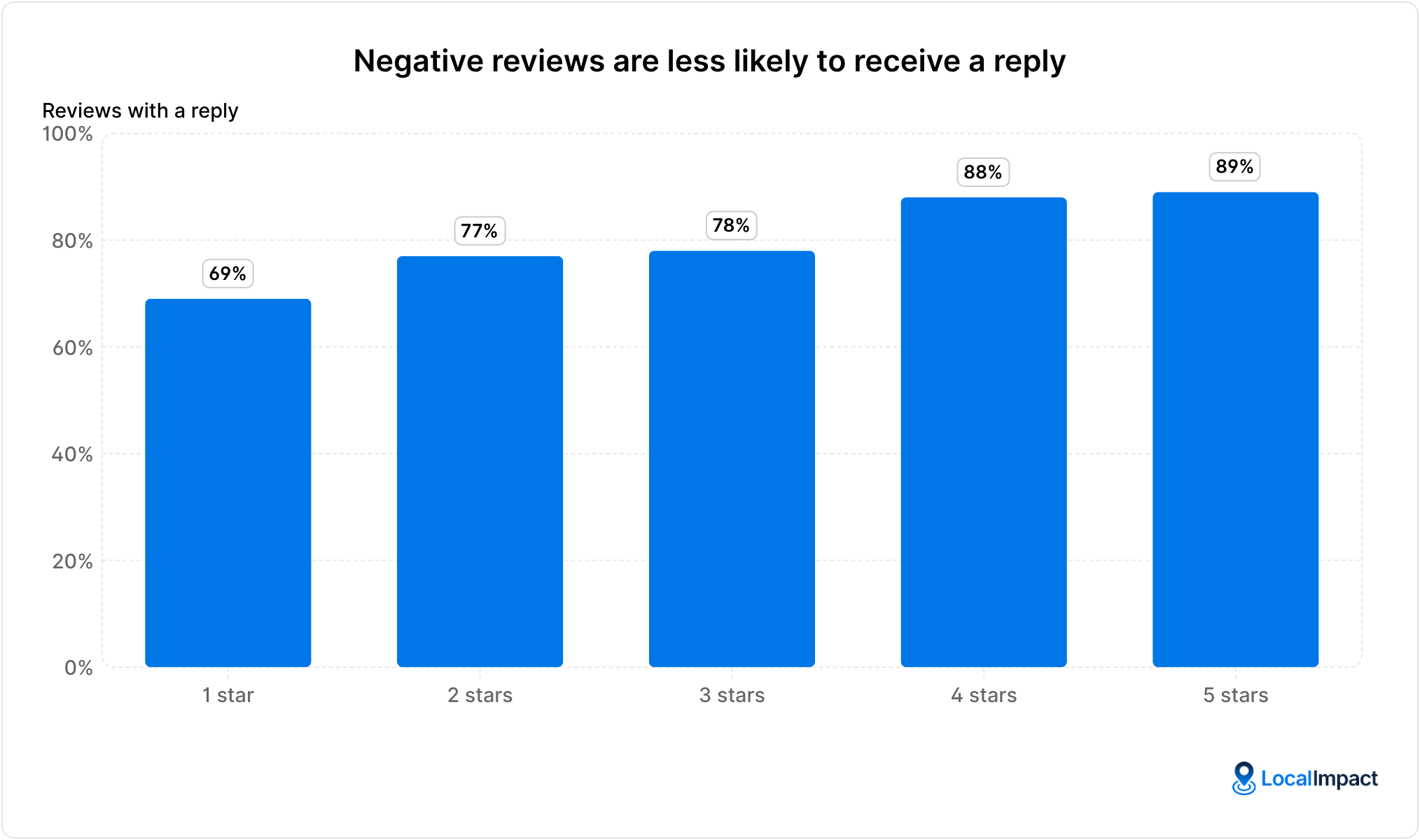
- 30% of one- and two-star reviews had no business reply when the data was collected.
One in three businesses left every review unanswered
34% of the businesses in our response analysis had not replied to any of the reviews collected for the year.
Some businesses replied to every review. Others replied occasionally. In our sample, 88 businesses with reviews had no responses at all.
An unanswered review doesn’t tell us what happened behind the scenes. The business may have spoken with the customer directly. But someone reading the review cannot see that conversation.
For a homeowner comparing contractors, a reply gives you a place to acknowledge a good experience or explain how you’re addressing a concern. Our earlier research on how consumers choose home service providers explored why reputation matters during that decision.
Start with a quick check of your own listing. Look through your recent reviews and identify which ones still need a response. If nobody on your team owns that task, assign it to someone before the backlog grows.
Businesses receiving fewer reviews were less likely to respond
Businesses that received only a few reviews during the year answered a much smaller share of them.
Those receiving between one and nine reviews replied to 26% of their reviews on average. For businesses receiving 200 or more, the average was 93%.
We didn’t measure why this difference exists. Businesses receiving more reviews may have different teams or processes. And having fewer reviews doesn’t necessarily mean a company is smaller.
The useful takeaway is that you don’t need a constant flow of feedback to justify a response routine. A review arriving once a month still deserves attention when it appears.
Set up a regular check instead of relying on someone to notice a new review by chance. If you’re also working on when to ask customers for reviews, include responding in the same process. Getting more feedback and acknowledging it should work together.
Nearly three in 10 negative reviews had no reply
30% of one- and two-star reviews had no business response when we collected the data.
That was 312 unanswered reviews out of 1,056 negative reviews. One-star feedback was also less likely to receive a reply than five-star feedback.
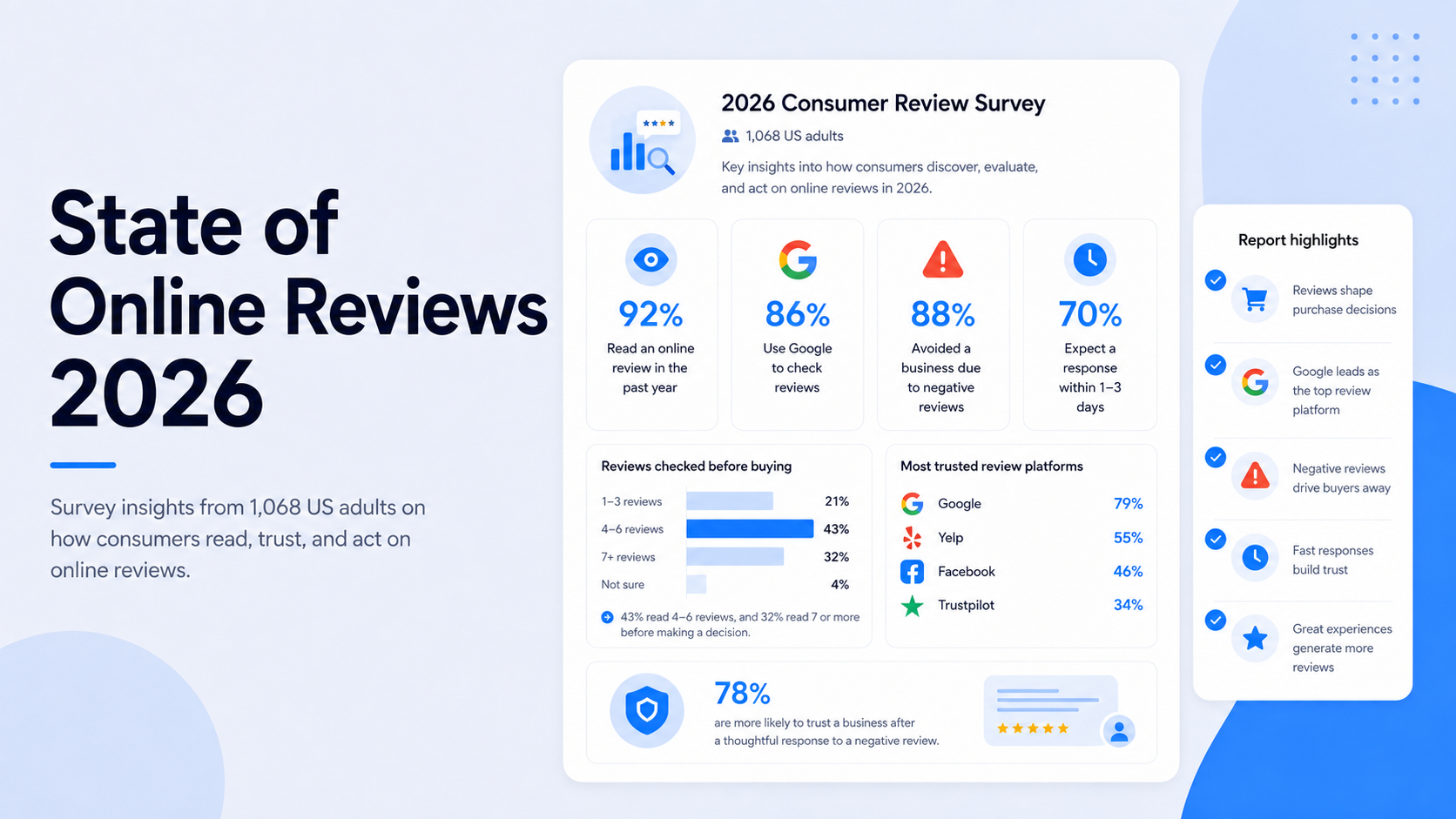
A negative review is an opportunity to show future customers how you handle a problem. In our separate consumer survey, 78% of buyers said a thoughtful response to a negative review made them more likely to trust a business.
That doesn’t mean a reply will fix every complaint. It does mean you have a public space to acknowledge the concern and offer an appropriate next step.
If a customer complains about a missed appointment, check what happened before replying. Address the scheduling concern, then give them a clear way to reach someone who can help. Avoid promising a refund or a return visit until your team has agreed to it.
Our guide to responding to negative reviews explains how to keep the conversation professional without getting drawn into an argument.
Stay on top of your Google reviews
Keep track of new reviews and respond from one place, with tools to help you draft replies faster.
Build a review routine your team can keep
A useful review routine makes it clear who checks feedback, who responds, and who follows up when a customer needs help.
You don’t need a complicated system to start. Connect the task to something your office already does, such as the morning dispatch check or the afternoon handoff. Then make sure someone covers it when the usual person is away.
These four steps turn that routine into a clear responsibility:
- Assign an owner and a backup. Choose who will check new reviews and who will cover absences. Agree on a recurring check time so the task doesn’t depend on someone remembering it between jobs.
- Work through unanswered feedback. Start with recent reviews, then review the older backlog. Read the full comment before replying, and check any service details needed to address the concern accurately.
- Give complaints a next step. If a review needs input from dispatch, billing, or a technician, pass it to the right person before making a promise. When you invite the customer to contact you, make sure that person knows about the issue and can continue the conversation.
- Check whether follow-up happened. Keep a shared note of complaints awaiting a call or further action. A public reply should lead into the work needed to help the customer, rather than replacing it.
LocalImpact’s review management software can bring monitoring and replies into a central workflow. If you use AI to draft review replies, check sensitive complaints before publishing and confirm that every promised action is accurate.
For help with the wording, our Google review response examples show how to acknowledge different kinds of feedback.
Give customer feedback a clear next step
Make review responses a routine part of your customer service process.
Check the feedback already on your listing, assign responsibility, and make sure complaints reach someone who can act on them. Keep that process consistent as new reviews arrive.
LocalImpact’s reputation management software for home service businesses helps you bring review requests, monitoring, and replies into that workflow.