Most people associate opportunity with technology. When they think about where the next decade's biggest winners will come from, they think about AI, software, or whatever's trending on social media.
This makes sense. Technology companies tend to dominate the headlines. And the stories of overnight success in tech are hard to ignore.
But there's a quieter story playing out that doesn't get nearly as much attention. And it involves businesses that most people would consider boring.
Plumbing. HVAC. Electrical. Roofing. Pest control.
These industries are entering what might be their strongest decade yet. And the forces driving this are already in motion.
Why the next decade is different
Home services have always been essential. But several trends are converging right now that make the coming decade especially favorable for these businesses.
The first is a generational shift in homeownership. Millennials are now the largest group of homebuyers, and many of them prefer to hire professionals rather than do repairs themselves.
At the same time, high mortgage rates are keeping existing homeowners in place longer, which means more maintenance, more renovations, and more demand for service providers.
The second is a labor shortage that keeps getting worse. The construction industry alone needs an estimated 439,000 new workers per year just to keep pace with demand and retirements.
Only about 3% of young adults say they want to pursue a career in the construction trades.
This imbalance gives established operators significant pricing power. And it's projected to widen over the next ten years.
The third is that institutional capital has noticed. Since 2014, private equity firms have invested over $31 billion into home services acquisitions.
The U.S. home services market is projected to reach $842 billion by the end of 2026.
PE firms are acquiring local operators, professionalizing their operations, and building regional platforms. When that kind of capital enters an industry, it's a signal that the growth trajectory is real.
And then there's the fact that this work simply can't be automated or outsourced.
You can't fix a furnace remotely. You can't outsource a plumbing repair to another country. You can't build an app that physically shows up at someone's house and solves a problem.
The work is local, physical, and essential.
AI makes these businesses stronger, not obsolete
This is where the story gets interesting.
The common assumption is that AI disrupts industries. And for a lot of knowledge work, that's true. But for home services, AI is doing something different. It's making these businesses more efficient without threatening the core service.
AI tools are already helping trades businesses handle scheduling, generate marketing content, manage customer communication, and respond to reviews faster.
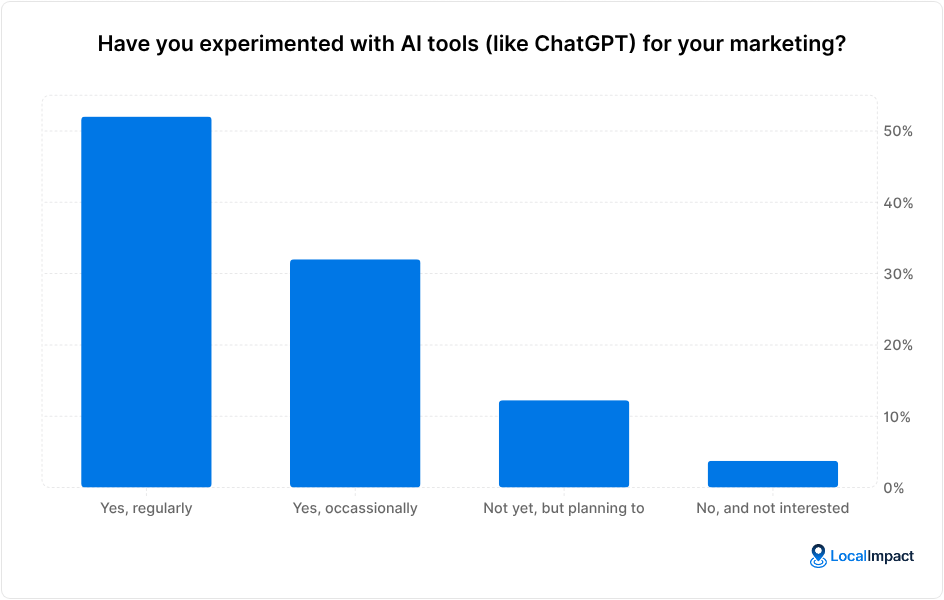
52% of small business owners now use AI tools like ChatGPT regularly. For a small HVAC company or plumbing operation, this means being able to run leaner and serve more customers without adding overhead.
The consumer side of this is just as important. 6 in 10 consumers now use AI tools when researching products and services. AI is increasingly shaping how people discover and compare businesses.
This means that visibility in AI-assisted search will matter more in the years ahead.
But here's what's worth paying attention to. When AI recommendations conflict with online reviews, 41% of consumers still trust reviews more. And 46% say they would read reviews more carefully if AI recommended a business with poor ratings.
AI can help a business get discovered, but reviews are still what closes the deal.
For trades businesses, this is significant. AI helps them operate better and get found more easily. And the trust signals that actually convert customers (reviews, ratings, responsiveness) are things these businesses can directly control.
Reputation is the real competitive advantage
In industries without household brand names or big marketing budgets, trust is everything. And in 2026, trust is largely shaped by online reviews.
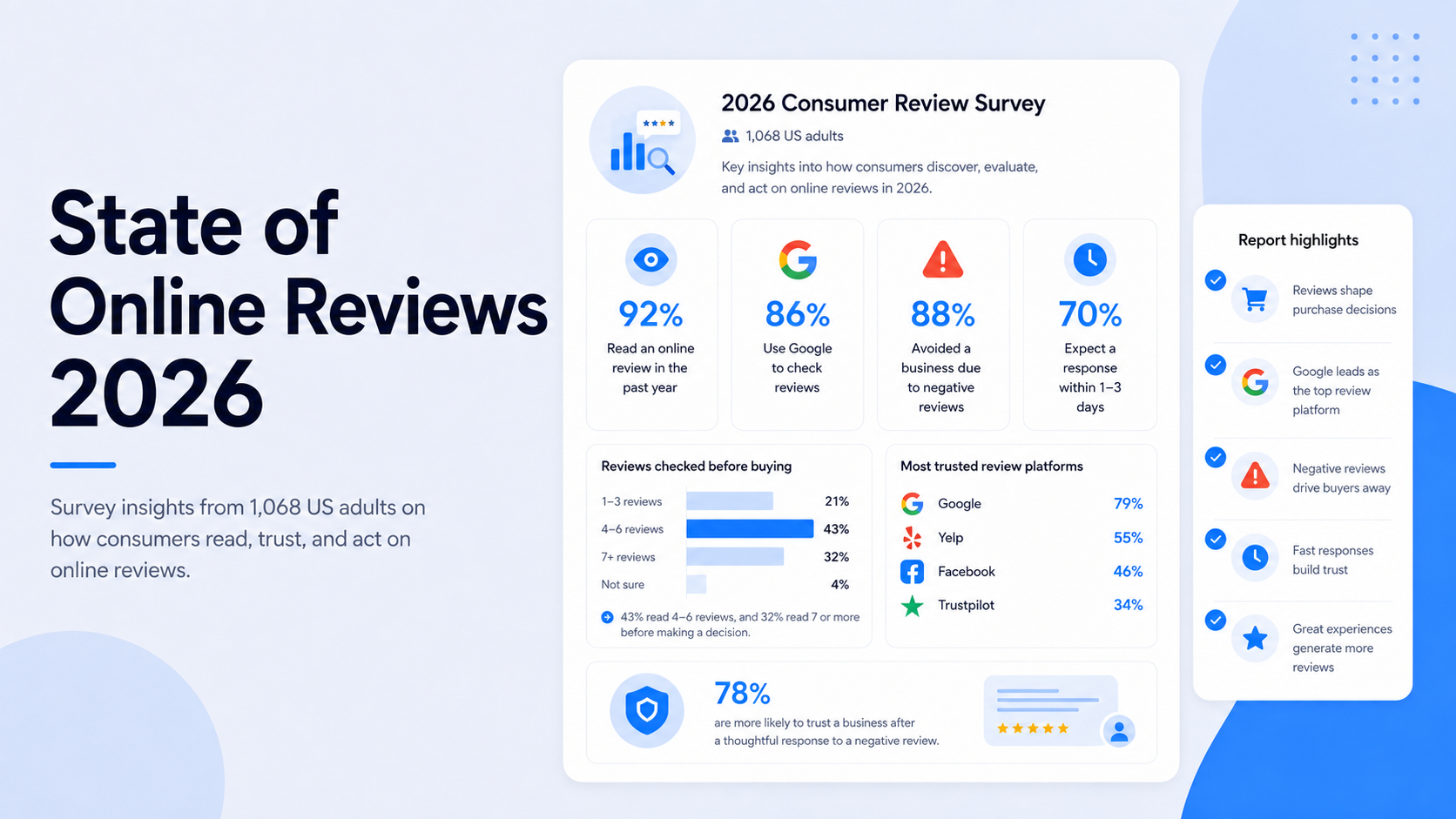
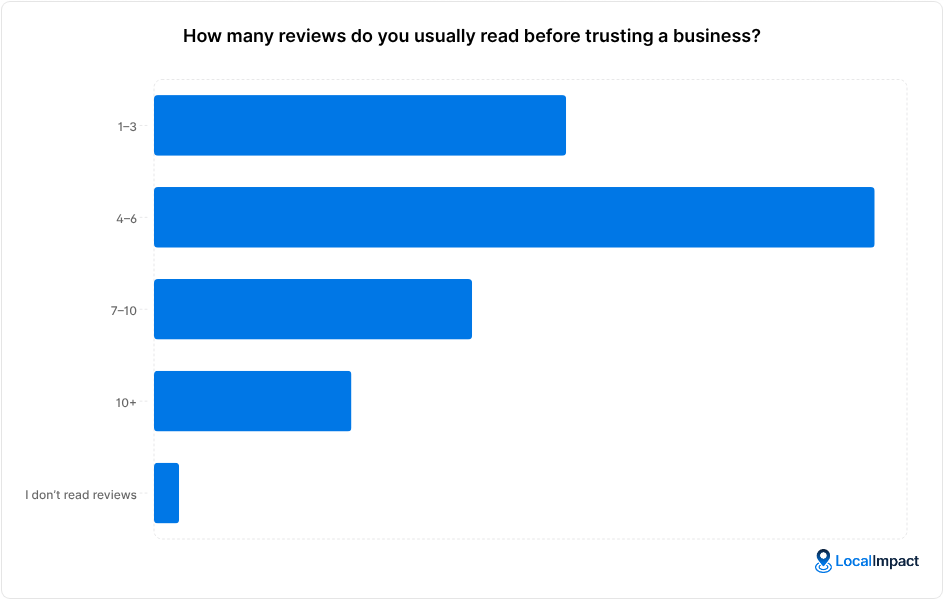
92.5% of consumers have read an online review in the past year. Most consumers read between 4 and 10 reviews before deciding to make a purchase.
And more than 78% of consumers won't even consider a business with a rating below 4 stars.
For home service providers, the bar is even higher. 51% of consumers won't consider a provider with less than a 4-star rating.
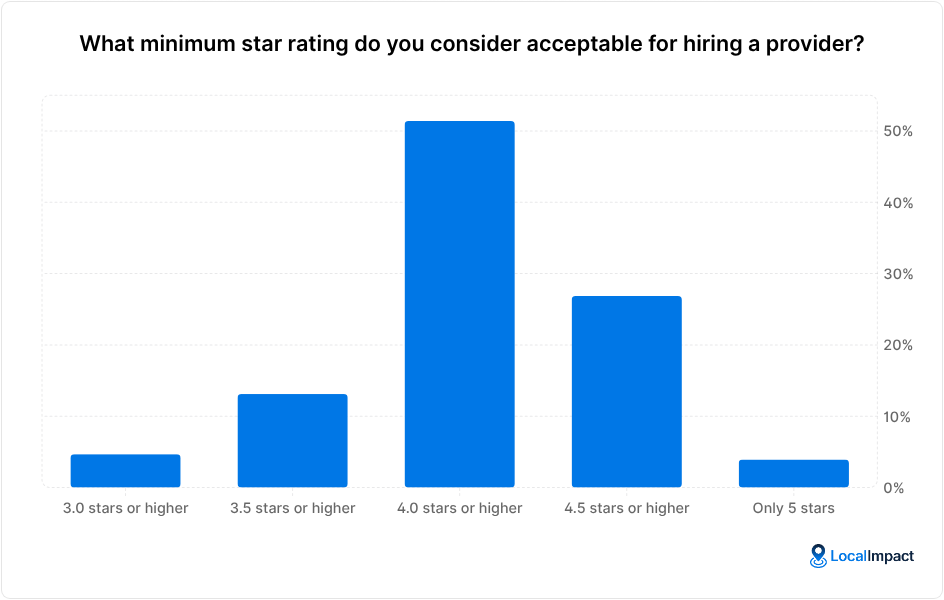
And 74% say they've chosen a more expensive provider at some point because that provider had better reviews.
This means that a strong online reputation is one of the most valuable assets a trades business can build. It's what gets you considered when a homeowner is comparing options. And it's what builds enough confidence for them to pick up the phone.
What makes reputation especially powerful in these industries is that it compounds over time.
Strong reviews bring in more inbound leads. More leads mean more jobs completed.
More completed jobs mean more opportunities to earn new reviews.
And unlike paid advertising, which stops producing results the moment you stop spending, a well-maintained review profile keeps working.
86% of small business owners say online reviews are extremely or very important for attracting new customers. Yet many still treat reputation as a secondary concern.
This also matters from an acquisition perspective.
When PE firms evaluate a home services business, they look at financials and operations. But they increasingly look at the business's online reputation as well.
A strong, actively managed review profile signals consistent service quality in a way that financial statements alone can't.
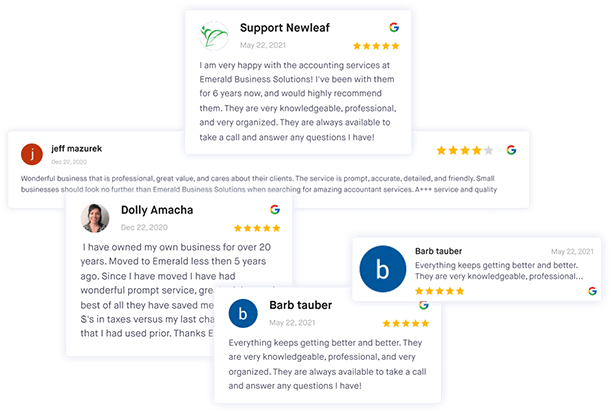
Manage online reviews with ease
Monitor, manage, and get more online reviews for your business with LocalImpact.
Rethinking where value gets created
The cultural bias toward technology and startups is understandable. Those stories are exciting and highly visible.
But the trades are entering a decade where the structural forces are all pointing in the same direction.
Demand is growing as more homeowners choose to hire professionals. The labor shortage is protecting pricing for established operators.
The work itself remains immune to automation and outsourcing. And AI is making these businesses operationally sharper without threatening their core service.
Add to that a customer acquisition model built on earned trust, and you have an industry that is becoming one of the most attractive places to build long-term value.
The local contractor with a small fleet and hundreds of five-star reviews is building a real asset. One that generates reliable cash flow, increases in value over time, and is attractive to institutional buyers paying premium multiples.
The biggest opportunities of the coming decade probably won't come from whatever's trending online. They'll come from the businesses that keep homes running.
How LocalImpact can help
LocalImpact is an online reputation management platform that allows you to monitor reviews across 30+ platforms, respond to customer feedback from one central location, and set up automated email and SMS campaigns to generate new reviews consistently.
You can also use AI-powered responses to reply to reviews faster and display your best reviews on your website using the review widget feature.