Running a local business isn't the same as running an online company or a national chain. Your customers are your neighbors. Your reputation travels through conversations at school pickup, at the coffee shop, and in local Facebook groups.
The habits you practice every day are what determine whether your business becomes a community fixture or quietly closes its doors after a couple of years.
We asked dozens of local business owners to share the one habit they believe makes the biggest difference.
Here are the habits that came up again and again.
1. Show up in your community
If you want people to choose your business over the competition, they need to know who you are first. And the best way to make that happen is to physically show up where your community gathers.
That could mean attending town council meetings, volunteering at a local fundraiser, sponsoring a youth sports team, or just being a regular at the neighborhood business mixer. The key is consistency.
You don't need to make a sales pitch at every event. You just need to be a recognizable, approachable person that people associate with your business.
Bennett Maxwell, CEO of Franchise KI, put it this way:
"When I opened my cookie shop, I was the one at the door greeting people. I got to know customers, and they got to know me.
That personal connection keeps people coming back in a way ads never could. If you run a local shop, get out there and talk to people.
It makes all the difference."
2. Audit your customer experience firsthand
Here's something you can do this week:
- Call your own business and see how the phone experience feels
- Visit your website on your phone and try to book an appointment
- Google your business name and review what comes up
- Read your last five customer reviews
You'll almost certainly find something that surprises you. Maybe a form that's confusing, a phone that rings too long, or outdated information on a listing.
Make this a monthly ritual. It takes less than an hour and it's the fastest way to catch the small problems that drive potential customers away before they ever talk to you.
Nellia Melnyk, Digital Marketing Specialist at Real FiG Advertising + Marketing, describes the habit this way:
"This means periodically calling your own company to go through the booking process, reading the latest reviews, and checking how your business appears on maps and in search.
Since problems with local businesses typically arise at the first point of contact, this habit helps you quickly notice the small details that influence a customer's decision to choose that business."
3. Respond to every review
Make it a rule: every review gets a response within 24 hours.
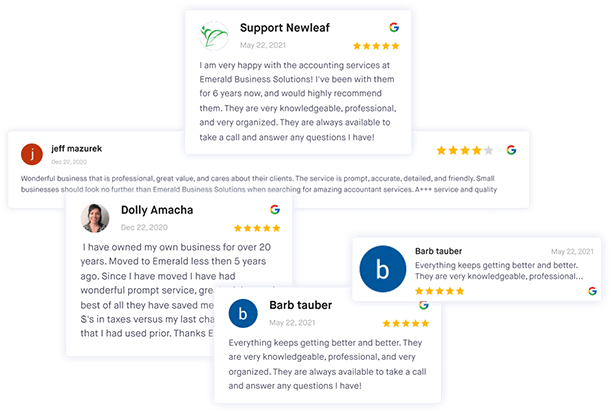
For positive reviews, a quick thank-you that mentions something specific goes a long way. For negative reviews, acknowledge the issue, keep it professional, and offer to make it right.
Don't argue, don't get defensive, and don't copy-paste the same generic response for every review.
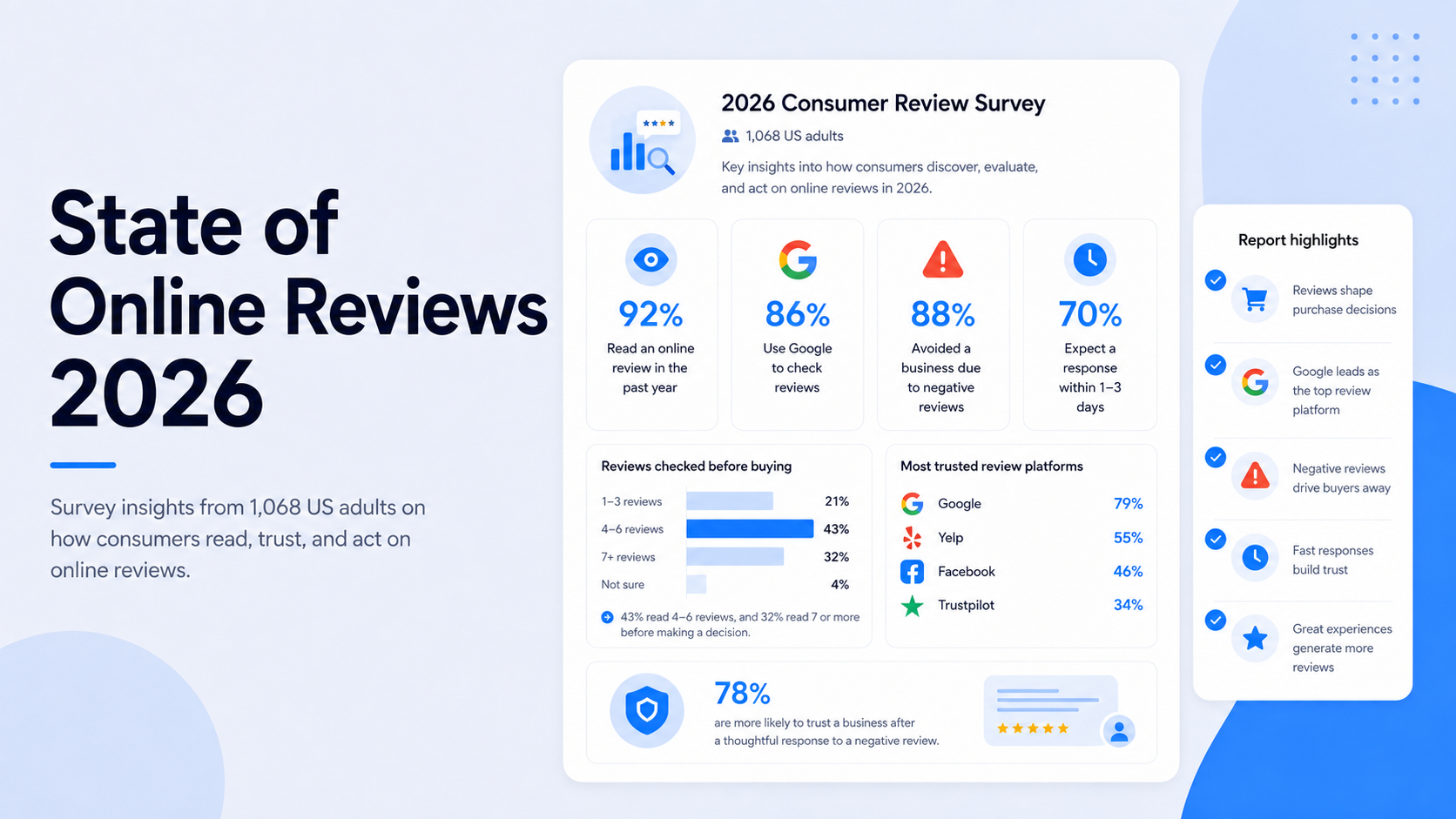
Potential customers read these exchanges carefully. Nearly 8 in 10 consumers say that seeing a thoughtful response to a negative review made them more likely to trust the business.
Ryan Hetrick, Co-founder of Epiphany Wellness, is emphatic about this:
"I respond to every single review, good, bad, and weird, within 24 hours maximum. I treat my page like I treat my real front door.
For a local business, the first impression occurs on the smartphone screen, usually well before the customer ever sees the building."
Pro tip: You can use LocalImpact to get notified when your business receives a new review across 30+ popular platforms, including Google, Facebook, and Yelp.
Alternatively, read and reply to the reviews using LocalImpact’s review feed.
There’s also the option to speed up replies by using the AI-powered review response feature.
Manage online reviews with ease
Monitor, manage, and get more online reviews for your business with LocalImpact.
4. Keep your Google Business Profile active
If you're only going to take one piece of advice from this article, let it be this: post to your Google Business Profile every week.
Share a photo from a recent job, write a quick update about a seasonal service, spotlight a team member, or just share a useful tip related to your industry. It doesn't need to be polished.
The point is to signal to Google that your business is alive and active, which directly influences whether you show up when someone nearby searches for what you offer.
Chris Kirksey, Founder, CEO, and SEO Strategist at Direction.com, shares a specific example:
"I worked with a family medicine practice in suburban Ohio that had a good website but was stuck in positions four and five on Google Maps for their core search terms. After auditing their GBP account, I discovered that they had only made two updates over the past 14 months.
So I began having them post every week, focusing on office updates, seasonal health topics, and staff spotlights, and responding to all reviews within the same day.
Within 11 weeks, their average map pack position changed from 4.6 to 1.8 for their top five search terms. No additional backlinks or changes to their site. Only consistent GBP activity."
5. Create direct customer feedback loops
Don't wait for someone to leave a review to find out how you're doing. Build feedback into your regular routine.
That could mean a quick follow-up email after a purchase, a short conversation at the register, or a simple "what could we do better?" during a service call.
The important thing is to ask specific questions (not just "how was everything?") and to actually act on what you hear.
Customers can tell the difference between a business that asks for feedback as a formality and one that genuinely changes based on what people say.
Richard Skeoch, Company Director at Hyperion Tiles, shares a concrete example:
"We added larger format tiles and completely rearranged the showroom because clients said the old layout was confusing.
People will tell you exactly what they want to buy next. You just have to ask them and then do it."
6. Follow up after every sale or job
This is one of the easiest habits to implement and one of the most commonly skipped. After you finish a job or close a sale, reach out within a day or two.
A simple message works: "Hey, just checking in to make sure everything's looking good. Let me know if anything comes up."
That's it. You're not selling anything. You're showing that you care about the outcome beyond the transaction.
This is how you turn a one-time customer into someone who comes back and sends their friends.
Joseph Melara, Chief Operating Officer at Truly Tough Contractors, is direct about it:
"The best local business owners I know all do one thing: they call customers after every job.
And it's not just about fixing problems. We found these calls catch small issues early and get people to come back.
Don't just hope customers are happy. Make those follow-up calls part of your team's daily routine."
7. Respond to leads and missed calls fast
When someone calls your business or fills out a contact form, they're usually ready to buy or book right now.
And they're probably reaching out to two or three other businesses at the same time. The one who responds first almost always wins.
Research shows that one-third of consumers consider response time their top priority when choosing a provider in an emergency, and 66% expect to hear back within a few hours.
If you can't answer every call live, set up a system: route missed calls to a notification, check voicemails on a schedule, and aim to return every call within 10 minutes during business hours.
For online inquiries, set specific times throughout the day to check and respond.
Dennis Holmes, CEO of Answer Our Phone, explains why speed is everything:
"Many local customers will not remain on hold for an extended period of time; they will typically go elsewhere if they do not receive a live person on the other end or an early reply to their call.
Small-business owners who implement a simple system for expediting the return of calls, routing messages, or providing after-hours coverage tend to capture more leads, book more work, and miss fewer opportunities."
8. Communicate proactively with clients
Don't wait for your clients to wonder what's going on. Reach out before they have to.
Send a confirmation text the day before an appointment. Give a quick update when a project hits a milestone.
If something's delayed, let them know before they have to ask.
These small touches take almost no time, and they eliminate the kind of uncertainty that makes people anxious and erodes trust. The goal is simple: your clients should never have to chase you for information.
Roger Bordley, Director and Owner of The Hangmaster, describes his approach:
"When we're scheduled to hang pictures, I always send a text the day before. Just a quick 'See you tomorrow at 2' kind of thing. It prevents any mix-ups and people feel comfortable enough to leave a key under the mat.
For any local service, that kind of communication makes all the difference."
9. Review your finances obsessively
Pick one day each week and make it your money day. Sit down with your bank statements, your recurring expenses, and your recent transactions.
Look for anything that's changed.
Did a supplier bump their prices? Is there a subscription you forgot about? Are your margins on a particular service tighter than they used to be?
You don't need fancy software for this. You just need the discipline to look at your numbers regularly enough that nothing sneaks up on you.
Brian Chasin, CFO and Co-founder of SOBA New Jersey, explains:
"The best in the business cannot wait to see their bank balance every week. They can tell you the variances from their usual supply costs, utility increases, or minor subscription fees that anyone else would just ignore.
They are constantly looking at where every one of their dollars is before the little drift becomes a crisis."
He adds a practical reason this matters so much for small operators:
"Many small businesses only operate with paper-thin margins. You just do not have the room for rounding errors.
An increase of 5% on a recurring cost may actually be a significant chunk of your actual take-home profit.
Being able to audit constantly, find these inefficiencies, and have the liquidity to make it through an off month helps."
10. Invest in staff wellbeing and empathy
If you have employees, make it a habit to check in with them regularly, and not just about work tasks.
Ask how they're doing. Find out if anything's frustrating them. Listen to their ideas for improving how things run.
Your frontline staff interact with your customers more than you do, and their energy and attitude shape how people feel about your business. A team that feels supported and heard will deliver the kind of service you can't train into someone.
And in a local business, where turnover is expensive and customers notice new faces, keeping good people around is one of the smartest investments you can make.
Tzvi Heber, CEO and Counselor at Ascendant New York, puts it clearly:
"The vibe of the staff is part of the product. If your employees are under stress and unhappy, the customers will sense it right away.
High turnover is very costly to a small business."
11. Use slow seasons to sharpen your business
Every business has quieter stretches. Maybe it's seasonal, maybe it's cyclical, but most local business owners dread those slow periods and treat them as something to survive.
The most strategic owners flip that thinking entirely. They use downtime to do the things there's never time for when things are busy: training staff, tightening up internal processes, auditing their operations, and fixing the small inefficiencies that pile up during peak season.
When the busy period hits again, their team is sharper, their systems are cleaner, and they're operating at a higher level than competitors who spent the slow months just waiting around.
Matt Stone, President of Stone Heating and Air, explains:
"Running HVAC in Southern Oregon, I watched competitors panic every spring and fall when heating and cooling demand dipped.
Instead, I used those shoulder seasons to run focused training with my Carrier-certified technicians, audit our service processes, and tighten up operations.
That discipline is a direct reason we've maintained Carrier Factory Certified Dealer status for over five years straight."
He adds:
"A well-trained team makes fewer errors, handles more calls confidently, and delivers a consistent customer experience, which means fewer emergency callbacks eating into your margins and more customers renewing maintenance agreements.
Most local owners treat downtime as lost revenue. Flip that mindset and it becomes your competitive edge, because your competitors are sitting still while you're quietly getting sharper."
Building habits that compound
None of these habits are complicated. Most of them take less than an hour a week.
The reason they work is because they stack on top of each other over time.
The owner who shows up in the community, responds to reviews, follows up after every job, and checks their numbers weekly is building a business that earns trust from every direction at once.
Start with one or two habits from this list. Get consistent with those before adding more.