
When a one-star review hits Google at 9 PM on a Saturday, every hour you don't see it is another customer reading it.
Real-time reputation tracking tools solve that timing problem by alerting you when new feedback lands across review sites so you can respond before the damage compounds.
Best real-time reputation tracking tools at a glance
| Software | Starting price | Free trial available? |
| LocalImpact | $19/month | Yes |
| Birdeye | Custom pricing | No |
| GatherUp | $99/month | Yes |
| Reviewshake | $29/month | Yes |
| Podium | Custom pricing | No |
| NiceJob | $75/month | Yes |
| ReviewTrackers | $89/location/month | No |
| Broadly | $799/month | No |
| TrueReview | $49/month | Yes |
| Grade.us | $124/month | Yes |
How we chose these tools
Our team spent 250+ hours hands-on with dozens of reputation tracking platforms, sending real review requests, testing dashboards, and putting the alerting systems through their paces. Here's what we weighed:
- Real-time alerting: How fast new reviews trigger notifications, and whether you can route alerts by location, channel, or sentiment.
- Source coverage: The number of review sites monitored, with particular attention to Google, Facebook, Yelp, and the industry-specific platforms that matter for local businesses.
- Response workflow: Whether you can reply to reviews from inside the platform itself, plus the quality of any AI-assisted response suggestions.
- Reporting and sentiment analysis: The depth of analytics around volume, ratings trends, response times, and the categorization of what customers are actually saying.
- Pricing transparency: Public pricing versus sales-call gatekeeping, and whether the entry tier is a genuine option or a stripped-down bait plan.
Ease of setup: How fast a non-technical operator can connect listings, import contacts, and start collecting reviews on day one.
1. LocalImpact
LocalImpact is a review management platform built for small businesses and the agencies that serve them, with over 30,000 businesses using it across healthcare, dental, home services, retail, automotive, legal, hospitality, and other local verticals.
The platform centralizes review collection, response, and display in one dashboard, pulling reviews from Google, Facebook, and 36+ other review platforms into a single inbox.
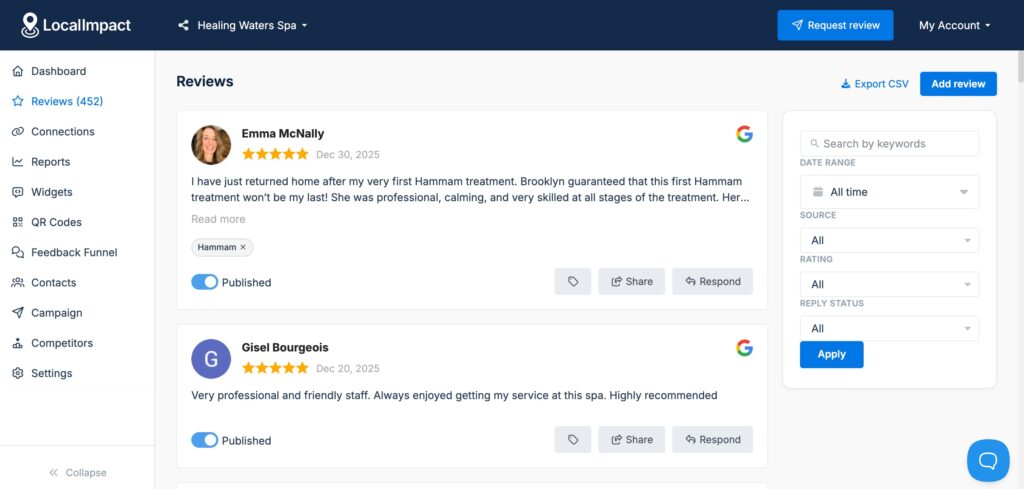
The product is structured around three jobs: collecting reviews automatically through SMS and email, managing responses with AI from one place, and showcasing reviews on your website to convert more visitors.
A white-label option lets agencies offer reputation management services under their own brand with custom logos, favicons, and domains.
Key features
- Automated review requests: Sends personalized review invitations by SMS and email with automated follow-ups for customers who don't respond the first time, so review collection runs without manual outreach.
- AI review replies: Generates personalized responses to every review based on sentiment, tone, and content, with easy editing tools to adjust tone, length, and clarity before publishing.
- QR codes and staff review links: Lets staff send review requests in real time through stand-alone links that don't require login, plus QR codes for receipts, signage, and in-store displays.
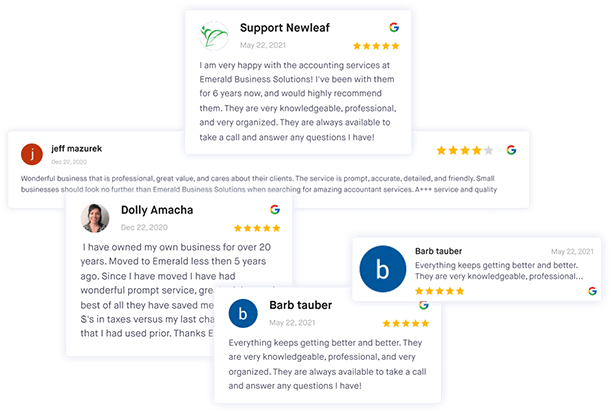
- Customizable review widgets: Displays Google and multi-platform reviews on your website with multiple layouts including list, slider, carousel, grid, masonry, flash, and rating badge, all customizable to match brand colors and fonts. Schema markup supports SEO visibility.
- Social sharing: Turns customer reviews into branded social media graphics with customizable templates, colors, and fonts so you can promote your best feedback across social channels.
- Multi-location management: Manages reviews, responses, and performance across every location from a single account with role-based access for HQ and local managers, plus side-by-side reporting to compare performance across regions.
- White-label platform: Custom logo, favicon, and domain options for agencies offering reputation management as a productized service to clients, with no LocalImpact branding visible.
- Integrations: Native connections with Zapier, HubSpot, QuickBooks, Jobber, Housecall Pro, and Mailchimp, plus 5,000+ additional apps through Zapier.
What users say
LocalImpact users consistently highlight the ease of setup and the responsiveness of the support team, especially for those running multiple business locations or agency client portfolios.
"The platform is extremely easy to set up and integrate with my existing website. The dashboard is simple to navigate, and the automation tools save me time collecting and displaying reviews.
Customer support is quick to respond and always helpful."
Pricing
LocalImpact offers a 14-day free trial with no credit card required.
Paid plans include:
- Growth ($49/month)
- Pro ($99/month)
- Agency ($149/month)
Manage your online reputation with ease
Monitor, manage, and get more online reviews for your business with LocalImpact.
2. Birdeye
Birdeye positions itself as an agentic marketing platform built specifically for multi-location complexity.
The core pitch is that AI agents handle key workflows across reviews, listings, social media, surveys, and customer messaging so corporate and local teams don't have to coordinate across half a dozen point tools.
The platform leans heavily into enterprise needs like role-based access, tiered approvals, and location-level reporting. It's HIPAA, SOC 2, and GDPR compliant and supports SSO and audit logging for larger organizations.
Key features
- Review Generation Agent: Runs A/B tests across subject lines, templates, sites, and channels to identify the best review source and message for each customer.
- Review Response Agent: Drafts personalized, on-brand replies by analyzing photos, detecting sentiment, and capturing emotion in the original review.
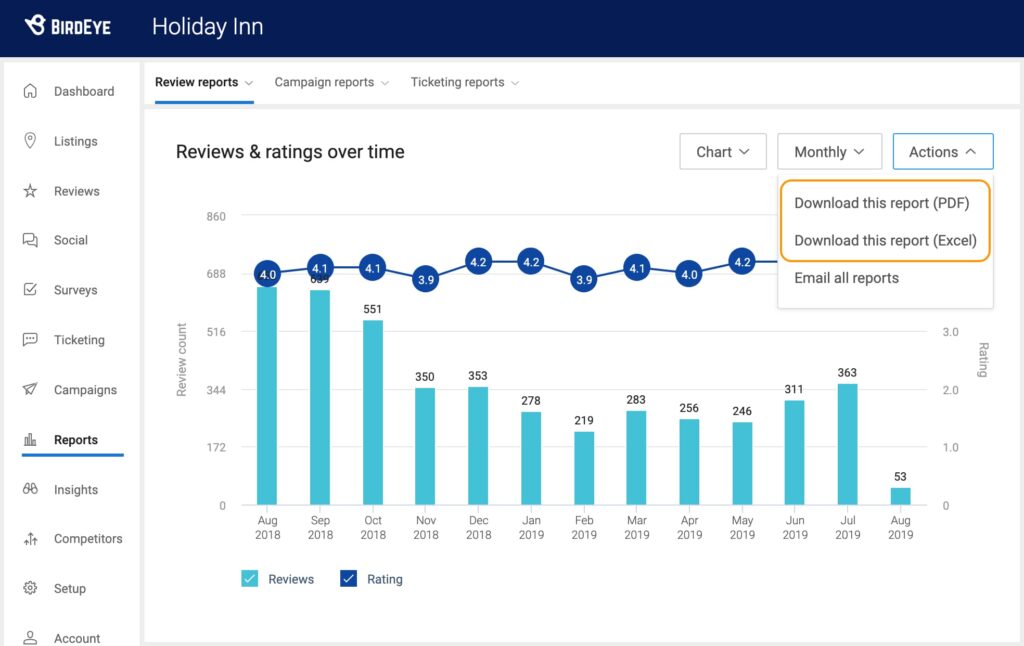
- Review Reporting Agent: Highlights trends, flags issues, and delivers performance insights for every location through a conversational interface.
- AI review widgets: Display top reviews on your website with AI-generated summaries that give visitors a snapshot of what makes the business stand out.
- Reputation Score and Sentiment Score: Centralize feedback from reviews and surveys to track brand health, sentiment trends, and category-level performance over time.
- Competitive benchmarking: Compares your review performance against competitors across all locations and surfaces areas for improvement.
Pros & Cons
Pros
- The centralized dashboard lets multi-location teams manage reviews, listings, messaging, and social from one place rather than jumping between sites
- AI-generated review responses and auto-reply features save meaningful time for teams handling high review volume
- Automation around review requests, including triggers tied to milestones like a loan closing or a move-in, consistently lifts review volume
Cons
- The platform has a meaningful learning curve given the breadth of features, with some settings buried in the interface
- Pricing can feel high for smaller teams, and several users mention limited flexibility during renewal conversations
- AI response suggestions sometimes feel robotic and need manual tweaking to match brand voice
What we like
Birdeye's automated review request triggers tied to CRM milestones are one of its most practical features.
When a loan hits Clear to Close, a tenant moves in, or a job completes, the review request fires automatically, which turns review generation into a background process rather than a manual task someone has to remember.
What users say
Users consistently praise how Birdeye centralizes review management and customer communication across locations, with the AI features and automation getting frequent shout-outs.
"I like that Birdeye gives me one place to manage reviews across all our locations. The dashboard is easy to work from day to day, and I can quickly see what needs a response, which locations are doing well, and where we may need to pay more attention. It saves me from having to jump between different review sites."
On the downside, some users mention that pricing flexibility and the learning curve are worth weighing before committing.
"With each new tool comes a heavy price request. We've been customers for 6 years now and there was no cooperation or meeting in the middle when it came to pricing for a tool that we had interest in."
Pricing
Birdeye doesn’t share its pricing publicly. You’ll need to reach out to the company’s sales team to get a quote.
3. GatherUp
Founded in 2013 by local search marketers and now part of Traject, GatherUp positions itself as the reputation platform built for agencies and multi-location businesses.
The product is structured around three stages: listening to feedback through review requests and monitoring, understanding it through AI insights and sentiment analysis, and engaging through AI-generated replies and SMS marketing.
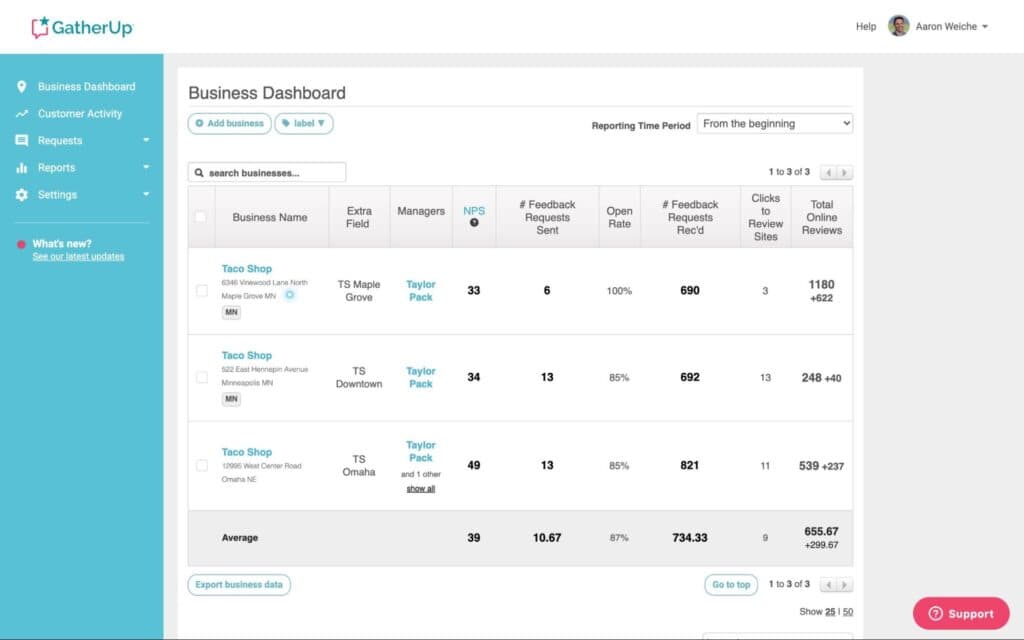
White labeling is a core part of the agency offering. You set your own pricing and margins, brand the platform as your own, and use GatherUp's underlying technology to deliver review and reputation services to clients across single locations or 100+ location portfolios.
Key features
- Email and SMS review requests: Sends automated review invitations and follow-up reminders, with segmentation, testing, and scheduling controls inside the platform.
- Review monitoring: Tracks customer feedback across major review sites and is the only platform that monitors Google Q&A alongside Facebook, Yelp, Glassdoor, OpenTable, and Indeed.
- SmartReply, AutoReply, and Suggested Replies: AI-generated review responses that match sentiment for positive reviews automatically, plus suggested drafts for negative feedback that go to email for one-click approval.
- Smart Insights and Auto-Tagging: AI surfaces the most common themes across review content and applies custom tags to keywords automatically so feedback gets organized without manual work.
- Review widgets and social sharing: Displays first- and third-party reviews on your site with multiple layouts, and turns reviews into branded social content for Facebook, Google Posts, and Instagram.
- Review Defense: A separate offering that detects, disputes, and defends against fake reviews and competitor fraud across locations.
Pros & Cons
Pros
- White-label setup lets agencies fully rebrand the platform and set their own pricing tiers and client margins
- Onboarding is a recurring highlight in reviews, with dedicated success reps walking new accounts through every step
- Auto-tagging and AI insights save real time for agencies sorting through high feedback volume
Cons
- Pricing scales steeply once you're managing many locations, which has come up as a concern from multi-location users
- Review display widgets feel dated to some users, with limited modern design options
- The platform has a learning curve given the depth of features and customization, even though basic setup is quick
What we like
GatherUp's roots show in how the product treats local SEO.
Review schema markup, first-party review capture, sentiment-tagged feedback, and Google Q&A monitoring all aim at the same outcome of helping agencies move their clients up in local search rather than just collecting stars in a dashboard.
What users say
Agency users consistently call out the onboarding experience and the platform's effectiveness as the parts that make GatherUp easy to recommend.
"GatherUp is like a missing puzzle piece I'm grateful to have finally found! Not only is my own review-gathering process more streamlined, but I've got a new productized service I can sell to my clients.
My onboarding experience with Mike was world-class."
On the downside, pricing comes up as the most common piece of constructive feedback, especially for agencies managing larger location footprints.
"The product is expensive for what it provides, especially when you have a lot of locations."
Pricing
GatherUp offers a 14-day free trial. Paid plans include:
- Single location ($99/month)
- Multi-location ($60/month per location)
- Agency (custom pricing)
4. Reviewshake
Reviewshake is built specifically around online reviews, with four core jobs: managing reviews across major sites, generating new reviews through automated outreach, showcasing reviews as social proof, and analyzing performance with sentiment and competitive benchmarking.
The platform has tracked over 2 million reviews across more than 3,500 growing businesses, leaning toward SMBs and the agencies that serve them.
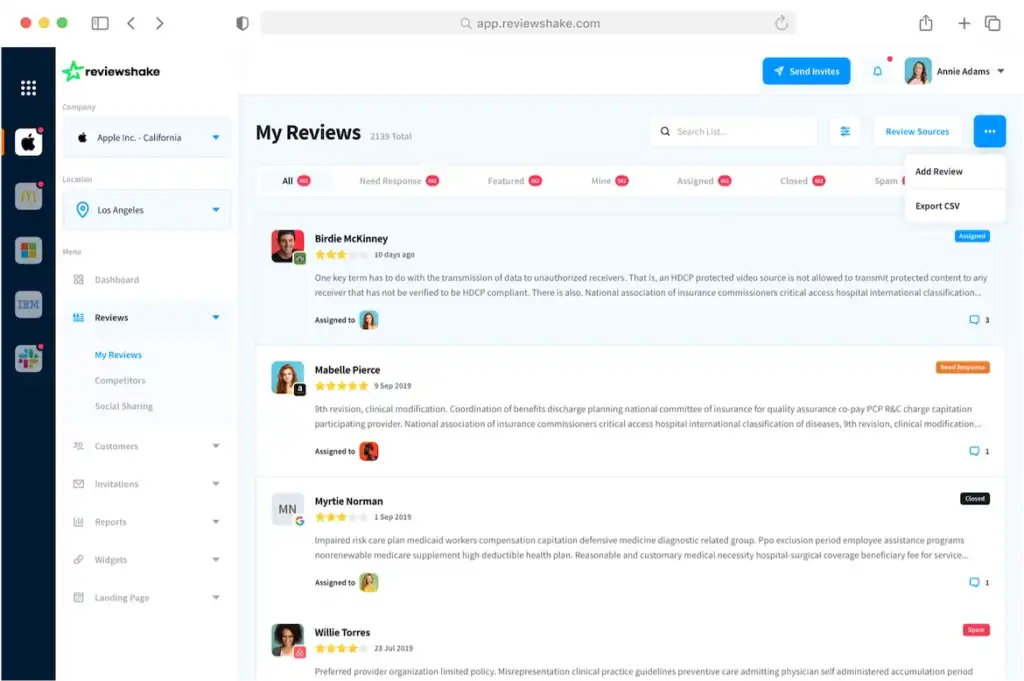
White labeling is a major selling point. Agencies can rebrand the platform as their own and resell it as a specialized service to clients in healthcare, hospitality, real estate, legal, auto, dental, and other local verticals.
Key features
- Automated review collection: Sends invites through SMS, email, and QR codes with smart timing rules and automated follow-up reminders designed to lift response rates.
- AI-powered reply suggestions: Drafts on-brand responses to incoming reviews so you can approve and send rather than typing replies from scratch.
- Sentiment analysis and trend tracking: Summarizes what customers are saying across all your locations, surfacing trends without needing to read every review manually.
- Competitor benchmarking: Tracks competitor star ratings, response times, and sentiment so you can see how you stack up in your local market.
- Review showcase tools: Customizable website widgets, Google Business Profile highlights, automated social sharing, and branded trust badges that display reviews wherever your customers see you.
- A/B testing for outreach: Tests subject lines and SMS headlines to identify which messaging drives the highest review conversion.
- White-label option: Lets agencies rebrand the platform with their own branding and resell reputation services to clients.
Pros & Cons
Pros
- White-label setup is a standout feature for agencies, with multiple users specifically calling out the ability to rebrand the platform as their own
- Customer support is widely praised for being responsive, with several users reporting response times within 30 to 60 minutes
- The platform consolidates customer feedback in one place and makes it easy to display reviews across a website and social channels
- A/B split testing on email and SMS headlines is a feature competitors at this size don't always offer
- Pricing is competitive for the feature set, with users describing it as strong value for money
Cons
- Review widget formatting and customization come up repeatedly as an area users want improved
- Native integrations are limited, so most CRM and POS connections need to run through Zapier
- A few users have flagged occasional bugs in the system, though most note the platform has improved a lot over time
- Some account-level limitations exist, like the inability to open multiple accounts in separate tabs at once
What we like
The combination of white labeling and showcase tools is a practical match for agencies.
Being able to rebrand the platform fully and then display branded review widgets, social posts, and trust badges across a client's web presence gives agencies a fuller reputation service to sell, rather than just a reporting dashboard.
What users say
Users consistently call out ease of use, white-label flexibility, and the customer support team as the things that keep them on the platform long-term.
"We started using ReviewShake around 3 years ago to replace our old provider, Grade US. We wanted a solution that was more cost-effective with all the same features. ReviewShake gave us this and more.
The feature I like the most is the white labeling. We have now rebranded the platform as our own and a specialized solution to the niche that we serve."
On the downside, widget customization is the most common piece of constructive feedback.
"There is not much to dislike about ReviewShake. If I had to pick one thing that I dislike it would be the current review widgets. However, they are adding new review widgets to enhance the platform."
Pricing
Reviewshake offers a free trial you can use to test out the software. Paid plans include:
- Starter ($29/month)
- Growth ($59/month)
- Ultimate ($99/month)
Manage your online reputation with ease
Monitor, manage, and get more online reviews for your business with LocalImpact.
5. Podium
Podium positions itself as an AI-native communications platform built around an "AI Employee" called Jerry that handles inbound conversations across text, calls, and webchat 24/7.
Over 100,000 local businesses use it, with strong concentration in auto dealerships, HVAC, plumbing, medical spas, dental, jewelry, furniture, and other retail verticals.
Reviews sit inside a broader product that also covers phones, payments, webchat, bulk messaging, and an inbox that consolidates customer interactions across channels.
The platform leans heavily into the "speed to lead" angle, with Podium reporting that businesses using AI Employees see lifts in sales, appointment show rates, after-hours bookings, and lead-to-sale conversion.
Key features
- AI Reputation Specialist: Crafts customizable, personalized review invites and replies automatically, with the AI handling both outreach and responses to incoming reviews.
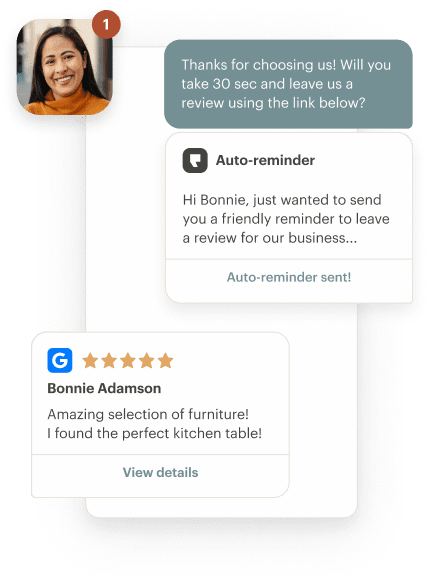
- Review automations: Sends review invites and reminders automatically so you stop missing chances to ask happy customers for a star rating.
- All-in-one inbox: Consolidates review sites and customer communication channels into a single inbox where multiple team members can see and reply to incoming messages.
- Comprehensive reporting: Tracks total reviews received with detailed attribution so you can see where reviews are coming from and how they're trending.
- Contact profiles: Syncs every review automatically with the customer profile it came from, keeping review history alongside other customer interactions.
- Mobile app: Lets you manage reviews and customer messages from anywhere, with desktop and mobile staying synced across devices.
- Webchat to text: Converts website visitors into SMS conversations that continue after they leave the site, useful for capturing leads outside business hours.
Pros & Cons
Pros
- The unified inbox is consistently called out as a real time-saver, letting teams handle texts, reviews, and customer interactions from one place
- Review automation noticeably lifts review volume, with users reporting big jumps in Google review counts after switching to Podium
- Call recording, transcription, and AI summaries are useful for managing customer interactions in industries like insurance, HVAC, and auto
- Mobile and desktop sync well, so calls and messages stay accessible whether you're in the office or on the road
- Industry-specific AI agents are trained on vertical-specific data, which makes them more effective in fields like auto, HVAC, dental, and aesthetics
Cons
- Pricing comes up repeatedly as a sticking point, especially for smaller teams that don't use every feature
- Some users have flagged frustrations around long-term contracts and auto-renewal terms
- The AI sometimes responds to conversations users wanted to handle manually, and those responses can sit in a separate box that's easy to miss
- Customer support quality varies, with some users reporting delays and inconsistent account management after the initial onboarding
- The platform has more features than many small businesses end up using, which can make the value harder to justify if you're focused only on reviews
What we like
Podium's review automations and real-time alerts are tightly wired into the same inbox where customer conversations live, so a new Google or Facebook review surfaces alongside texts and calls instead of sitting in a separate dashboard.
For local businesses that want to catch and respond to reviews the moment they land, that consolidation matters more than the breadth of features around it.
What users say
Users consistently call out how Podium centralizes communication and lifts review collection rates after switching from manual outreach.
"Podium has been a game changer for us- it's been a great way to text our customers, without technician's cell phone numbers being given out, it's been a great way for us to really ramp up our review capturing, and has been another great way for our customers (current and potential) to reach out to us."
On the downside, pricing and contract terms come up most often in constructive feedback.
"One downside I've noticed with Podium is the pricing it can feel a bit heavy, especially if you're not using every feature regularly.
For smaller teams or tighter budgets, the cost combined with contract commitments can make you think twice. It's not that the platform isn't useful, but you do start questioning the value if your usage is limited or uneven."
Pricing
Podium doesn’t display its pricing publicly. You’ll need to reach out to the company’s sales team to get a quote.
6. NiceJob
NiceJob is a reputation marketing platform built around making review collection genuinely set-and-forget.
The pitch is simple: connect it to a field service CRM like Jobber, Housecall Pro, JobTread, ServiceTitan, or Service Fusion, and review invites go out automatically by SMS and email the moment a job is completed.
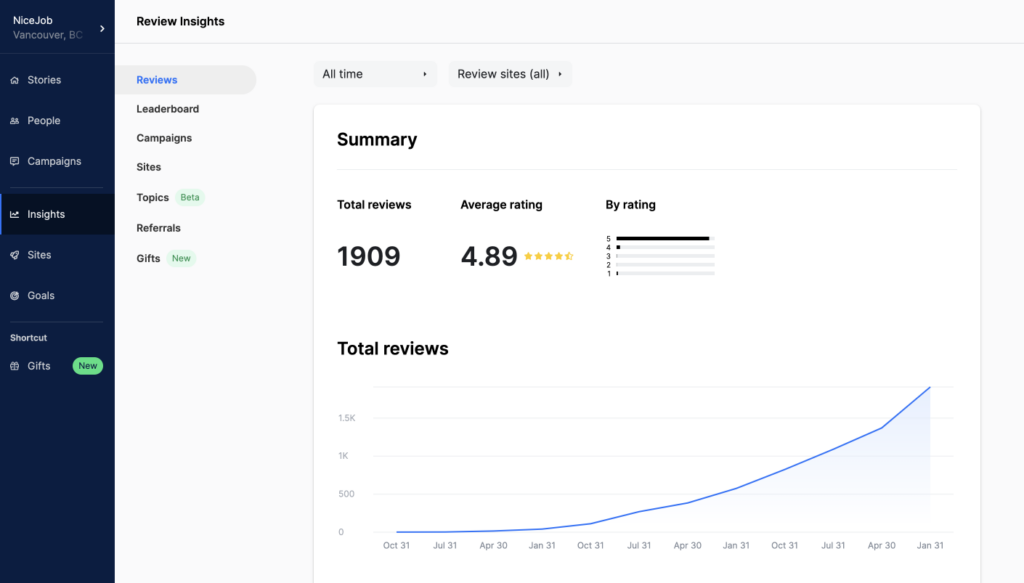
Beyond reviews, NiceJob includes social proof widgets, automated social sharing, a referral engine, gift campaigns, microsites, and an AI replies feature for Pro plan subscribers that drafts and posts review responses on a daily schedule.
Key features
- Automated review collection: Sends review requests by SMS followed by a three-email sequence, with the timing and content of the campaign fully customizable.
- Deep CRM integrations: Triggers review invites automatically when a job is marked complete in connected CRMs, with native integrations for Jobber, Housecall Pro, JobTread, ServiceTitan, Service Fusion, QuickBooks, HoneyBook, and Facebook.
- AI Review Replies (Pro plan): Generates and posts responses automatically each evening with customizable tone, voice, length, and rules like only replying to reviews of three stars and higher.
- Social proof widgets: Embeds website widgets that display recent reviews, ratings, and trust badges from multiple review sites, plus a made-for-you microsite that houses NiceJob and connected platform reviews.
- Automated social sharing: Posts new five-star reviews to Facebook automatically as branded social media content.
- Insights and competitor tracking: Reports on which sites are driving reviews, campaign engagement, and team-level review attribution, with a Pro feature that tracks competitor review volume, ratings, and sentiment.
- Referrals and Get Repeats: Adds a referral program and re-engagement tools to drive repeat business from existing customers.
Pros & Cons
Pros
- Automation runs genuinely hands-off once connected to a CRM, with multiple users reporting they only need to manage the bill
- Onboarding and customer support are widely praised, with users calling out live access to knowledgeable reps during setup
- CRM integrations with field service platforms like Jobber, Housecall Pro, and JobTread trigger invites at the right moment in the job lifecycle
Cons
- Native integrations are limited to nine apps; users outside core home service CRMs often have to fall back on Zapier
- Website widgets get flagged for limited customization on display count, styling, and brand fit, and some users report widgets occasionally breaking and needing reinstallation
- Multi-location support is clunky, with awkward location switching, duplicated reviews across locations, and a fixed cap of 15 reviews in the Stories widget
- Reviews can't be exported, which limits how data can be used outside the platform
- The AI Replies feature is locked to the Pro plan, which a few long-term customers have flagged as a sore point
What we like
The CRM-triggered automation is what separates NiceJob from generic review platforms.
For a home service business, having review invites fire automatically the moment a technician closes out a job in Jobber or Housecall Pro means review collection actually happens at the highest-intent moment, which is right after the customer experiences the work.
The trade-off is that the platform's value drops sharply for businesses outside the supported CRM ecosystem.
What users say
Users consistently highlight how hands-off the system becomes once it's wired into their workflow.
"It does a tremendous job automating review requests from our customers and is hassle-free for our business. I love how easily it integrates with Housecall Pro and automatically invites customers to leave reviews right when their job is finished."
On the constructive side, multi-location operators and users who want more from the broader platform have flagged real limitations.
"Overall, NiceJob is a decent solution if you only need a simple way to collect more reviews. But if you're hoping to use the other features such as SEO benefits, referrals, or multi-location support, you may find it falls short."
Pricing
NiceJob offers a 14-day free trial that does not require a credit card.
Paid plans include:
- Reviews ($75/month)
- Pro ($125/month)
- Sites add-on ($99/month + $199 setup fee)
7. ReviewTrackers
ReviewTrackers is built around the enterprise end of the market.
The product sits at the intersection of reputation management and customer experience analytics, with feature depth in areas like sentiment analysis, competitive benchmarking, customer experience metrics, local SEO, and listings management.
The platform also integrates with Hootsuite for a combined reviews-and-social workflow, and offers add-ons for employer brand monitoring, software brand monitoring, and app store monitoring.
Key features
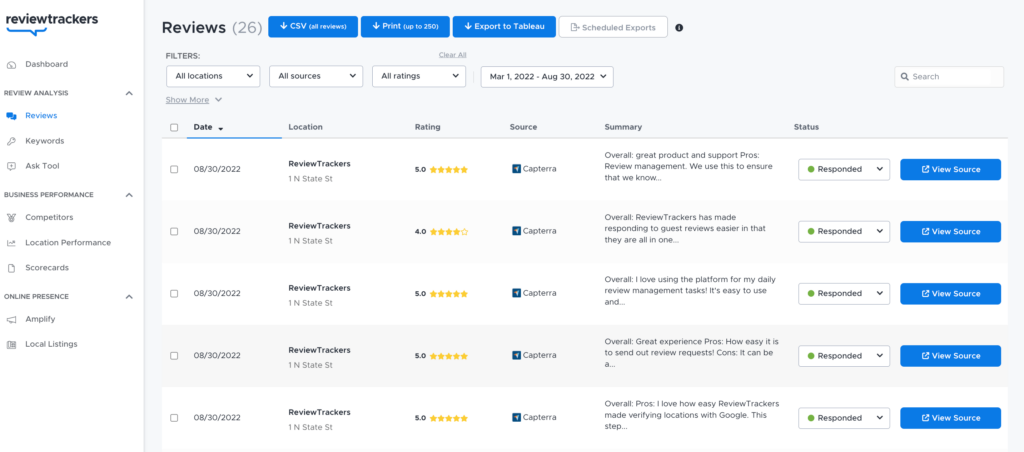
- Review aggregation across major directories: Pulls reviews from the top directories that drive revenue into one dashboard, with filters for responded versus unresponded reviews and the ability to reply to Google reviews directly from the platform.
- AI-generated and Smart Response templates: Drafts review responses with AI plus customizable template management so multi-location teams can stay on brand while replying at scale.
- Automated review request campaigns: Sends review invites by email and SMS with the option to give customers a choice of destination, like Facebook and Google, and remind people who didn't follow through.
- Competitor analysis: Automatically identifies competitors, tracks their review velocity, ratings, and sentiment, and categorizes their review data to surface where they're winning and where they're vulnerable.
- Customer experience analytics: Turns unstructured review text into structured insight on sentiment, keyword themes, and trends across locations to feed retention and acquisition strategy.
- Local listings management: Keeps business listing data consistent across the web to support local search visibility.
- Amplify website widgets: Displays reviews directly on a brand's website as social proof.
- Hootsuite integration: Combines review and social monitoring into one workflow for teams that handle both channels together.
Pros & Cons
Pros
- Aggregation across a wide set of review sources saves time for teams that previously had to log into each platform individually
- Reporting and dashboards are widely praised, especially for multi-location operators tracking 20+ properties or franchisees
- Competitor analysis goes deeper than most tools in this category, with structured insights on rival performance rather than just raw counts
- Easy to set up and intuitive once teams learn the interface, with a strong mobile app that puts review data at hand for field managers
Cons
- Direct response from inside the platform doesn't work for every review site; Yelp and TripAdvisor get flagged specifically
- Review site connections sometimes silently disconnect, and notifications about it aren't always reliable, so teams can go weeks before noticing
- The interface has a lot of buttons and options that can overwhelm new users until they spend time learning the system
- A few users want a wider crawl of less-mainstream review sources beyond the major directories
What we like
The competitive analytics layer is what separates ReviewTrackers from most tools in this category.
For a multi-location brand trying to figure out why one region outperforms another, having competitor review data automatically categorized by theme, alongside review velocity benchmarks, makes it possible to build retention and acquisition strategies grounded in what local rivals are actually doing well.
What users say
Users consistently highlight the combination of cross-location aggregation and customer success support as the things that make the platform stick.
"At my company, reputation and reputation management is key. Review trackers gives us the opportunity to monitor all of our locations in one platform and makes it easy for our team to respond to all reviews.
The platform is easy to use and reporting is key for our leadership and executive team."
On the constructive side, response coverage and disconnect notifications are the most common pieces of feedback.
"The only thing I wish we could revise is the ability to respond to Yelp and Trip Advisor within the platform."
Pricing
Pricing starts at $89/location/month.
8. Broadly
Broadly is built around an "AI Workforce" of role-specific AI employees that handle reputation, web chat, social media, sales, and SEO for local service businesses.
The reputation side of Broadly focuses on automated review requests by text and email, AI-drafted review responses, and a centralized inbox that pulls in messages from Google, Facebook, web chat, and contact forms.
It connects with the field service tools local businesses already run, including ServiceTitan, Jobber, Booker, ShopMonkey, Clio, PawLoyalty, PetExec, Shop-Ware, Mitchell, and QuickBooks.
Key features
- AI-powered review requests: Sends review invites by SMS and email automatically after a job or appointment, with the AI Reputation Specialist drafting thoughtful, on-brand replies to incoming reviews.
- Consolidated inbox: Brings together messages from web chat, SMS, email, Facebook, Instagram, and contact forms into a shared inbox so the whole team can see and respond to customer conversations.
- Private feedback funnel: Sends customers to a private feedback form first, giving the business a chance to fix issues before they turn into public reviews.
- AI-assisted web chat: Engages website visitors with a chat widget that captures contact info, answers common questions using info from the Google Business Profile and website, then continues the conversation by SMS.
- NPS surveys and customer sentiment tracking: Collects quick post-interaction feedback so teams can spot trends and identify happy customers worth re-engaging.
- Local SEO and listings management: Keeps business information consistent across more than 40 listings sites and tracks local search rank through an easy-to-read grid view.
- Social Media Manager: Drafts and schedules content for Facebook, Instagram, Twitter, Google Business Profile, and LinkedIn from one place.
- Payments and CRM-style features: Sends estimates, reminders, and accepts mobile payments alongside the reputation tools.
Pros & Cons
Pros
- Review collection results are widely reported as strong, with users describing dramatic jumps in Google review counts within months of starting
- The private feedback step gets praise for catching service issues before they become public negative reviews
- Setup is described as effortless by long-term users, and the platform integrates cleanly into existing daily workflows
- The all-in-one approach combining reviews, web chat, payments, and social into one app saves time for owner-operators wearing multiple hats
Cons
- Contract terms and cancellation policies have come up as a friction point, with users reporting locked-in 12-month agreements and difficulty getting out
- Multi-location operators can't combine multiple Google Business Profile stores under one account, which forces separate accounts and higher costs
- Some review automations don't reliably push to every site; Yelp specifically has come up as a weak spot
- Customization on email response templates is more limited than some users would like
What we like
The combination of review collection and AI-assisted web chat in one platform is a practical fit for local service businesses that get most leads through their website and Google Business Profile.
Capturing a website visitor's contact info through chat, continuing the conversation over SMS, completing the job, and then automatically triggering a review request closes the loop on the full customer journey inside one tool.
What users say
Users consistently call out the volume of reviews the platform brings in and the time savings on follow-up.
"Broadly has saved me hours of time by completely automating the client review process. Setting up custom forms and following up with clients was very time consuming.
Once we signed up with Broadly our reviews skyrocketed and all we had to do was watch them roll in."
On the constructive side, recent customer service experiences and contract structure are where the most pointed feedback shows up.
"I think their customer service is horrendous. It's impossible to get support from them. We've been using Broadly for years, and they have gone downhill."
Pricing
Broadly is priced at $799/month.
Manage your online reputation with ease
Monitor, manage, and get more online reviews for your business with LocalImpact.
9. TrueReview
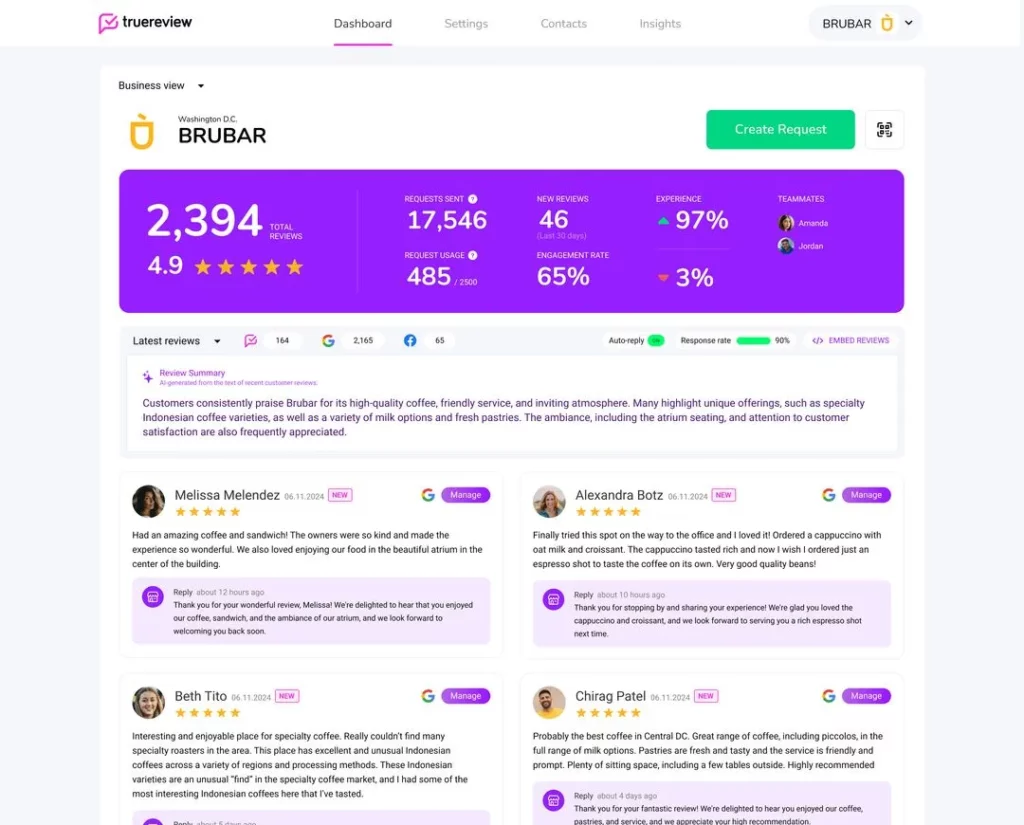
TrueReview is a focused review management platform built around the basics: collecting reviews through SMS and email, monitoring new reviews on Google and Facebook in real time, and responding faster with AI-generated replies.
The product strips out the extras that pad bigger platforms and keeps the dashboard clean enough that a solo operator or small team can be up and running the same day they sign up.
Key features
- SMS and email review requests: Sends review invitations through both channels with drip campaign support for follow-up reminders.
- AI review response generator: Crafts personalized replies to Google and TrueReview reviews based on the original review text.
- Review monitoring: Tracks new reviews on Google and Facebook with real-time dashboard alerts.
- Custom shareable links: Generates QR codes and links for in-store review collection through tablets or NFC cards.
- Social review post generator: Turns positive reviews into branded social media graphics with customizable fonts and colors.
- Zapier integration: Connects with CRMs, POS systems, and scheduling software to trigger review requests automatically.
Pros & cons
Pros
- Transparent monthly pricing starting at $23 makes it accessible for solo operators
- Setup is fast, with most users sending their first review request within an hour
- The AI review response generator works well even on the lower tiers
- Customer support is consistently called out as friendly and responsive
Cons
- Review monitoring focuses on Google and Facebook rather than the 100+ sites bigger tools cover
- Multi-location management requires the Premium plan and isn't as polished as dedicated multi-location tools
- Customization options for review request templates are simpler than enterprise alternatives
What we like
TrueReview's social review post generator is a nice touch that most tools at this price don't include. Turning a strong five-star review into a branded social graphic with a few clicks gives small businesses a quick way to extend the life of their best feedback.
What users say
Users appreciate the simplicity and the visible lift in review volume after switching to TrueReview.
"We are very happy with response from our patients since we have been using TrueReview. TrueReview offers simple platform to send SMS to our patient to give us review
Since we have been using TrueReview, we have been getting lot of review from patients. Before we never received these many google reviews from our patients."
A small number of users note that managing multiple locations from one login can feel constrained.
"The plan we have, we can only use 1 business under the same business account, which makes it difficult to balance review requests between two locations."
Pricing
TrueReview offers a 14-day free trial with up to 250 review requests, no credit card required.
Paid plans include:
- Starter ($49/month)
- Small Business ($99/month)
- Premium ($299/month)
10. Grade.us
Grade.us is built specifically for agencies, marketers, and SEOs rather than end businesses.
The platform is white-labeled top to bottom: agencies can put their own branding, logo, and even custom domain on the entire experience so clients never see the Grade.us name.
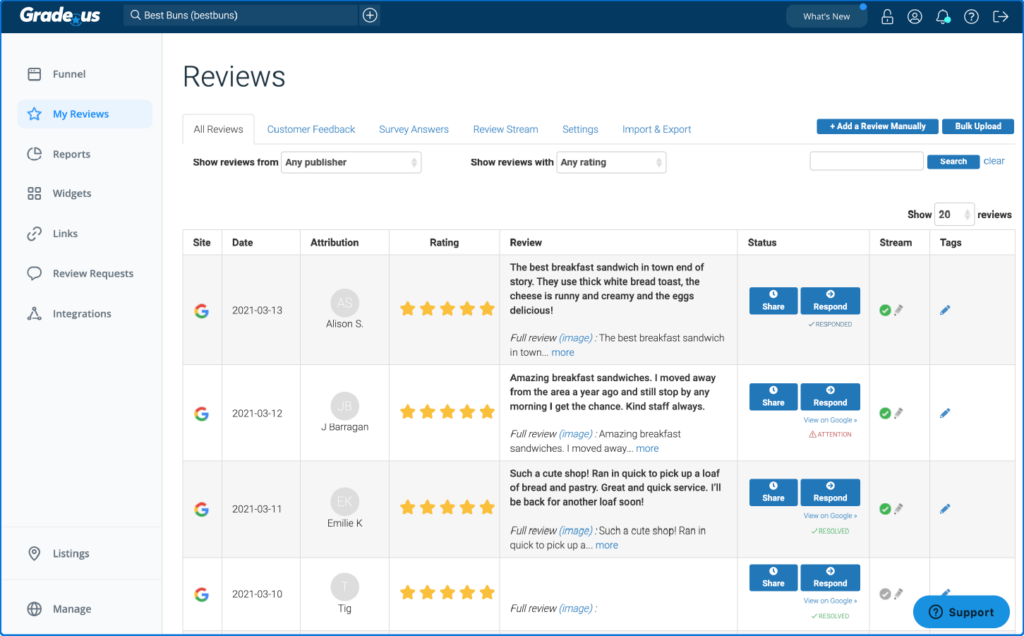
The product focuses on four jobs: converting customers into reviewers, monitoring reviews across third-party sites, recovering customers and responding to negative reviews, and marketing reviews as SEO-friendly content.
Key features
- Customizable review funnel: Segmented funnel layouts route customers toward the review sites the agency chooses for each client, with a streamlined minimum-click path to leaving a review.
- Email and SMS drip campaigns: Highly customizable email cadence and unlimited follow-ups, plus SMS review requests sent from a dedicated local phone number with the option to include images.
- Review monitoring across 150+ sites: Tracks reviews across Google, Facebook, Yelp, and a long list of industry-specific sites including Healthgrades, TripAdvisor, Zillow, and Avvo, with daily email notifications when new reviews come in.
- Review command center: Centralized inbox for filtering reviews by site, setting status levels, leaving internal notes, and responding to Google and Facebook reviews directly from the dashboard.
- Review marketing widgets: Embedded review stream widget for websites, a WordPress plugin with schema-friendly markup for SEO, a floating carousel widget for dynamic 5-star reviews, and automated Facebook sharing of top reviews.
- White-label everything: Custom domain, branded email templates, white-labeled scheduled reports, and a Premium White Label Dashboard add-on ($440 annually, complimentary at 100 seats) that puts the agency's logo on the platform itself.
- Agency growth resources: Local Client Finder for prospecting, prospect review reports for pitches, plus white-label pitch decks, marketing videos, and educational content to help agencies sell reputation management.
- Reporting and sentiment analysis: Scheduled white-label review portfolio reports, time-frame customized review distribution, campaign activity tracking, interactive sentiment analysis, and word clouds surfacing themes in positive and negative reviews.
Pros & Cons
Pros
- White-label depth is genuinely best-in-class, with agencies able to rebrand the platform completely down to the favicon and run it on their own domain
- Customer support is widely praised, with specific reps named repeatedly in reviews and response times under an hour reported by long-term users
- Fast onboarding for new clients, with some agency users reporting under-10-minute setup per client
- Review funnel customization gives agencies real control over the customer journey for each client, with strong conversion rates from request to review
Cons
- Price increases over the years have come up as a sticking point for several long-term users, with some saying it made the platform unworkable at scale
- Native integrations are extremely limited; the platform has very few direct CRM or workflow integrations and leans heavily on the API and workarounds
- Email customization, while flexible, has come up as an area users want to push further, especially for industry-specific templates
- No native mobile app for users of the platform, which a few agency users have flagged
- Reporting has historically been a weak spot, though the platform has rolled out reporting redesigns in response to user feedback
What we like
The combination of deep white labeling and agency-focused tooling like the Local Client Finder, prospect review reports, and ready-made pitch decks is hard to find elsewhere in this category.
Most reputation platforms treat agency use as a side feature, but Grade.us treats it as the core use case.
For an agency offering reputation management as a productized service, having the platform itself disappear behind their own brand makes it easier to position the service as proprietary and justify higher retainer pricing to clients.
What users say
Users consistently call out the white-label flexibility and customer support as the things that make the platform worth using long-term.
"Very easy to use and set up new clients. The onboarding process is less than 10 minutes per client. And the customer support has been great. The few times I've had questions/issues the team has been quick to respond and resolve everything."
On the constructive side, pricing changes and limited customization in specific areas are the most common feedback.
"Far too expensive. Doubled in price while I was using it. Hard to pass those costs on to my clients."
Pricing
Grade.us offers the following pricing plans:
- Small Business ($124/month for one location)
- Multi Location ($75/month/location)
- Agency (custom pricing)
How to choose the right real-time reputation tracking tool for you
The right tool depends mostly on the size of your operation, your existing tech stack, and how much you can spend per location. Here are the five things to weigh before signing up:
- Location count and pricing model: Tools priced per location can scale predictably for a 3-location dental practice but become punishing at 50+ locations. If you're running a single business, look for transparent per-account pricing rather than per-location rates.
- Source coverage matters more than feature count: A platform that monitors 200 sites isn't necessarily better than one that monitors 30 if your customers leave reviews mainly on Google and Facebook. Match coverage to where your customers actually post rather than chasing the longest source list.
- Integration with your existing CRM or PMS: Review requests that fire automatically off completed jobs or appointments will always outperform manual outreach. If you're already on Jobber, QuickBooks, or a specific PMS, prioritize tools with native integrations rather than relying on Zapier alone.
- Real-time alerting versus daily digest: Tools differ on how quickly new reviews trigger notifications. For high-risk industries like healthcare, hospitality, or anything customer-facing, real-time alerts that route by sentiment or location are worth paying extra for.
- AI response generation quality: Most platforms now include AI-drafted review replies, but quality varies a lot. Test the suggestions on a few real reviews during your trial to see whether you'd actually post them with light edits or rewrite from scratch every time.
Whatever you pick, the platforms with public pricing and free trials let you validate fit before committing. Treat the trial as a real test by importing actual customers and sending real requests rather than poking around the demo data.