
Healthcare providers like to believe that patients choose them because of their expertise.
But the reality is a lot more uncomfortable.
Our survey of 1,068 US consumers reveals that choosing a healthcare provider is impacted by the same factors as choosing where to eat, shop, or travel.
Online reviews, recent experiences, and provider responses play a big part in which healthcare provider consumers opt for. Healthcare services are subject to the same scrutiny as any other consumer service.
While patient priorities haven’t necessarily shifted, there’s been a big shift in how patient trust is earned and lost in 2026.
The consideration set is smaller than you think
When asked how they first discovered the healthcare provider they chose, most consumers cite Google Search (25%). Nearly one in five (18%) found their provider through online reviews and insurance provider directories.
And 16% listened to recommendations from friends and family. The least popular way of discovering new providers were referrals from existing providers.
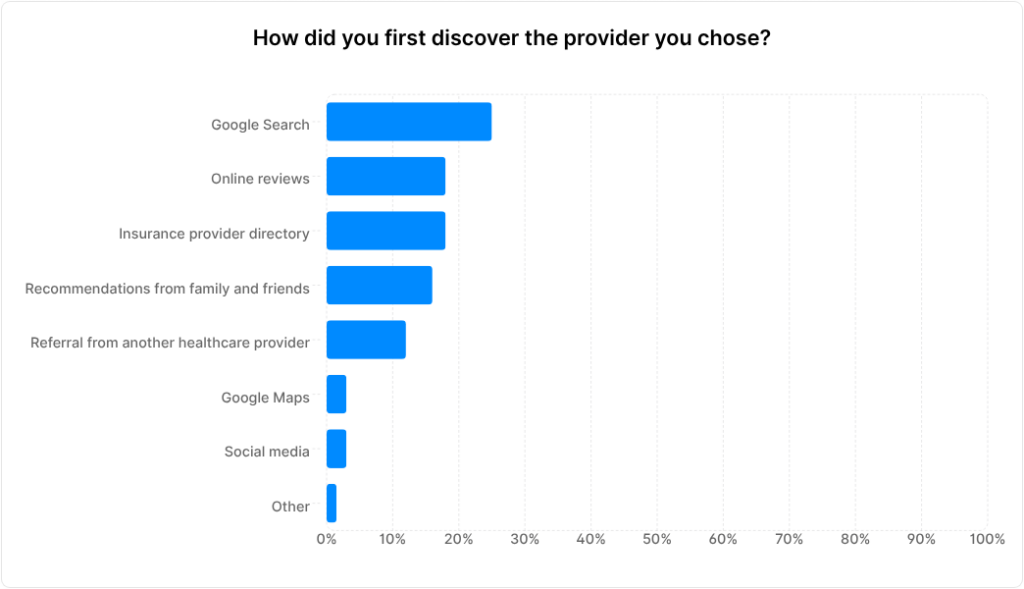
Most consumers seriously consider just 2-3 providers before making their choice. Only 17% consider just a single provider.
As you can see, consumers’ consideration set is fairly small, so being able to make the shortlist is everything.
Insurance and location get your foot in the door, but reviews win patients
When we asked consumers which factors mattered most when choosing a provider, the top answers included insurance acceptance (47%) and location (45%).
This is the reality of modern healthcare selection: insurance and proximity are table stakes. While they don’t necessarily win the decision, they do determine which providers are even eligible to be shortlisted.
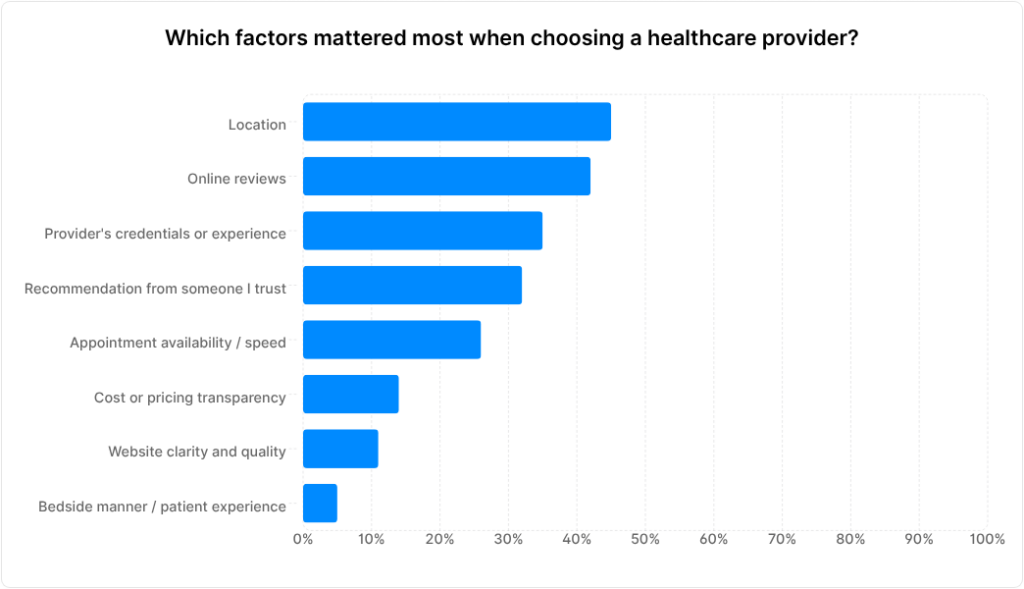
The third most important factor cited were online reviews (42%). Followed by provider credentials or experience (35%), recommendations from someone they trust (32%), and appointment availability and speed (26%).
When asked how important online reviews are in their decision, 40% said very important. And 33% said moderately important.
That’s 3 out of 4 consumers saying reviews carry serious weight when choosing a healthcare provider.
The rating threshold effect
Consumers tend to use reviews like filters. 44% wouldn’t consider a healthcare provider with a rating lower than 4 stars. And 28% are only looking for providers with a 4.5-star rating or higher.
In other industries, service providers might get by with a 3.8 or 3.9 rating. In healthcare, that kind of rating means you’re not even being considered.
Most consumers read anywhere from 3 to 10 reviews before making a decision. And almost one in five read more than 10 reviews.
When asked which types of reviews influence them the most, 62% say recent reviews. Reviews that include detailed personal experiences and those mentioning treatment outcomes are also influential.
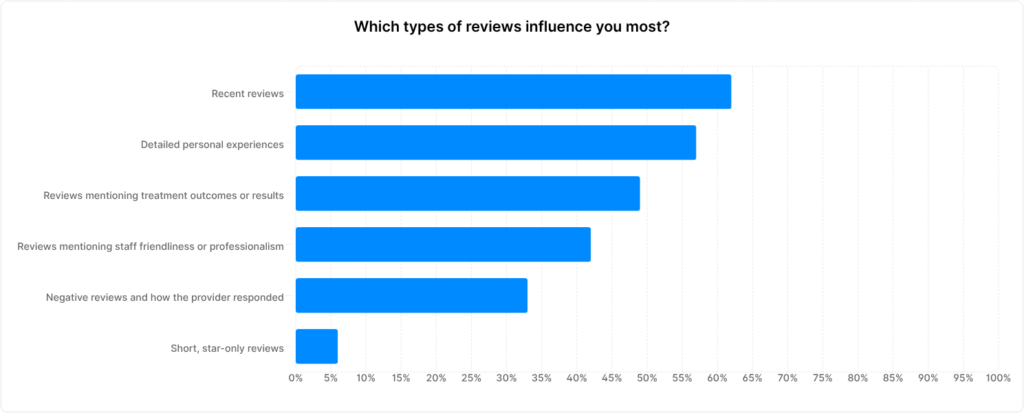
But patients aren’t just scanning for “good” or “bad” reviews.
They’re trying to understand whether you respect patients’ time and make them feel heard. They also want to know that your staff is professional and that they’re not going to have an experience that feels hostile.
The fastest way to lose a patient: look like you don’t care
When asked what would make them avoid a healthcare provider, the top answer was multiple recent negative reviews (56%).
The second top answer: unprofessional responses to reviews (48%). Patients aren’t just judging your practice based on what people say about you. They’re also judging you based on how you react when something goes wrong.
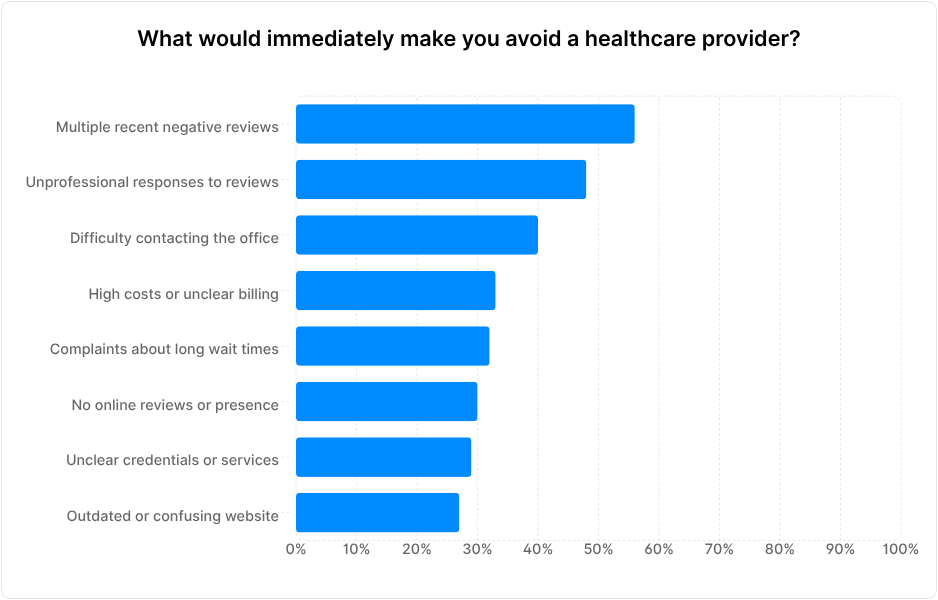
Other reasons cited include difficulty contacting the office (40%), high costs or unclear billing (33%), complaints about long wait times (32%), and no online presence at all (30%).
To put it simply, you might be a competent provider who offers strong clinical care. But if your front door feels unreliable, patients will look elsewhere.
73% of consumers say they’ve decided not to contact a healthcare provider after researching them online. Your online presence can make or break your healthcare practice.
Reviews decide everything, yet most people don’t leave one
Only 36% of patients leave a review after their visit. This means that your online reputation is determined by a minority, which results in a “review economy” problem, with small sample sizes, skewed extremes, and the outsized impact of a few stories.
But patients still judge you based on your online reputation.
One place where you can take control is in the way you respond to reviews. 80% of consumers state that seeing a thoughtful response to a review from a provider would influence their likelihood to return.
In other words, care isn’t just what happens in the exam room. It continues even after the patient has left your practice.
Improve your online reputation
Use LocalImpact to manage and improve your practice's online reputation with ease.
Patients want modern access, but they still start with the phone
There’s a common narrative that healthcare is going fully digital and that patients want to do everything online.
Our survey results suggest something more nuanced.
Most patients (54%) still contact a provider via a phone call first. A smaller percentage use website contact forms (17%), online booking systems (14%), and email (7%).
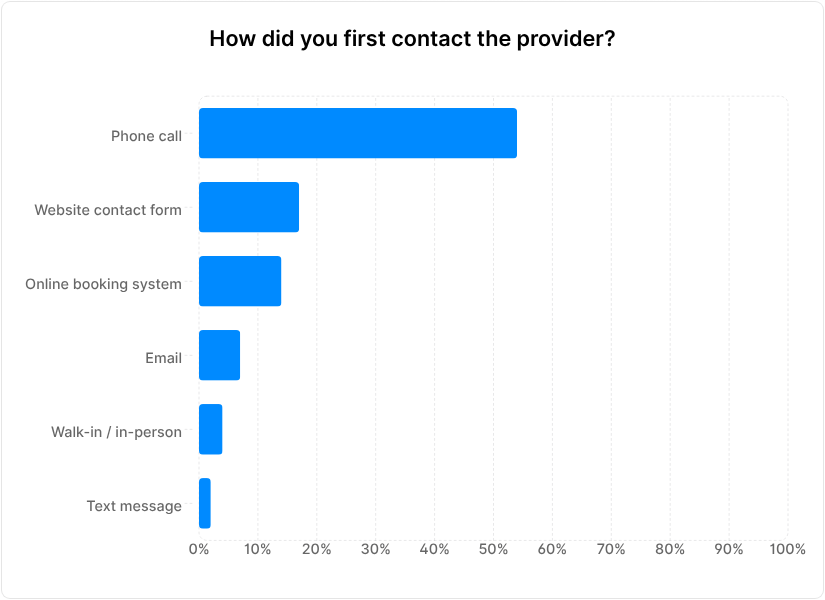
So what’s happening? Patients are discovering and vetting providers digitally, but when it’s time to reach out, they still want to do so via a direct channel. They want to hear a real person on the other side.
And they want to get a response fast. 1 in 5 consumers expect a response within 15 minutes.
And 55% expect to get a response within 4 hours.
What this means for healthcare providers in 2026
In 2026, consumers are choosing healthcare providers through filters: insurance, distance, and ratings.
They make their decision based on recent patient experiences, detailed stories, outcomes, and how staff treat people. And they punish indifference: rude review responses, unanswered phone calls, and confusing websites.
Today’s consumers aren’t trying to find the absolute best doctor in their city. They’re trying to avoid a bad experience when they’re already stressed.
When people are sick, worried, or responsible for someone else’s care, they look for signs that a provider will show up when they need them to. Reviews, response times, and visible professionalism have become the proxies patients rely on to make that judgment.
This doesn’t mean medicine has become secondary. It means trust now has to be demonstrated, not assumed. And much of that demonstration happens in places providers don’t traditionally think of as “care.”
In 2026, the first test of a healthcare experience rarely happens in a clinic. It happens online.