
Healthcare software has become essential for running efficient, patient-centered practices.
The right tools can streamline documentation, simplify billing, reduce administrative work, and improve communication across every part of a clinic or health system.
Here’s our list of the top 23 healthcare tools currently available on the market.
Top healthcare software at a glance
No time to read the full article? Here's a quick comparison table.
| Software | Category | Best for |
| Epic EHR | Electronic Health Record | Large hospitals and health networks |
| Elation EHR | Electronic Health Record | Independent primary care practices |
| Oracle Health EHR | Electronic Health Record | Large health systems and care networks |
| Medesk | Medical Practice Management | Small to midsize outpatient clinics and private practices |
| PracticeSuite | Medical Practice Management | Independent physician practices and billing companies |
| SimplePractice | Medical Practice Management | Solo and small-group therapy and wellness professionals |
| EZClaim | Medical Billing | Small to midsize practices and billing companies |
| LocalImpact | Healthcare Reputation Management | Healthcare practices of all sizes |
| iPrescribe | E-Prescribing | Individual clinicians and small practices |
| DoseSpot | E-Prescribing | Telehealth platforms and EHR vendors |
| PioneerRx | Pharmacy Management | Independent retail pharmacies |
| BestRx | Pharmacy Management | Independent retail pharmacies |
| PrimeRx | Pharmacy Management | Multi-location and specialty pharmacy operations |
| OsiriX DICOM Viewer | Medical Imaging | Radiologists and imaging centers on macOS |
| RadiAnt DICOM Viewer | Medical Imaging | Radiologists and imaging centers on Windows |
| PostDICOM | Medical Imaging | Imaging teams and teaching institutions |
| T-Pro | Medical Transcription | Hospitals and clinics of all sizes |
| Augmedix | Medical Transcription | Hospitals and health systems |
| DeepScribe | Medical Transcription | Busy practices and value-based care organizations |
| Doxy.me | Telemedicine | Solo providers and small clinics |
| Prevounce | Remote Patient Monitoring | Practices and health systems scaling RPM programs |
| CareSimple | Remote Patient Monitoring | Providers and payers needing a turnkey RPM solution |
| Vitalera | Remote Patient Monitoring | Providers moving toward home-based and virtual-first care |
Electronic Health Record (EHR) Software
1. Epic EHR
Best for: Large hospitals and health networks that need an enterprise-grade EHR with deep specialty support and cross-system interoperability.
Epic EHR is an electronic health record system built for hospitals and large health networks. It gives clinicians access to patient records, clinical documentation, and order management across multiple specialties.
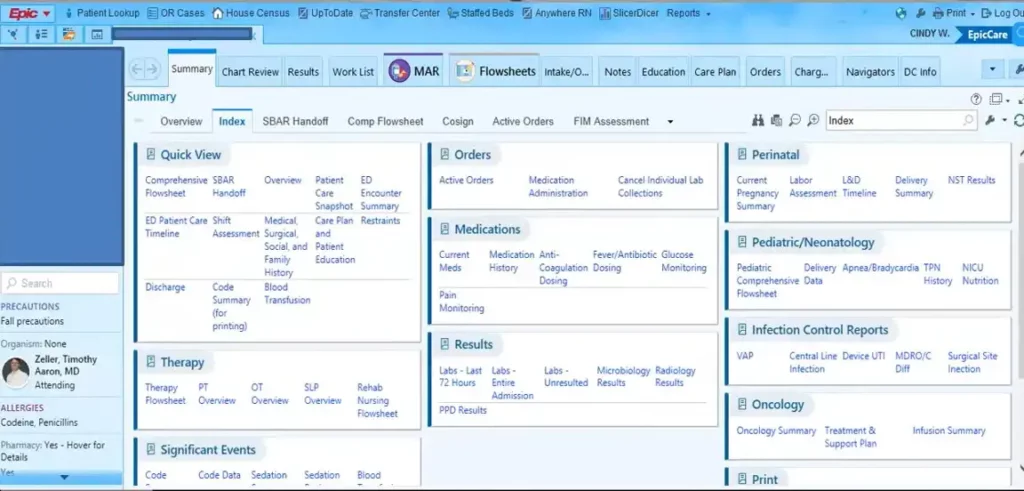
The platform also supports mobile access, video visits, and a comprehensive patient portal for engagement. Because of its scope and complexity, the system is a better fit for large-scale organizations rather than small independent practices.
What we like
Epic's Care Everywhere feature allows secure, real-time sharing of patient records across different institutions, which directly reduces care gaps when patients move between providers.
The customizable templates and role-specific interfaces mean clinical staff across departments can tailor the system to their actual workflows rather than adapting to a generic layout.
2. Elation EHR
Best for: Independent primary care practices that want a clinician-first EHR built around physician workflow rather than administrative requirements.
Elation EHR is a clinical-first electronic health record platform built specifically for independent primary care practices. It offers intuitive charting, native mobile apps, and AI-powered features like automated note generation to reduce time spent on documentation.
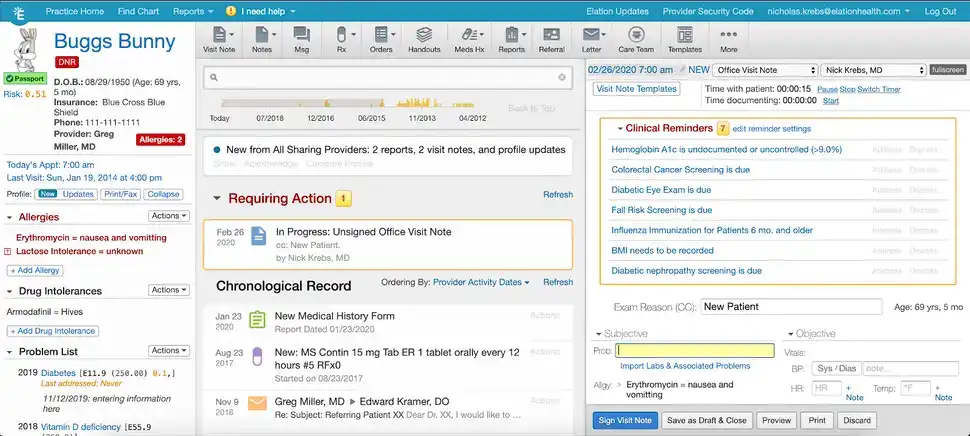
It supports referral management, e-prescribing, telehealth, and a patient portal so that practices can coordinate care, communicate with patients, and streamline workflows.
With its modern design and unified architecture, the platform works well for small to midsize practices that want simplicity without sacrificing power.
What we like
Elation's single-page charting layout keeps everything needed for a patient encounter visible without navigating between multiple tabs or screens.
The ability to open a previous chart side-by-side with a current visit is a small but practical feature that saves real time in longitudinal care settings, and the AI-powered note generation takes a meaningful bite out of post-visit documentation time.
3. Oracle Health EHR
Best for: Large health systems and care networks that need a cloud-native EHR with embedded AI, voice-first documentation, and scalable interoperability across multiple sites and specialties.
Oracle Health EHR is a modern electronic health record platform designed for large health systems and care networks.
It integrates embedded AI, including voice-first capabilities and real-time clinical intelligence, so that clinicians can surface insights and streamline documentation.
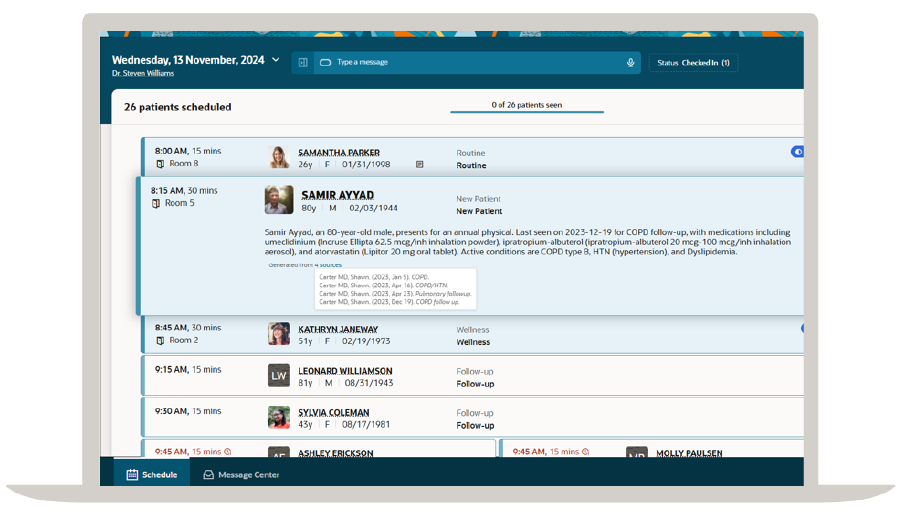
The solution is built on cloud-native architecture and supports scalable deployment, interoperable workflows, and secure data exchange across devices and settings.
This solution aligns best with large organizations aiming to reduce administrative burden and strengthen care coordination through advanced analytics and automation.
What we like
The voice-first navigation and ambient documentation capabilities set Oracle Health apart for organizations looking to reduce time spent on manual note entry.
Its cloud-native foundation on Oracle Cloud Infrastructure means the system is built for enterprise scale from the ground up, which is a meaningful advantage for health systems managing data and workflows across dozens of facilities.
Improve your online reputation
Use LocalImpact to manage and improve your practice's online reputation with ease.
Medical Practice Management Software
4. Medesk
Best for: Small to midsize outpatient clinics and private practices that want a single cloud-based platform for scheduling, patient records, billing, and communication without enterprise-level complexity.
Medesk is a cloud-based medical practice management platform designed for small to midsize clinics and private practices.
It handles core functions such as online booking, scheduling, and billing while also supporting a built-in EHR for managing patient records, treatment plans, and documents.
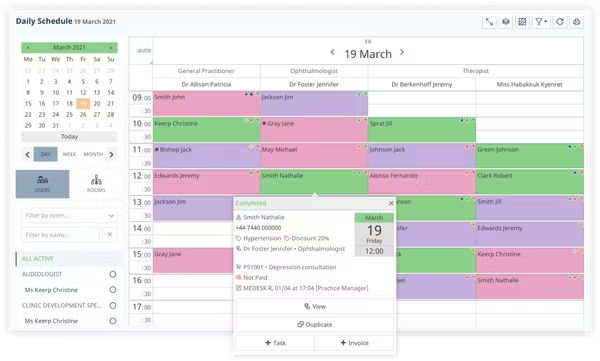
The system has tools for telemedicine, automated reminders (SMS/email), and analytics to help practices monitor performance and optimize their workflows.
Medesk tends to serve outpatient clinics well, especially those that want a single system to manage scheduling, communication, and daily operations.
What we like
Medesk's scheduling module lets receptionists view all clinicians' schedules simultaneously and notify patients of changes via SMS, reducing the back-and-forth that typically eats into front-desk time.
The dedicated account manager model also stands out in a space where post-sale support is often impersonal, and the analytics tools give practice managers a clear view of performance without requiring a separate reporting tool.
5. PracticeSuite
Best for: Independent physician practices and billing companies that need an affordable all-in-one platform covering scheduling, EHR, billing, and revenue cycle management.
PracticeSuite is a cloud-based medical practice management platform designed for independent physician practices and billing companies.
It brings together scheduling, billing, EHR functionality, and financial reporting in one system so that practices can manage patients, claims, and operations from a single interface.
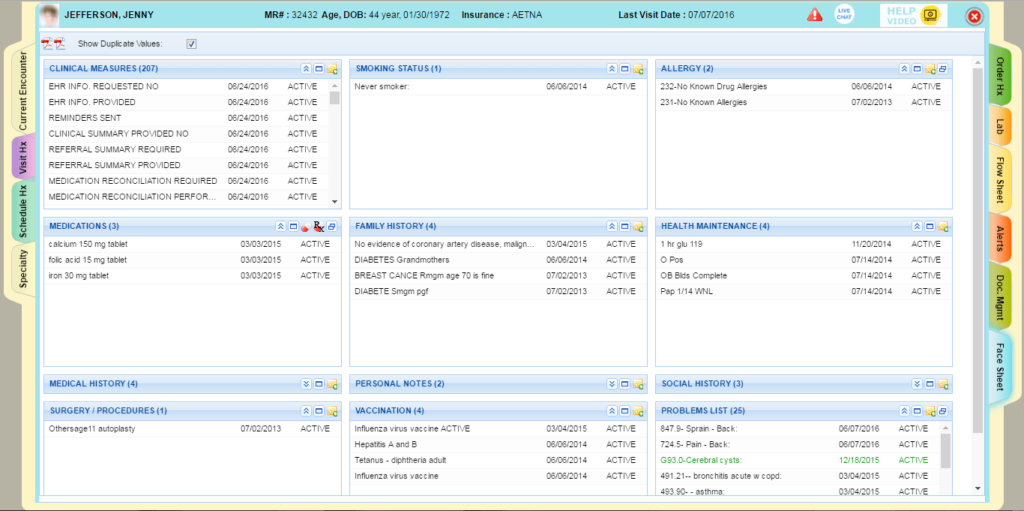
The software automates eligibility checks, claims management, payment processing, and denial tracking to help practices improve revenue cycle efficiency.
PracticeSuite is a strong match for small and midsize clinics that prefer an all-in-one platform instead of juggling multiple separate tools.
What we like
PracticeSuite's billing and reporting depth is a genuine differentiator at its price point, including six-month trend reporting and financial analytics that similarly priced competitors often skip.
The claim processing workflows support both UB04 and CMS1500 formats, which matters for practices billing across different care settings.
6. SimplePractice
Best for: Solo and small-group therapists, counselors, speech-language pathologists, and other wellness professionals that want a single platform for scheduling, documentation, billing, and telehealth.
SimplePractice is a practice-management and EHR platform built for therapists, speech-language pathologists, occupational therapists and other wellness professionals.
It combines scheduling, online appointment requests, documentation, billing, a client portal and integrated telehealth into one system.
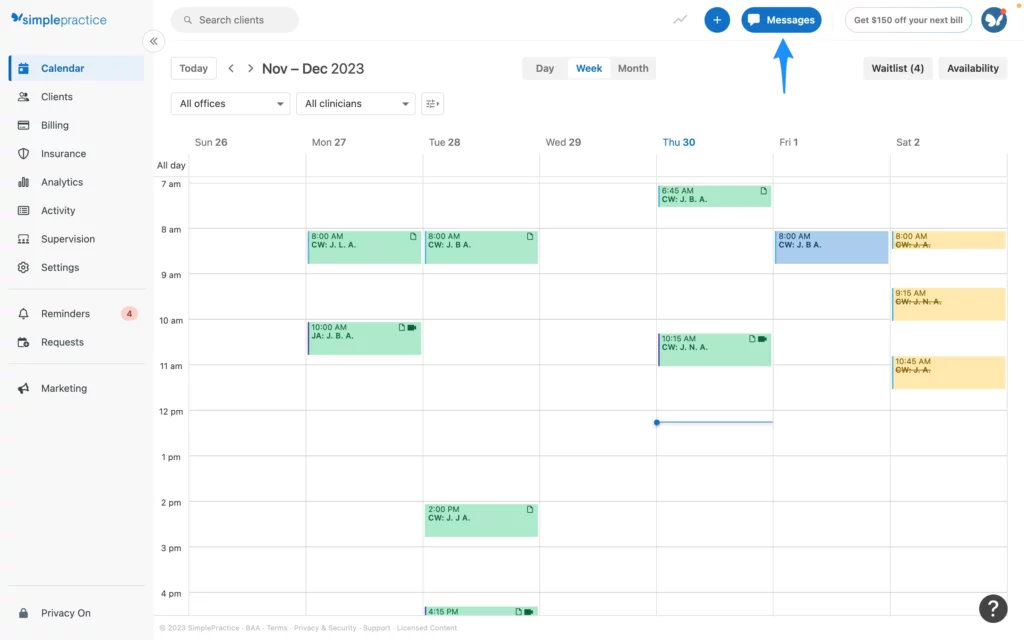
Its intuitive interface and library of customizable templates help solo and small-group practices reduce administrative burden and stay compliant.
SimplePractice fits well in private practice environments where clinicians handle both patient care and administrative tasks.
What we like
The customizable template library includes specialty-specific formats like Wiley treatment plan templates for behavioral health, which saves significant documentation time for clinicians who previously built notes from scratch.
The client-facing portal is polished and easy for patients to use, covering self-scheduling, intake forms, and invoice payments in one place.
Medical Billing Software
7. EZClaim
Best for: Small to midsize practices and independent billing companies that want straightforward, affordable billing software without the complexity of a full practice management suite.
EZClaim is a medical billing software platform designed to simplify claim processing, payment collection, and financial management for healthcare providers.
It automates tasks such as eligibility verification, claim submission, and electronic remittance advice to reduce administrative workload and accelerate revenue cycle performance.
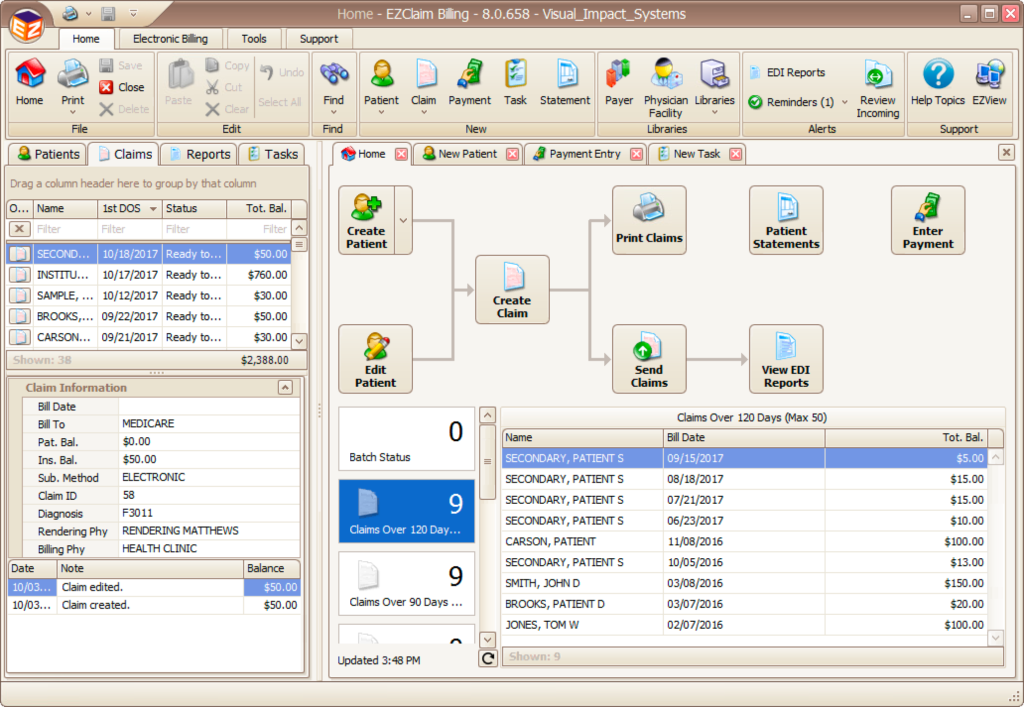
The system offers reporting tools that give practices visibility into key financial metrics and trends, helping them make data-driven decisions.
It supports a wide range of practice types including general, therapy, surgical, vision, and home care providers, and is suitable for both in-house billing teams and outsourced billing firms.
Its straightforward interface and flexible design make it a practical choice for small and medium-sized practices that want to improve billing efficiency.
What we like
EZClaim's template-based claim entry lets users set up workflows for common appointment types and process a claim in under 30 seconds, which compounds meaningfully for high-volume billing environments.
The integration with TriZetto for electronic eligibility verification is well-regarded for streamlining real-time eligibility checks before claims go out.
Healthcare Reputation Management Software
8. LocalImpact
Best for: Healthcare practices of all sizes, from solo clinicians to multi-location health systems, that want to actively manage, monitor, and grow their online reputation across the platforms patients use to choose a provider.
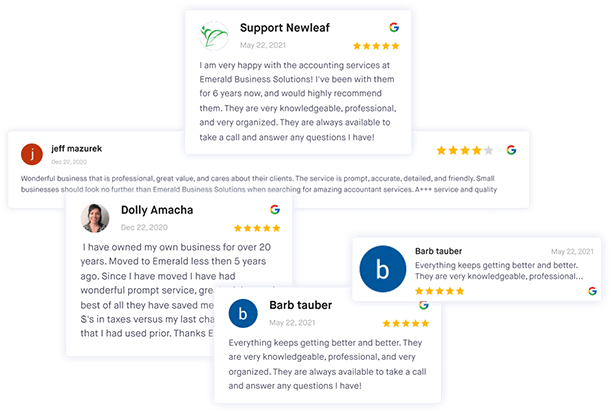
LocalImpact is a healthcare reputation management software solution that allows practitioners, clinics, and hospitals to monitor, manage, and showcase their online reviews from one central location.
It supports 26+ popular platforms, including Google, Yelp, Healthgrades, WebMD, Zocdoc, and Vitals.
You can use LocalImpact’s review feed to read and reply to all the reviews you get across different platforms.
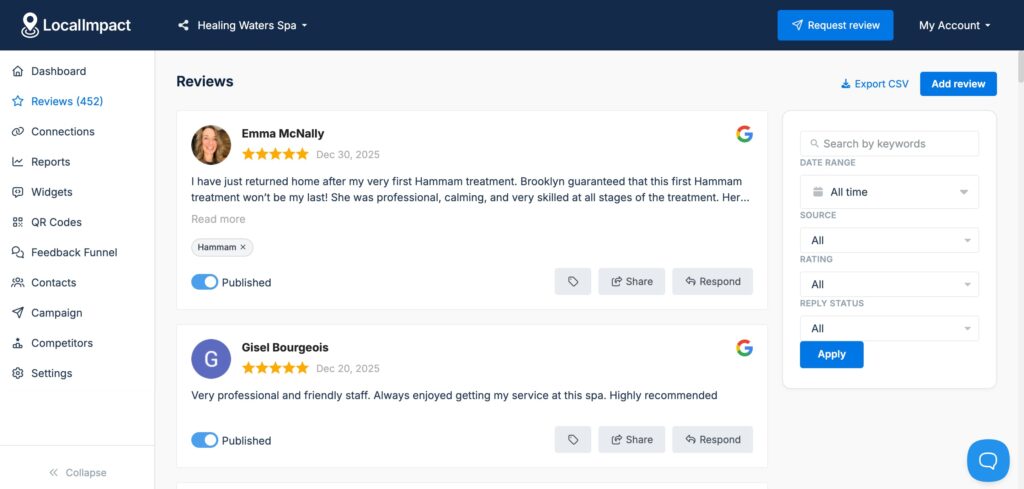
There’s also an AI-powered response feature that allows you to generate personalized review replies in seconds.
It supports automated email and SMS review request sequences, allowing you to automatically request reviews from patients.
There’s also a review widget feature, which allows you to showcase top patient reviews on your site. The widget is very easy to set up. All you need to do is add a short snippet of code to your website.
What we like
LocalImpact monitors 26+ review platforms relevant to healthcare, including Healthgrades, WebMD, Zocdoc, and Vitals, not just Google and Yelp.
The automated review request sequences work across both email and SMS, and the review widget makes it straightforward to surface top patient reviews directly on your website without any technical lift.
Improve your online reputation
Use LocalImpact to manage and improve your practice's online reputation with ease.
E-Prescribing Software
9. iPrescribe
Best for: Individual clinicians and small practices that need a mobile-first e-prescribing solution for both controlled and non-controlled medications, without committing to a full EHR system.
iPrescribe is an e-prescribing platform designed for individual clinicians and private practices.
It enables secure electronic prescriptions for both controlled and non-controlled medications from mobile or desktop devices.
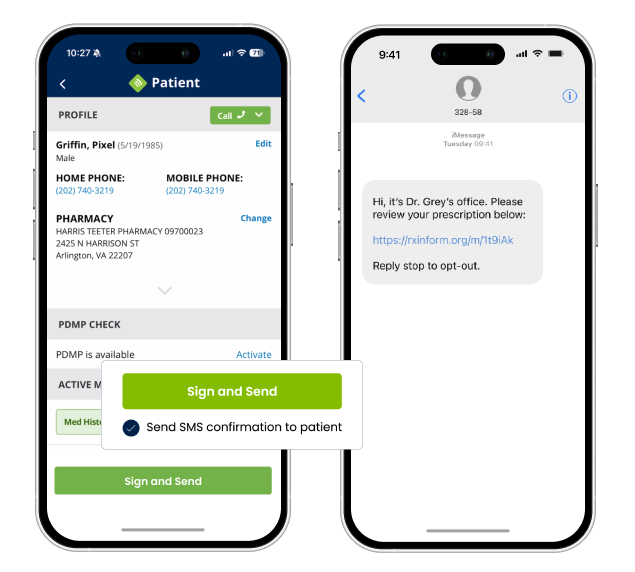
The system also supports real-time benefit checks, medication history review, patient communication (including automated texts), and optional integration with an EHR.
The tool works particularly well for clinicians who want a simple, compliant prescribing workflow without committing to a full EHR system.
What we like
iPrescribe's predictive analytics engine surfaces commonly prescribed medications and complete sig data based on the patient's diagnosis codes and the clinician's own prescribing patterns, which reduces repetitive manual entry for high-volume prescribers.
In-workflow PDMP checking is also built in, so controlled substance monitoring doesn't break clinical flow.
10. DoseSpot
Best for: Telehealth platforms, EHR vendors, and digital health companies that need to embed certified e-prescribing into an existing product via API integration.
DoseSpot is an e-prescribing platform that helps clinicians send medications securely and efficiently. It supports controlled substances, integrates with more than 140 APIs, and connects with pharmacies and payers to streamline workflow.

The solution offers real-time benefit checks and supports prior authorisation to reduce administrative delays and cost-related patient drop-off.
DoseSpot tends to benefit practices, telehealth providers, and health systems that need a quick, reliable, and fully compliant e-prescribing solution.
What we like
DoseSpot is built specifically to be embedded within other platforms, with two integration pathways covering both plug-and-play and fully custom implementations.
Real-time pharmacy benefit checks and electronic prior authorization are included, which helps reduce the administrative delays that typically sit between a prescription and a patient actually filling it.
Pharmacy Software
11. PioneerRx
Best for: Independent retail pharmacies that want a feature-rich, community-supported pharmacy management platform with strong clinical service capabilities and consistent software updates.
PioneerRx is a pharmacy management software solution built for independent retail pharmacies. It supports core functions such as dispensing, point-of-sale, inventory and ordering, medication therapy management, and automated workflow customization.
The system offers mobile apps for patient refills, two-way texting, and delivery tracking, helping pharmacies engage patients and streamline operations.
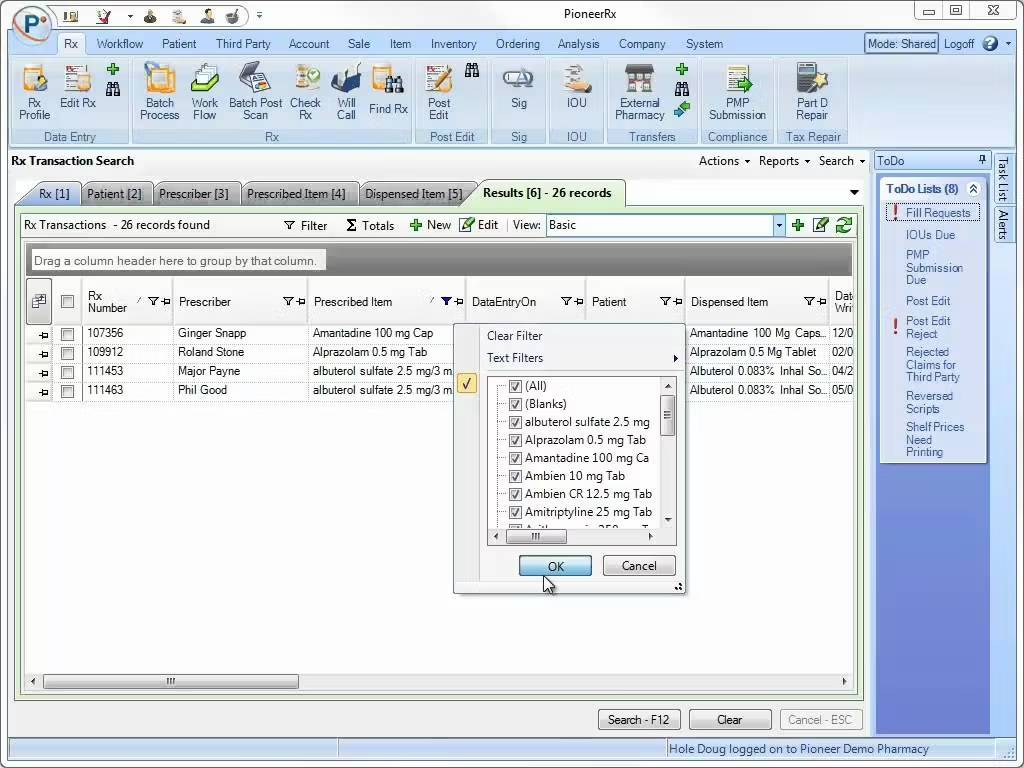
With features like risk scoring, adherence programs, and detailed analytics, it helps pharmacies boost clinical services and profitability.
Its robust feature set makes it a strong option for pharmacies aiming to expand clinical services and manage higher prescription volumes.
What we like
PioneerRx is updated weekly, and the platform's active user community lets pharmacists upvote feature requests directly, giving independent owners real input into the product roadmap.
The software spans dispensing, compounding, MTM programs, adherence tracking, and mobile delivery apps, making it genuinely useful for pharmacies looking to expand clinical services well beyond basic filling.
12. BestRx
Best for: Independent retail pharmacies that want a reliable, affordable, and highly customizable pharmacy management platform backed by responsive customer support.
BestRx is a pharmacy-management software solution built specifically for independent retail pharmacies.
It integrates core functions such as prescription processing, inventory and ordering, point-of-sale, and patient communications to help streamline both front-end and back-office operations.
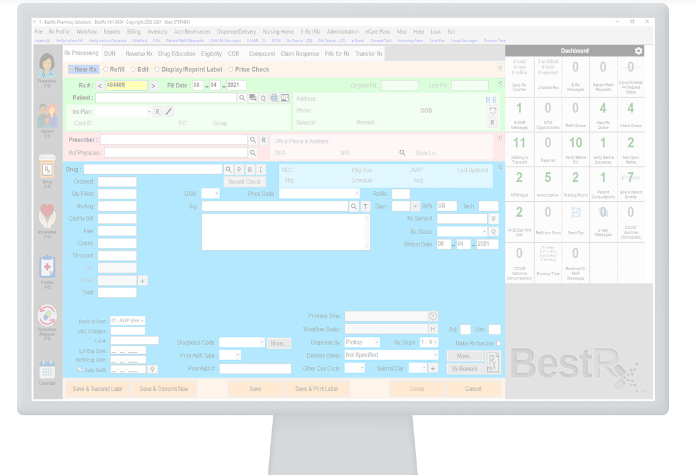
The platform includes automation tools for tasks like refill scheduling and delivery tracking, plus real-time reporting on profitability and workflow.
BestRx is a solid match for community pharmacies that need a familiar, customizable platform that supports everyday workflows.
What we like
BestRx's customization options are a practical strength for independent pharmacies with specific workflow needs, and the system can be adapted without expensive development work.
Regular updates to meet changing federal and state compliance requirements mean owners aren't left scrambling when regulations shift.
13. PrimeRx
Best for: Independent, specialty, long-term care, and multi-location pharmacy operations that need a scalable platform covering dispensing, inventory, point-of-sale, and patient communication from one system.
PrimeRx is a pharmacy management software solution built for retail, compound, specialty, long-term care, and multi-location pharmacy operations.
It helps pharmacies manage dispensing, inventory, point-of-sale, delivery and document workflows in one platform.
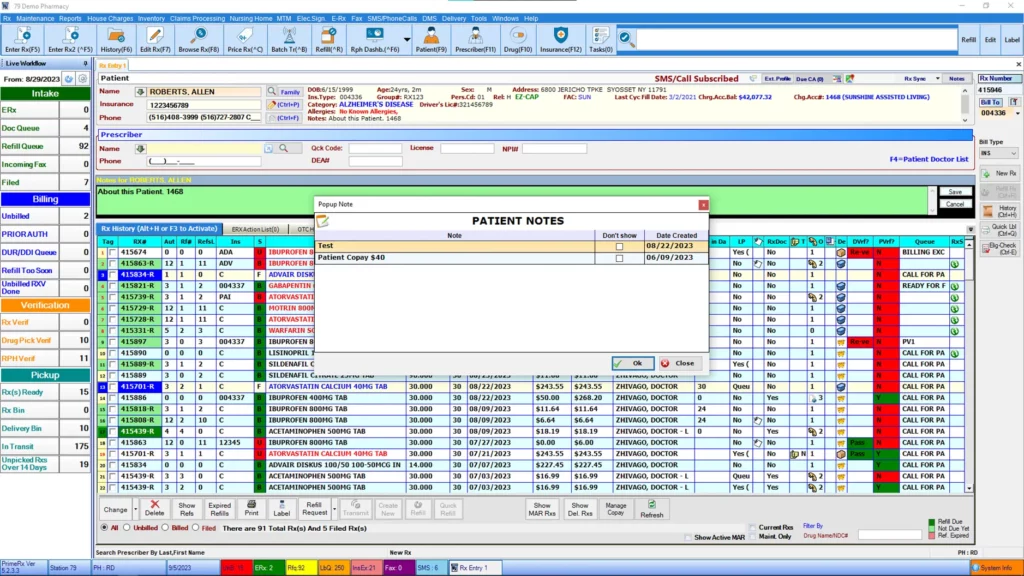
The system includes features such as automated refills, two-way SMS patient communication, delivery tracking, and detailed analytics to support both operational efficiency and patient adherence.
PrimeRx is well positioned for pharmacy teams that require a scalable, configurable system for multi-location or specialty operations.
What we like
PrimeRx's multi-pharmacy management capabilities stand out for operators running more than one location, with centralized reporting and patient profile management across all stores.
The automated refill scheduling and two-way SMS patient communication tools also support the kind of adherence-focused workflows that are increasingly tied to pharmacy reimbursement programs.
Medical Imaging Software
14. Osirix DICOM Viewer
Best for: Radiologists, imaging centers, and academic institutions on macOS that need a high-performance DICOM viewer with advanced 3D and 4D post-processing and strong PACS connectivity.
Osirix DICOM Viewer is a medical imaging software solution built for viewing, processing, and analyzing DICOM-format images such as CT, MRI, PET/CT and SPECT/CT.
It features 2D, 3D and 4D navigation capabilities along with advanced post-processing tools and plug-in support for extending functionality.
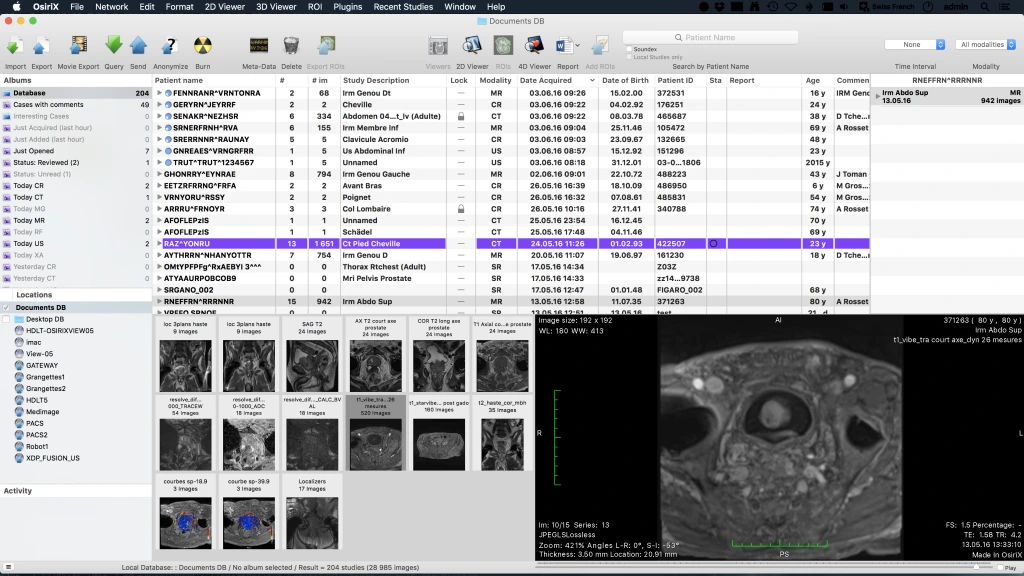
The platform is suited for radiologists, imaging centers and academic institutions that require high-performance imaging review and integration with PACS servers.
OsiriX is commonly adopted by radiologists, imaging centers, and academic groups that need a high-performance viewer with strong PACS connectivity.
What we like
OsiriX's 3D and 4D rendering capabilities are among the most advanced available in a clinical viewer, and the plugin architecture allows institutions to extend the platform with specialized processing tools without switching systems.
The FDA-cleared version, OsiriX MD, is certified for primary diagnostic use, which is a meaningful threshold for clinical environments where diagnostic accuracy is non-negotiable.
15. RadiAnt DICOM Viewer
Best for: Radiologists and imaging centers on Windows that need a fast, lightweight DICOM viewer for reviewing and navigating complex cases without excessive system overhead.
RadiAnt DICOM Viewer is a medical image viewer built for radiologists and imaging centers that need to open, navigate and analyse DICOM files quickly and efficiently.
It supports multi-series layouts, multi-window synchronization, and common imaging modalities like CT, MRI and PET/CT so users can view complex cases with ease.
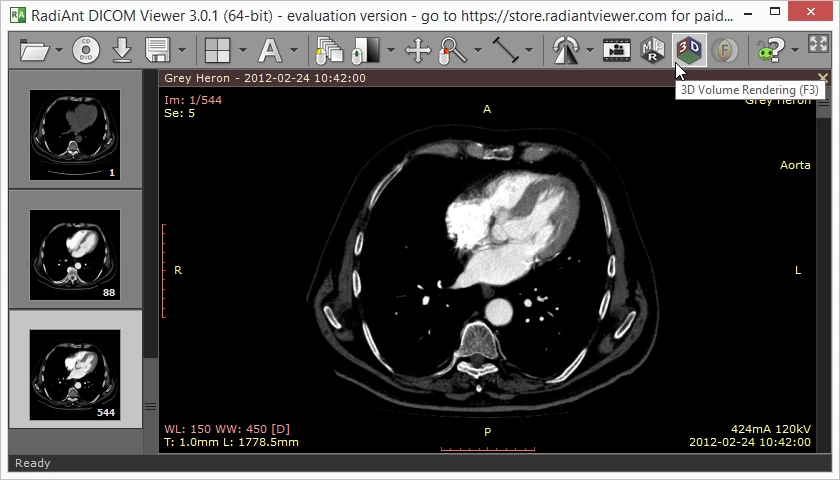
With its intuitive interface and lightweight install it’s suited for users who want a powerful viewer without excessive system overhead or complexity.
What we like
RadiAnt's GPU-accelerated image loading and smooth scrolling through large datasets perform well even on older hardware, which matters in environments where upgrading workstations isn't always an option.
The compact installer can also run directly from a USB stick, which is useful in settings where installing software on clinical workstations is restricted.
16. PostDICOM
Best for: Imaging teams, teaching institutions, and multi-site practices that need cloud-based DICOM storage, viewing, and sharing without the infrastructure requirements of a traditional on-premise PACS.
PostDICOM is a cloud-based PACS and DICOM viewer system that lets clinics, hospitals, researchers and students upload, store and share medical imaging and associated documents.
It supports advanced image processing tools like multi-planar reconstruction, 3-D rendering and HTML5 viewing on desktop or mobile devices.
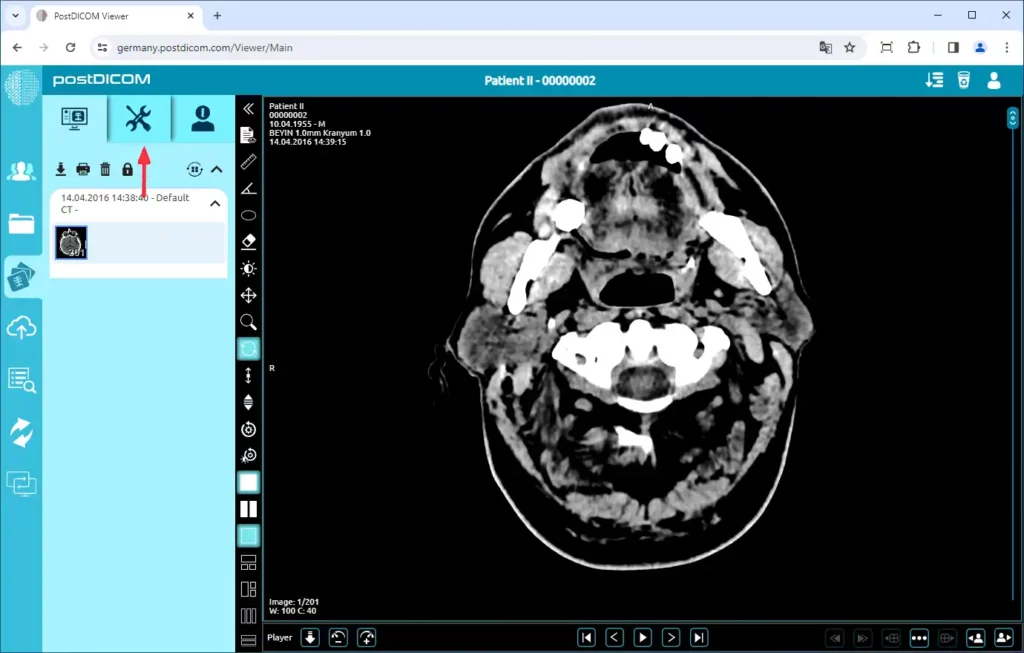
The platform is also used for teaching and research, allowing users to create case libraries, anonymize data and collaborate across locations.
PostDICOM is a strong fit for imaging teams, teaching institutions, or multi-site practices that need a scalable cloud archive instead of a traditional desktop viewer.
What we like
PostDICOM's browser-based, zero-footprint architecture means clinicians and collaborators can access studies from any device without installing software, which is a practical advantage for distributed teams sharing cases across locations.
Case anonymization and shareable libraries make it particularly well-suited for academic and research workflows where protecting patient data during case sharing is essential.
Improve your online reputation
Use LocalImpact to manage and improve your practice's online reputation with ease.
Medical Transcription Software
17. T-Pro
Best for: Hospitals and clinics of all sizes that want to reduce manual documentation time through digital dictation, cloud-based speech recognition, and structured document distribution.
T-Pro is a transcription and dictation platform built for healthcare organizations of all sizes. It offers digital dictation, cloud-based speech recognition, and document distribution tools designed to cut down on manual entry and speed up correspondence.
The platform works across mobile, desktop and virtual environments, integrating with existing clinical systems to streamline workflows.
T-Pro is a practical choice for hospitals and clinics that want to cut administrative work and improve documentation accuracy.
What we like
T-Pro's compatibility across mobile, desktop, and virtual environments makes it practical for clinical teams with varied and shifting workflows.
The integration with existing clinical systems means documentation outputs flow directly into established processes rather than requiring a separate step to transfer or reformat content.
18. Augmedix
Best for: Hospitals, health systems, and busy practices that need to eliminate end-of-day charting by capturing clinical notes in real time during patient encounters.
Augmedix is a medical documentation platform that uses ambient-AI and human review to convert clinician-patient conversations into structured clinical notes.
It works during exams to capture real-time conversation, transcribe it, and with a combination of AI and documentation specialists, deliver notes ready for EHR sign-off.
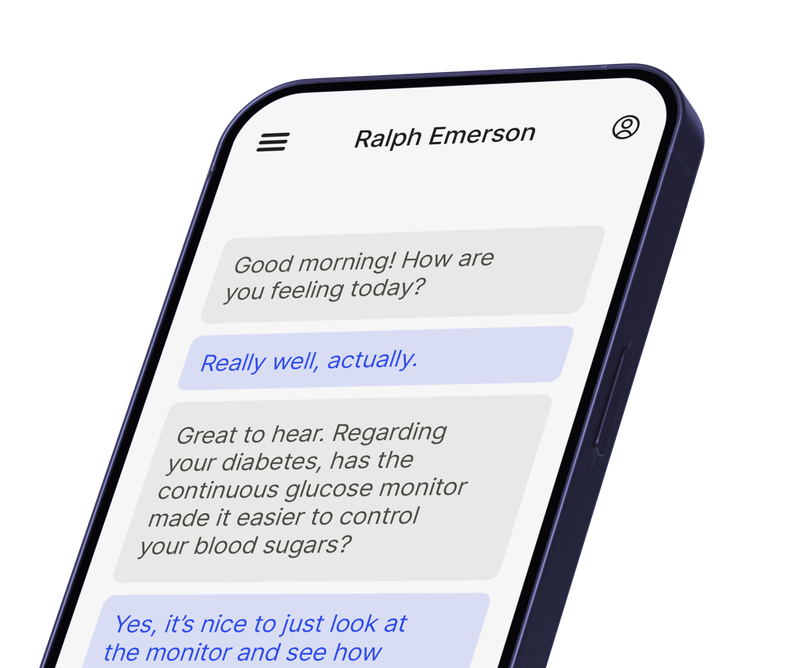
Augmedix tends to serve hospitals, health systems, and busy practices that need to minimize documentation time and streamline note entry.
It supports integrations with major EHR systems and complies with data-security standards such as HITRUST and HIPAA.
What we like
Augmedix's human-in-the-loop quality review layer distinguishes it from purely AI-driven documentation tools, adding an accuracy check that matters for complex or high-stakes clinical encounters.
The ambient capture approach also means clinicians don't need to change how they interact with patients, which keeps the documentation process genuinely invisible to both sides of the visit.
19. DeepScribe
Best for: Busy practices and value-based care organizations that want AI-powered ambient documentation with specialty-specific templates and built-in coding support to reduce both charting time and billing complexity.
DeepScribe is an AI-powered medical scribe platform that listens to the clinician-patient conversation and generates a fully structured clinical note for use in the EHR.
It offers specialty-specific documentation templates and coding support (ICD-10, HCC, E/M) to help practices ensure accuracy and compliance.
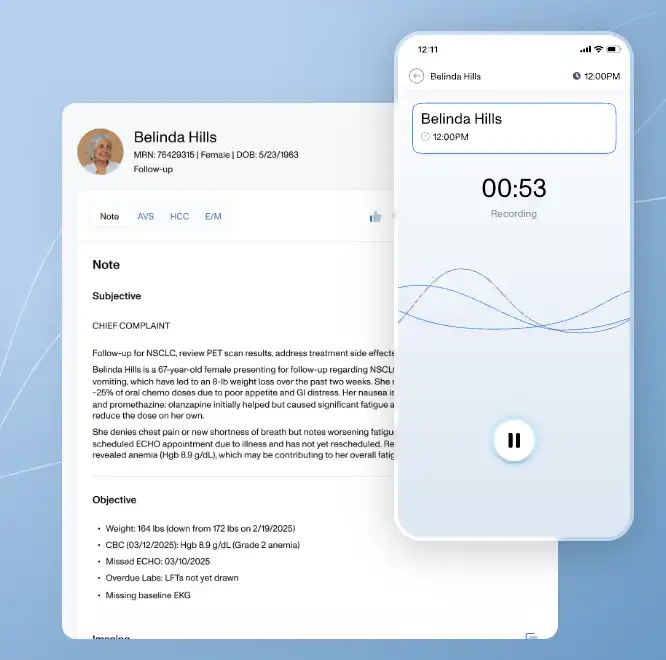
The platform is best suited for busy practices and value-based care organizations seeking to reduce the documentation burden and free clinicians to spend more time with patients.
Its ambient-listening architecture and EHR integrations allow it to capture visits without manual dictation or typing.
What we like
DeepScribe's specialty-specific templates and E/M coding support mean the platform does more than transcribe, it actively structures notes in a format that supports accurate billing and HCC capture.
The system also improves over time with use, learning each clinician's patterns and preferences to produce progressively more accurate first drafts.
Telemedicine Software
20. Doxy.me
Best for: Solo providers, therapists, and small clinics that want a simple, browser-based telehealth tool with no app download required for patients and a free tier available for individual practitioners.
Doxy.me is a telemedicine platform that lets healthcare providers conduct secure video consultations with patients using just a web browser. It works on any device and requires no software download for patients, making it easy for practices to adopt.

The platform includes virtual waiting rooms, patient queues, and waiting-room branding to mirror in-clinic workflows, and it meets HIPAA, GDPR and other global privacy standards.
Doxy.me works especially well for solo providers, therapists, and small clinics that want an uncomplicated, browser-based telehealth tool.
What we like
Doxy.me's no-download, browser-based access for patients removes one of the biggest friction points in telehealth adoption, particularly for older or less tech-savvy patient populations.
The virtual waiting room mirrors in-clinic workflows well, giving providers visibility into patient queue status and the ability to communicate with waiting patients before the visit begins.
Remote Patient Monitoring Software
21. Prevounce
Best for: Practices, health systems, FQHCs, and payers that want a structured platform for launching or scaling remote patient monitoring programs alongside chronic care management and Medicare annual wellness visits.
Prevounce is a remote patient monitoring (RPM) platform built for practices, health systems, FQHCs/RHCs, and payers.
It allows providers to enroll patients, supply cellular-connected devices for blood pressure, weight, glucose, oxygen, and more, and stream the data securely into one platform.
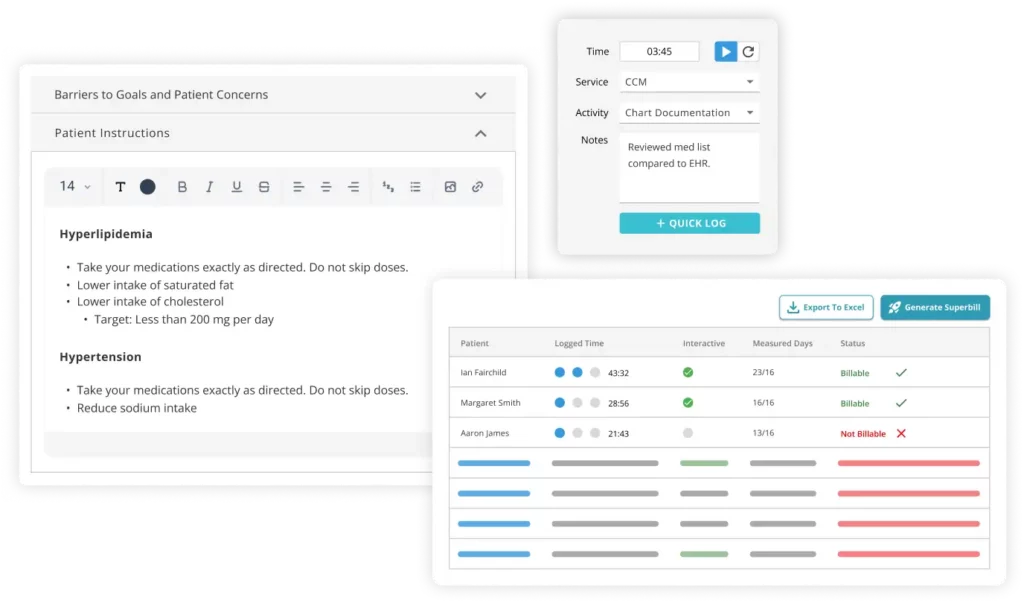
The system includes AI-powered insights, automated alerts, compliant billing tools, and integrations with major EHRs so programs can scale and remain reimbursable.
Prevounce is a strong option for organizations aiming to build or expand remote care programs across multiple service lines.
What we like
Prevounce walks clinical staff through each service's regulatory and billing requirements step by step, which reduces the risk of missed documentation and helps practices capture reimbursement they'd otherwise leave on the table.
The cellular-connected device model also means patients don't need WiFi or smartphone setup to participate, lowering the barrier for older or lower-income patient populations.
22. CareSimple
Best for: Providers, payers, and health systems that want a turnkey remote patient monitoring solution that ships patient-ready devices directly to patients and integrates with major EHR systems out of the box.
CareSimple is a remote patient monitoring (RPM) platform built for providers, payers, and health systems.
It enables clinicians to ship patient-ready, cellular-connected devices and collect vitals such as blood pressure, weight, glucose, and oxygen saturation without requiring WiFi or smartphone setup.
The platform integrates directly with EHR systems and supports chronic care management, hospital-at-home, and population health workflows through alerting, analytics, and billing support.
It’s best suited for organizations seeking a turnkey solution to launch or expand remote care programs with minimal technical burden.
What we like
CareSimple's cellular-connected device model ships directly to patients with no WiFi or smartphone required, which meaningfully expands the patient populations that can participate in remote monitoring programs.
The direct EHR integrations with Epic, Cerner, and Meditech mean vitals data flows into the clinical record automatically rather than sitting in a separate portal that clinicians have to check separately.
23. Vitalera
Best for: Providers and health systems moving toward home-based care, chronic condition support, and virtual-first workflows that need a platform combining connected devices, patient mobile apps, and EHR integration.
Vitalera is a remote patient monitoring (RPM) and home care platform designed for healthcare providers, payers, and telehealth services.
It enables organizations to deploy connected medical devices, engage patients with mobile apps, and monitor vitals such as blood pressure, glucose, oxygen saturation, and more in real time.

The platform supports care coordination workflows, analytics dashboards, and seamless integration with EHR systems so that remote data becomes part of the clinical record.
Vitalera fits providers and health systems that are moving toward home-based care, chronic condition support, and virtual-first workflows.
What we like
Vitalera's combination of connected medical devices and a patient-facing mobile app creates a more engaged monitoring experience than device-only RPM solutions, which can improve adherence and the quality of data collected over time.
The analytics dashboards and EHR integrations also mean remote data becomes part of the broader clinical record rather than living in isolation.
Choosing the Right Healthcare Software for Your Practice
Healthcare software covers a wide range of clinical, operational, and administrative needs, so the best choice depends on the size of your organization, your specialty, and the workflows you want to improve.
Start by identifying the areas where your team spends the most time or experiences the most friction, then evaluate tools that directly address those challenges.
It also helps to consider factors like ease of use, integration with your existing systems, data security, and long-term scalability.
With the right mix of solutions in place, practices can streamline daily tasks, improve patient communication, and deliver higher-quality care with fewer administrative bottlenecks.